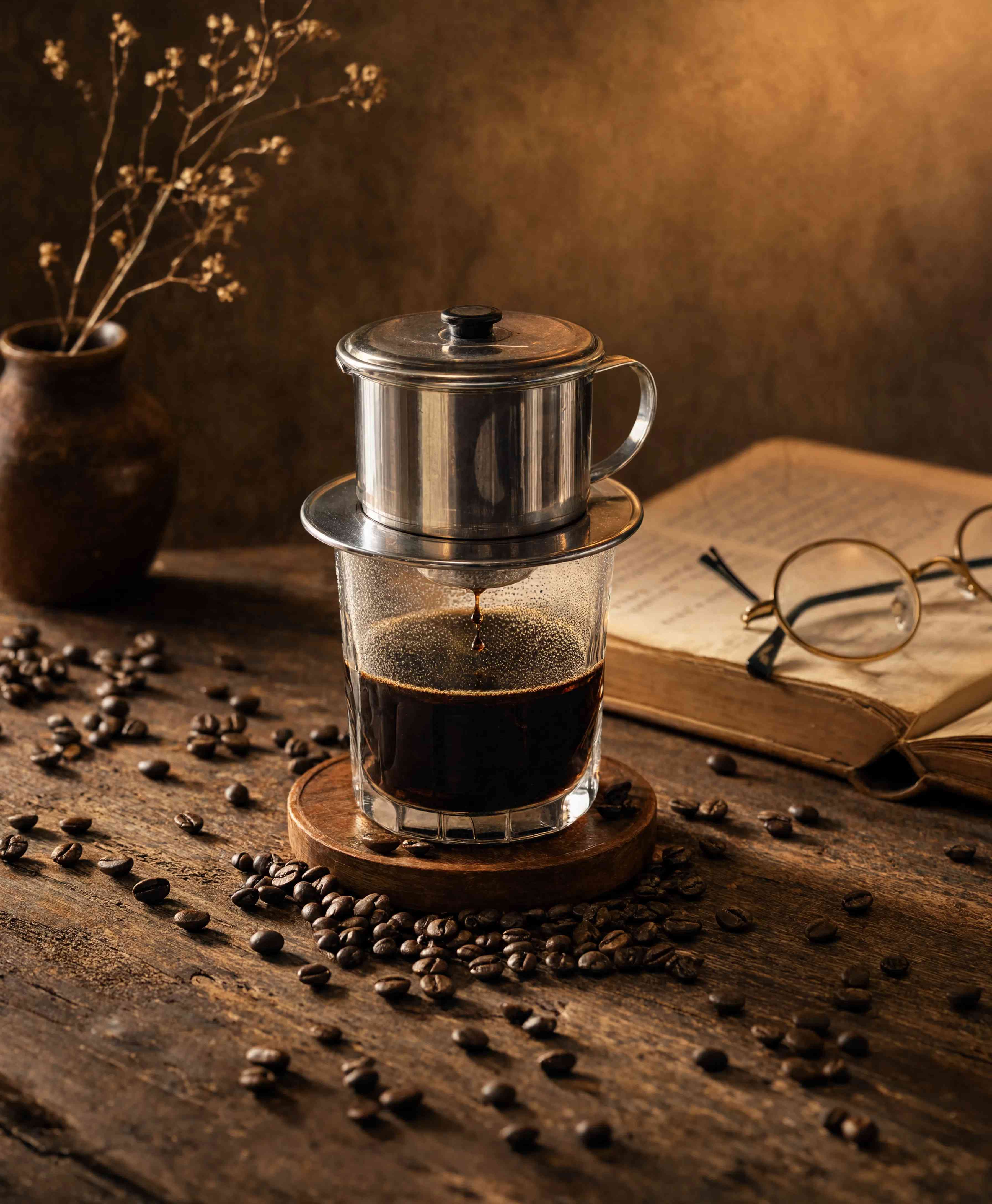
Nước đi vào chất lượng ở đâu
Khi nước được dùng để pha cà phê, nó không chỉ là chất mang. Nước tiếp xúc trực tiếp với cà phê và hòa tan một phần các chất từ bột vào đồ uống. Vì vậy, chất lượng nước có thể ảnh hưởng đến cả khả năng chiết xuất và cảm nhận cuối cùng.
SCA từng công bố các yêu cầu nước dùng cho pha cà phê trong tài liệu tiêu chuẩn trước đây, với các chỉ tiêu như mùi, màu, clo, tổng chất rắn hòa tan, độ cứng canxi, độ kiềm, độ pH và natri. Một tài liệu của SCA cũng giải thích rằng khoáng chất trong nước ảnh hưởng đến tính chất dung môi và do đó ảnh hưởng đến cách các chất trong cà phê được chiết xuất. Những con số cụ thể cần được đặt trong đúng tài liệu và phiên bản, không nên gọi mọi bảng khuyến nghị cũ là một tiêu chuẩn hiện hành duy nhất.
Các nghiên cứu gần đây tiếp tục cho thấy thành phần nước có thể làm thay đổi hành vi chiết xuất và đặc tính của đồ uống. Vì vậy, nếu nói “cà phê sạch” mà bỏ qua nước pha, câu chuyện về chất lượng vẫn còn thiếu một mắt xích.
“Nước sạch” và “nước phù hợp để pha” không hoàn toàn là một câu
Nước có thể đáp ứng yêu cầu an toàn nhưng chưa chắc tạo ra cùng một kết quả pha với mọi nguồn nước khác. Lý do nằm ở thành phần hòa tan. Độ cứng, độ kiềm và các khoáng chất có thể thay đổi cách nước tương tác với các hợp chất trong cà phê.
SCA giải thích rằng hydrogen carbonate có khả năng đệm axit và vì thế độ kiềm có thể ảnh hưởng rõ đến cảm nhận độ chua của cà phê. Các khoáng chất như canxi và magiê cũng tham gia vào cách nước tương tác với chất được chiết xuất. Một nghiên cứu được SCA giới thiệu cho thấy độ kiềm và tỷ lệ pha có thể làm thay đổi mức ảnh hưởng của nước lên độ chua trong các phương pháp pha khác nhau.
Vì vậy, “nước sạch” và “nước phù hợp để pha” cần được đặt thành hai câu hỏi. Câu thứ nhất hỏi nước có đáp ứng yêu cầu an toàn và vệ sinh hay không. Câu thứ hai hỏi thành phần của nước có phù hợp với mục tiêu pha và cảm quan hay không. Hai câu có thể cùng đạt, nhưng một câu không tự động chứng minh câu còn lại.
Nước dùng cho vệ sinh lại là câu chuyện khác
Nước dùng để rửa thiết bị và bề mặt tiếp xúc với cà phê có mục đích khác nước đi thẳng vào đồ uống. Tuy vậy, nếu nước tiếp xúc với bề mặt thực phẩm, chất lượng của nước vẫn cần được kiểm soát phù hợp với mục đích sử dụng.
Điểm cần chú ý là nguy cơ không chỉ nằm ở bản thân nguồn nước. Nước có thể để lại khoáng, mùi hoặc các chất khác trên bề mặt nếu việc tráng và làm khô không phù hợp. Một nguồn nước phù hợp cho một công đoạn không nên được dùng như bằng chứng rằng mọi công đoạn khác đều đã được kiểm soát.
Trong cơ sở sản xuất, vì vậy nên ghi rõ nước được dùng cho việc gì. Nước pha được kiểm soát theo mục tiêu của đồ uống. Nước vệ sinh được xem xét theo yêu cầu vệ sinh và tiếp xúc bề mặt. Nếu hai dòng nước có cùng nguồn, hồ sơ vẫn nên phân biệt mục đích để tránh suy luận quá mức.
Đặt nước vào đúng vị trí trong khái niệm “sạch”
Nước là một phần của câu chuyện “sạch”, nhưng không phải theo nghĩa chỉ cần nói “nước sạch” là mọi vấn đề đã được giải quyết. Có ít nhất ba lớp cần tách: an toàn và vệ sinh của nguồn nước, thành phần hóa học phù hợp với việc pha, và sự phù hợp của nước với công đoạn vệ sinh.
Cách nhìn này đặc biệt hữu ích khi đánh giá chất lượng một ly cà phê. Nếu đồ uống có vị khác thường, không nên chỉ nhìn vào hạt. Nước, thiết bị, nhiệt độ, tỷ lệ pha và cách vận hành đều có thể góp phần. Nước phù hợp giúp giảm một biến số lớn trong quá trình pha, nhưng không thể thay thế việc kiểm soát những biến số còn lại.
Vì vậy, đưa nước vào câu chuyện “cà phê sạch” không phải để làm cho khái niệm rộng hơn một cách tùy tiện. Mục đích là đặt đúng câu hỏi cho đúng công đoạn: nước có phù hợp với việc tiếp xúc trực tiếp với đồ uống không, thành phần của nó có phù hợp với mục tiêu pha không, và nước dùng vệ sinh có được kiểm soát theo mục đích của nó không.
Tài liệu tham khảo
- Specialty Coffee Association — Water and the Taste of Coffee — https://sca.coffee/sca-news/news-from-our-partners/water-and-the-taste-of-coffee-ay9gh
- Specialty Coffee Association — Water and Coffee Acidity: How to Adapt Water Recipes for Different Extraction Methods — https://sca.coffee/sca-news/25/issue-9/english/water-and-coffee-acidity-how-to-adapt-water-recipes-for-different-extraction-methods-25-magazine-issue-9-pxjby
- Exploring the impacts and mechanisms of water on the taste extractions and perceptions of coffee brews: A case study in filter brewing — Journal of Food Composition and Analysis, 2025 — https://www.sciencedirect.com/science/article/pii/S0889157525008026
Where water factors into quality
When water is used to brew coffee, it isn't just a carrier. It comes into direct contact with the coffee and dissolves some of the compounds from the grounds into the drink. So water quality can affect both extraction and the final sensory experience.
The SCA has previously published water requirements for brewing in earlier standards documents, covering criteria like odor, color, chlorine, total dissolved solids, calcium hardness, alkalinity, pH, and sodium. An SCA resource also explains that the minerals in water affect its solvent properties and therefore how compounds in coffee get extracted. Specific figures should be tied to their correct document and version — not every old recommendation table should be treated as one single current standard.
More recent research continues to show that water composition can change extraction behavior and the character of the resulting drink. So if a “clean coffee” claim overlooks brewing water, the quality story is still missing a link.
“Clean water” and “water suited to brewing” aren't quite the same statement
Water can meet safety requirements without necessarily producing the same brewing result as every other water source. The reason lies in dissolved composition. Hardness, alkalinity, and minerals can all change how water interacts with the compounds in coffee.
The SCA explains that hydrogen carbonate has acid-buffering capacity, so alkalinity can noticeably affect how sour a coffee tastes. Minerals like calcium and magnesium also play a role in how water interacts with the extracted compounds. A study cited by the SCA found that alkalinity and brew ratio can change how much water's effect on acidity shows up across different brewing methods.
So “clean water” and “water suited to brewing” need to be treated as two separate questions. The first asks whether the water meets safety and hygiene requirements. The second asks whether its composition suits the brewing and sensory goals at hand. Both can be true at once, but one doesn't automatically prove the other.
Water used for cleaning is a different story altogether
Water used to wash equipment and surfaces that touch coffee serves a different purpose from water that goes directly into the drink. Even so, if water touches a food-contact surface, its quality still needs to be controlled to match that purpose.
The key point is that the risk doesn't lie only in the water source itself. Water can leave behind minerals, odors, or other residues on a surface if rinsing and drying aren't handled properly. Water that's suitable for one step shouldn't be treated as proof that every other step has been properly controlled.
In a production facility, it's worth clearly recording what each stream of water is used for. Brewing water is controlled against the goals of the drink. Cleaning water is assessed against hygiene requirements and surface-contact needs. Even if both streams come from the same source, the records should still distinguish their purposes to avoid drawing conclusions that go too far.
Giving water its proper place within “clean”
Water is part of the “clean” story, but not in the sense that simply saying “clean water” resolves everything. There are at least three layers worth separating: the safety and hygiene of the water source, the chemical composition suited to brewing, and the water's suitability for the cleaning step it's used in.
This framing is especially useful when assessing the quality of a cup of coffee. If a drink tastes off, the beans shouldn't be the only suspect. Water, equipment, temperature, brew ratio, and technique can all contribute. Suitable water removes one major variable from the brewing process, but it can't replace controlling the rest.
So bringing water into the “clean coffee” conversation isn't about stretching the concept arbitrarily wider. The point is to ask the right question at the right stage: is the water suitable for direct contact with the drink, does its composition suit the brewing goal, and is the water used for cleaning controlled for its own purpose?
References
- Specialty Coffee Association — Water and the Taste of Coffee — https://sca.coffee/sca-news/news-from-our-partners/water-and-the-taste-of-coffee-ay9gh
- Specialty Coffee Association — Water and Coffee Acidity: How to Adapt Water Recipes for Different Extraction Methods — https://sca.coffee/sca-news/25/issue-9/english/water-and-coffee-acidity-how-to-adapt-water-recipes-for-different-extraction-methods-25-magazine-issue-9-pxjby
- Exploring the impacts and mechanisms of water on the taste extractions and perceptions of coffee brews: A case study in filter brewing — Journal of Food Composition and Analysis, 2025 — https://www.sciencedirect.com/science/article/pii/S0889157525008026