Sau khi xay, diện tích tiếp xúc thay đổi thế nào
Khi một hạt cà phê còn nguyên, phần bên trong được bảo vệ bởi cấu trúc của hạt. Xay hạt thành bột tạo ra rất nhiều bề mặt mới tiếp xúc trực tiếp với không khí. Kích thước hạt càng nhỏ, tổng diện tích bề mặt trên cùng một khối lượng càng lớn.
Sự thay đổi này không chỉ có ý nghĩa về hình học. Những hợp chất tạo mùi và nhiều thành phần dễ biến đổi vốn nằm trong cấu trúc hạt nay có đường tiếp xúc với môi trường nhiều hơn. Vì vậy, cùng một lượng cà phê, trạng thái nguyên hạt và trạng thái đã xay không có cùng mức độ nhạy cảm trong bảo quản.
Đây là nền tảng để hiểu vì sao câu “cà phê mới rang” chưa đủ để mô tả độ tươi. Một sản phẩm được rang gần đây nhưng đã xay và tiếp xúc lâu với môi trường có thể thay đổi nhanh hơn một sản phẩm cùng tuổi rang nhưng vẫn được giữ ở dạng hạt nguyên.
Oxygen và moisture tác động lên bột ra sao
Oxygen và hơi ẩm là hai yếu tố quan trọng trong quá trình bảo quản cà phê rang xay. Khi diện tích bề mặt tăng, việc trao đổi giữa sản phẩm và môi trường trở nên dễ dàng hơn nếu bao bì không tạo được lớp bảo vệ phù hợp.
Một nghiên cứu của Cardelli và Labuza về thời hạn bảo quản cà phê rang xay đã khảo sát ảnh hưởng của oxygen, hoạt độ nước và nhiệt độ. Trong điều kiện nghiên cứu của họ, tăng áp suất riêng phần của oxygen làm tốc độ suy giảm tăng mạnh; hoạt độ nước và nhiệt độ cũng ảnh hưởng đến tốc độ biến đổi. Những con số cụ thể của nghiên cứu không nên biến thành quy luật chung cho mọi sản phẩm, nhưng chúng cho thấy rõ một nguyên tắc: môi trường bảo quản có thể làm thay đổi tốc độ mất chất của cà phê rang xay.
Điều quan trọng là không hiểu oxygen và moisture như hai yếu tố độc lập hoàn toàn. Chúng cùng tham gia vào trạng thái của sản phẩm trong quá trình lưu trữ. Vì vậy, một bao bì tốt cần được xem xét như một hệ thống bảo vệ, thay vì chỉ nhìn vào một đặc tính riêng lẻ.
Hương mất đi theo những đường nào
Cà phê rang chứa nhiều hợp chất bay hơi tạo nên mùi đặc trưng. Sau khi xay, một phần các hợp chất này có thể dễ dàng rời khỏi vật liệu hơn do bề mặt tiếp xúc tăng. Đồng thời, các phản ứng hóa học trong quá trình lưu trữ có thể làm thay đổi thành phần của hệ hương.
Nghiên cứu về khoảng không phía trên cà phê rang xay đã cho thấy thành phần các chất bay hơi thay đổi theo thời gian bảo quản. Một số tỷ lệ hợp chất trong khoảng không có thể được sử dụng để theo dõi quá trình lưu trữ. Các nghiên cứu cảm quan khác cũng ghi nhận những thay đổi về đặc tính mùi của cà phê rang xay theo thời gian.
Điều này giúp giải thích một hiện tượng quen thuộc: cà phê có thể vẫn còn mùi khi mở bao nhưng mùi đã không còn giống lúc đầu. Mất chất không nhất thiết đồng nghĩa với việc sản phẩm “hỏng” ngay. Nó có thể bắt đầu bằng sự giảm cường độ hương, thay đổi cân bằng giữa các hợp chất thơm và dần dần xuất hiện những đặc tính của cà phê cũ.
Vì vậy, đánh giá độ tươi nên nhìn vào cả mùi, điều kiện bảo quản và thời gian lưu trữ, thay vì chỉ nhìn ngày rang.
Hạt nguyên và bột cần cách bảo quản khác nhau ở đâu
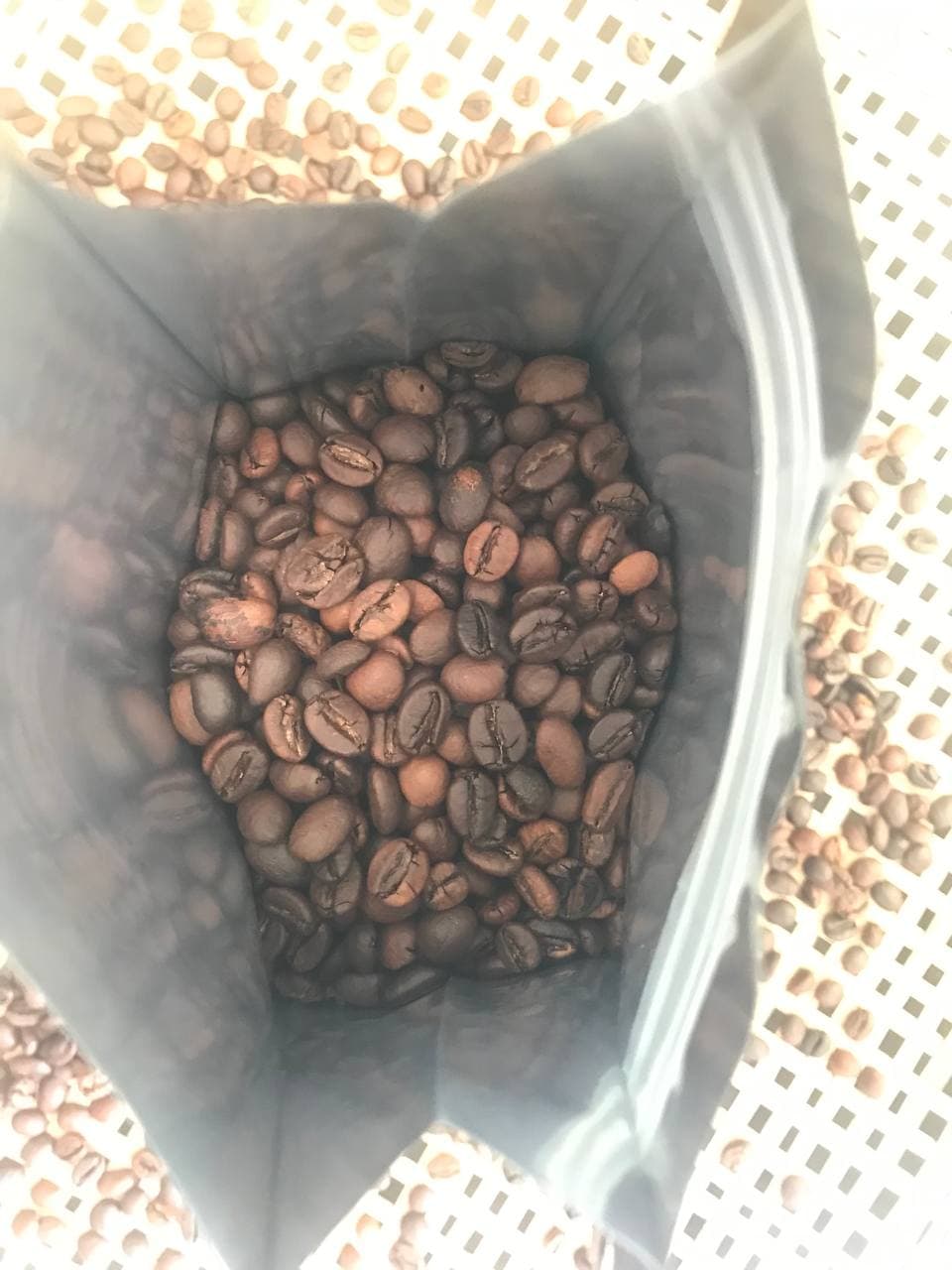
Với hạt nguyên, một phần cấu trúc bên trong vẫn được giữ lại nên diện tích tiếp xúc với môi trường thấp hơn so với khi đã xay. Điều đó không có nghĩa hạt nguyên miễn nhiễm với quá trình lão hóa; nó chỉ có nghĩa tốc độ và cơ chế tiếp xúc có thể khác.
Với cà phê xay, thời điểm xay trở nên đặc biệt quan trọng. Nếu xay quá sớm rồi để bột trong thời gian dài, sản phẩm có thêm thời gian tiếp xúc với oxygen và môi trường. Bao bì vì vậy cần hạn chế trao đổi khí và hơi ẩm, đồng thời cách mở và đóng lại cũng ảnh hưởng trực tiếp đến thời gian sản phẩm tiếp xúc với môi trường.
Nghiên cứu về thời hạn bảo quản cà phê rang xay cho thấy oxygen, hoạt độ nước và nhiệt độ đều có thể ảnh hưởng đến tốc độ suy giảm. Một nghiên cứu khác theo dõi các hợp chất trong khoảng không của cà phê rang xay cũng cho thấy có thể quan sát được sự thay đổi theo thời gian. Hai nhóm bằng chứng này cùng dẫn đến một cách tiếp cận thực tế: giảm thời gian bột tiếp xúc với môi trường, bảo vệ tốt sau khi xay và chỉ xay lượng cần dùng khi điều kiện sử dụng cho phép.
Do đó, sự khác biệt giữa hạt nguyên và bột không nằm ở việc một loại “tốt” còn loại kia “xấu”. Khác biệt nằm ở mức độ tiếp xúc với môi trường và cách kiểm soát thời gian từ lúc xay đến lúc sử dụng. Hiểu đúng điều này sẽ giúp chọn cách bảo quản phù hợp thay vì áp dụng một quy tắc giống nhau cho cả hai trạng thái.
Tài liệu tham khảo
- Cardelli, C.; Labuza, T. P. — Application of Weibull Hazard Analysis to the Determination of the Shelf Life of Roasted and Ground Coffee — LWT, 2001 — https://www.sciencedirect.com/science/article/pii/S0023643800907321
- Kallio, H. et al. — Headspace of roasted ground coffee as an indicator of storage time — Food Chemistry, 1990 — https://www.sciencedirect.com/science/article/pii/030881469090097N
How the contact surface changes after grinding
When a coffee bean is still whole, its interior is protected by the bean's own structure. Grinding it into grounds creates an enormous amount of new surface that's now in direct contact with air. The smaller the particle size, the greater the total surface area for the same weight of coffee.
That change isn't just a matter of geometry. Aroma compounds and many other volatile components that used to sit inside the bean's structure now have far more contact with the surrounding environment. So the same amount of coffee, in whole-bean form versus ground form, doesn't carry the same level of sensitivity during storage.
This is the underlying reason why “recently roasted” alone doesn't fully describe freshness. A product roasted recently but ground and left exposed to the environment for a while can change faster than a product of the same roast age that's still kept whole.
How oxygen and moisture affect ground coffee
Oxygen and moisture are two key factors in storing ground coffee. As surface area increases, exchange between the product and the environment becomes easier whenever the packaging doesn't provide an adequate protective layer.
A study by Cardelli and Labuza on the shelf life of ground roasted coffee examined the effects of oxygen, water activity, and temperature. Under their study conditions, increasing the partial pressure of oxygen sharply increased the rate of decline; water activity and temperature also affected how fast changes occurred. The specific figures from that study shouldn't be turned into a universal rule for every product, but they clearly demonstrate a principle: storage conditions can change how fast ground coffee loses quality.
It's important not to treat oxygen and moisture as two completely separate factors. They both play into the product's overall state during storage. So good packaging should be looked at as a protective system, rather than judged on a single isolated property.
How aroma is lost
Roasted coffee contains a range of volatile compounds that create its characteristic aroma. Once ground, some of these compounds can escape more easily because of the increased surface area. At the same time, chemical reactions during storage can shift the composition of that aroma system.
Research on the headspace above ground roasted coffee has shown that the composition of volatile compounds changes over storage time. Certain compound ratios in the headspace can even be used to track how long a product has been stored. Other sensory studies have also documented changes in the aroma characteristics of ground coffee over time.
This helps explain a familiar phenomenon: coffee can still smell like something when the bag is opened, but that smell no longer matches the original. Losing quality doesn't necessarily mean the product has “spoiled” right away. It can start with a drop in aroma intensity, a shift in the balance between aromatic compounds, and the gradual appearance of stale-coffee characteristics.
So assessing freshness should look at smell, storage conditions, and storage duration together — not just the roast date.
Where whole beans and grounds need different storage approaches
With whole beans, part of the internal structure stays intact, so the contact area with the environment is smaller than after grinding. That doesn't mean whole beans are immune to aging — it just means the speed and mechanism of exposure can be different.
With ground coffee, the timing of grinding becomes especially important. If it's ground too early and left sitting for a long time, the product gets extra exposure to oxygen and the environment. Packaging, then, needs to limit gas and moisture exchange, and how the package is opened and resealed directly affects how long the product is exposed to the environment.
Research on ground-coffee shelf life shows that oxygen, water activity, and temperature can all affect the rate of decline. Another study tracking compounds in the headspace of ground roasted coffee also found observable changes over time. Together, these two bodies of evidence point to a practical approach: reduce how long grounds are exposed to the environment, protect them well right after grinding, and only grind the amount needed when conditions allow.
So the difference between whole beans and grounds isn't a matter of one being “good” and the other “bad.” It comes down to the level of environmental exposure and how well the time between grinding and use is controlled. Understanding this properly helps in choosing the right storage approach, instead of applying the same rule to both forms.
References
- Cardelli, C.; Labuza, T. P. — Application of Weibull Hazard Analysis to the Determination of the Shelf Life of Roasted and Ground Coffee — LWT, 2001 — https://www.sciencedirect.com/science/article/pii/S0023643800907321
- Kallio, H. et al. — Headspace of roasted ground coffee as an indicator of storage time — Food Chemistry, 1990 — https://www.sciencedirect.com/science/article/pii/030881469090097N