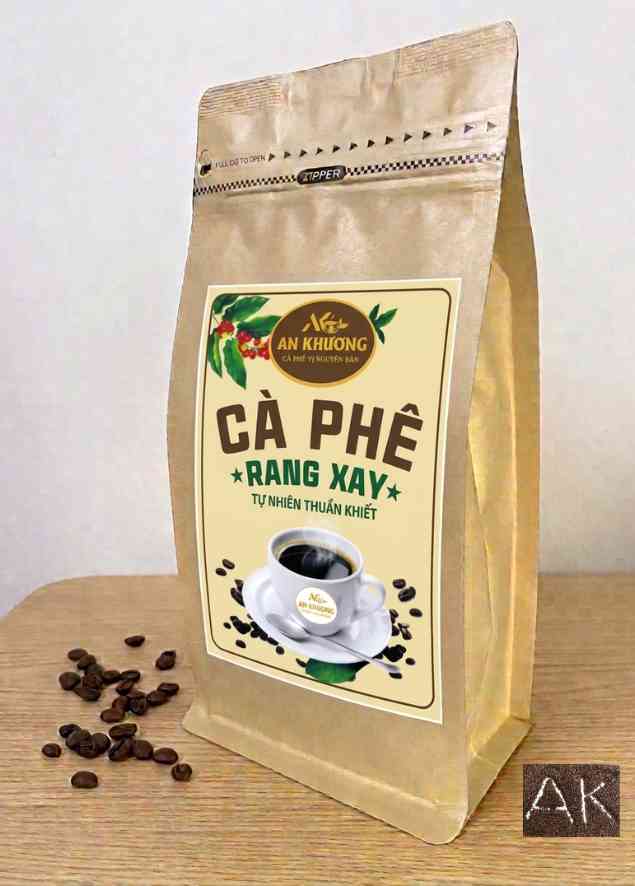
Oxy trong bao bì đến từ đâu
Khi một gói cà phê được đóng kín, bên trong vẫn có thể tồn tại một lượng oxy. Nguồn đầu tiên là không khí có sẵn trong khoảng không của bao tại thời điểm đóng gói. Sau đó, oxy có thể tiếp tục đi vào qua vật liệu hoặc qua những điểm không kín trong hệ thống bao bì.
Với cà phê rang xay, lượng oxy ban đầu và tốc độ oxy đi vào sau đó đều có ý nghĩa. Nghiên cứu về bao bì cà phê nạp khí trơ cho thấy nồng độ oxy còn lại trong khoảng không giảm theo thời gian do các phản ứng oxy hóa tiêu thụ oxy, đồng thời chất lượng cảm quan thay đổi.
Điều này cho thấy “đã đóng kín” không đồng nghĩa với “không còn oxy”. Một gói được đóng kín bằng vật liệu hàng rào tốt và một gói có vật liệu truyền oxy cao có thể có lịch sử bảo quản rất khác nhau.
Kiểm soát oxy vì vậy phải bắt đầu từ lúc tạo môi trường bên trong bao và tiếp tục trong suốt thời gian lưu trữ.
Giảm oxy ban đầu bằng cách nào
Một cách phổ biến là giảm lượng không khí trong bao trước khi đóng kín, chẳng hạn bằng hút chân không hoặc thay thế không khí bằng một khí phù hợp. Hai phương pháp này không hoàn toàn giống nhau nhưng cùng hướng tới việc giảm lượng oxy ban đầu tiếp xúc với sản phẩm.
Nghiên cứu về cà phê nạp khí nitơ cho thấy những mẫu được nạp khí trơ có lượng oxy dư thấp hơn và trong điều kiện thử nghiệm cụ thể cho thời gian duy trì chất lượng dài hơn mẫu không nạp khí.
Tuy nhiên, lượng oxy ban đầu chỉ là một phần của bài toán. Nếu vật liệu bao bì cho oxy đi qua nhanh, lượng oxy bên trong vẫn có thể tăng theo thời gian. Nếu đường hàn có lỗi, hiệu quả kiểm soát cũng giảm.
Do đó, công nghệ giảm oxy và vật liệu hàng rào phải được thiết kế cùng nhau. Một phương pháp xử lý ban đầu tốt không thể bù vô hạn cho một bao bì có khả năng bảo vệ kém.
Bao bì phải hạn chế oxy đi vào trong suốt thời gian bảo quản
Khả năng truyền oxy của vật liệu thường được mô tả bằng tốc độ truyền oxy. Chỉ số này giúp so sánh khả năng cản oxy của các cấu trúc trong những điều kiện thử nghiệm xác định.
Nhưng thông số của một lớp màng không phải là toàn bộ câu chuyện. Bao bì thực tế có thể gồm nhiều lớp, đường hàn, van và các vị trí ghép nối. Điều kiện nhiệt độ và độ ẩm cũng có thể ảnh hưởng đến khả năng truyền khí của vật liệu.
Nghiên cứu về bao bì cà phê dạng viên cho thấy các nhà nghiên cứu có thể theo dõi oxy trong khoảng không, độ ẩm, quá trình oxy hóa lipid và các hợp chất dễ bay hơi đồng thời trong thời gian dài. Cách tiếp cận này phản ánh đúng bản chất của vấn đề: oxy chỉ là một phần trong hệ thống bảo quản.
Với sản xuất thực tế, cần đánh giá bao bì hoàn chỉnh thay vì chỉ chọn vật liệu dựa trên một con số riêng lẻ.
Kiểm soát oxy phải gắn với thời hạn bảo quản
Không có một mức oxy dư duy nhất có thể nói là phù hợp cho mọi loại cà phê. Mức phù hợp phụ thuộc vào dạng sản phẩm, mức rang, cấu trúc bao bì, thời gian bảo quản và điều kiện phân phối.
Nghiên cứu năm 2003 về cà phê rang xay trong bao bì nạp nitơ cho thấy trong điều kiện thử nghiệm 25°C và độ ẩm tương đối 65%, mẫu nạp nitơ với khoảng 2–3% oxy dư trong khoảng không đạt thời gian bảo quản ít nhất sáu tháng, trong khi hệ thống không nạp nitơ được báo cáo khoảng ba tháng. Đây là kết quả của một thiết kế thử nghiệm cụ thể, không phải thời hạn chung cho mọi cà phê.
Điều quan trọng từ nghiên cứu này là cách kiểm soát oxy có thể làm thay đổi lịch sử bảo quản, nhưng hiệu quả luôn phụ thuộc vào toàn bộ hệ thống.
Muốn công bố một thời hạn bảo quản đáng tin, cơ sở nên đánh giá chính sản phẩm trong chính bao bì và điều kiện mà sản phẩm sẽ trải qua.
Tài liệu tham khảo
- Alves et al. (2003), Roasted and ground coffee in nitrogen gas flushing packages — https://www.scielo.br/j/cta/a/CTZcCZjzvNfSLxFYSxWx84n/
- Shelf life prediction of oxygen-sensitive products: The influence of moisture on prediction accuracy for freeze-dried coffee (2019) — https://onlinelibrary.wiley.com/doi/full/10.1002/pts.2444
- A Recyclable Polypropylene Multilayer Film Maintaining the Quality and the Aroma of Coffee Pods during Their Shelf Life (2024) — https://www.mdpi.com/1420-3049/29/13/3006
Where does the oxygen in packaging come from
When a bag of coffee is sealed, a certain amount of oxygen can still remain inside. The first source is the air already present in the headspace at the moment of packing. After that, oxygen can continue entering through the material or through points in the packaging system that aren't fully sealed.
For ground roasted coffee, both the initial oxygen level and the rate of later oxygen ingress matter. Research on nitrogen-flushed coffee packaging shows residual oxygen in the headspace decreases over time as oxidation reactions consume it, while sensory quality changes accordingly.
This shows “sealed” doesn't mean “no oxygen left.” A bag sealed with a good barrier material and one with a high-oxygen-transmission material can have very different storage histories.
Controlling oxygen, then, has to start at the moment the internal environment is created and continue throughout the storage period.
How is the initial oxygen level reduced
A common method is reducing the amount of air in the bag before sealing, such as through vacuuming or replacing the air with a suitable gas. These two methods aren't identical, but both aim to reduce the initial oxygen level the product is exposed to.
Research on nitrogen-flushed coffee shows samples flushed with inert gas had lower residual oxygen and, under the specific test conditions, maintained quality longer than samples without gas flushing.
However, initial oxygen level is only part of the equation. If the packaging material has a high oxygen transmission rate, oxygen inside can still increase over time. If the seal is faulty, control effectiveness drops too.
So oxygen-reduction technology and barrier material need to be designed together. A good initial treatment can't indefinitely compensate for packaging with poor protective ability.
Packaging needs to limit oxygen ingress throughout storage
A material's oxygen transmission ability is usually described by its oxygen transmission rate. That figure helps compare the oxygen barrier of different structures under defined test conditions.
But a single film's specification isn't the whole story. Real packaging can consist of multiple layers, a seal, a valve, and connection points. Temperature and humidity conditions can also affect a material's actual gas transmission.
Research on coffee-pod packaging shows researchers can track headspace oxygen, moisture, lipid oxidation, and volatile compounds simultaneously over an extended period. That approach reflects the real nature of the problem: oxygen is only part of the storage system.
For actual production, the complete packaging needs to be assessed — not just a material chosen based on one isolated number.
Oxygen control needs to be tied to shelf life
There's no single residual-oxygen level that's right for every type of coffee. The right level depends on product form, roast level, packaging structure, storage duration, and distribution conditions.
A 2003 study on ground roasted coffee in nitrogen-flushed packaging found that under test conditions of 25°C and 65% relative humidity, nitrogen-flushed samples with roughly 2–3% residual headspace oxygen reached a shelf life of at least six months, while the non-flushed system was reported at around three months. This result belongs to one specific test design — not a universal shelf life for all coffee.
The key takeaway from that study is that how oxygen is controlled can change a product's storage history, but effectiveness always depends on the whole system.
To make a credible shelf-life claim, a facility should test the actual product within its actual packaging and the conditions it will actually experience.
References
- Alves et al. (2003), Roasted and ground coffee in nitrogen gas flushing packages — https://www.scielo.br/j/cta/a/CTZcCZjzvNfSLxFYSxWx84n/
- Shelf life prediction of oxygen-sensitive products: The influence of moisture on prediction accuracy for freeze-dried coffee (2019) — https://onlinelibrary.wiley.com/doi/full/10.1002/pts.2444
- A Recyclable Polypropylene Multilayer Film Maintaining the Quality and the Aroma of Coffee Pods during Their Shelf Life (2024) — https://www.mdpi.com/1420-3049/29/13/3006