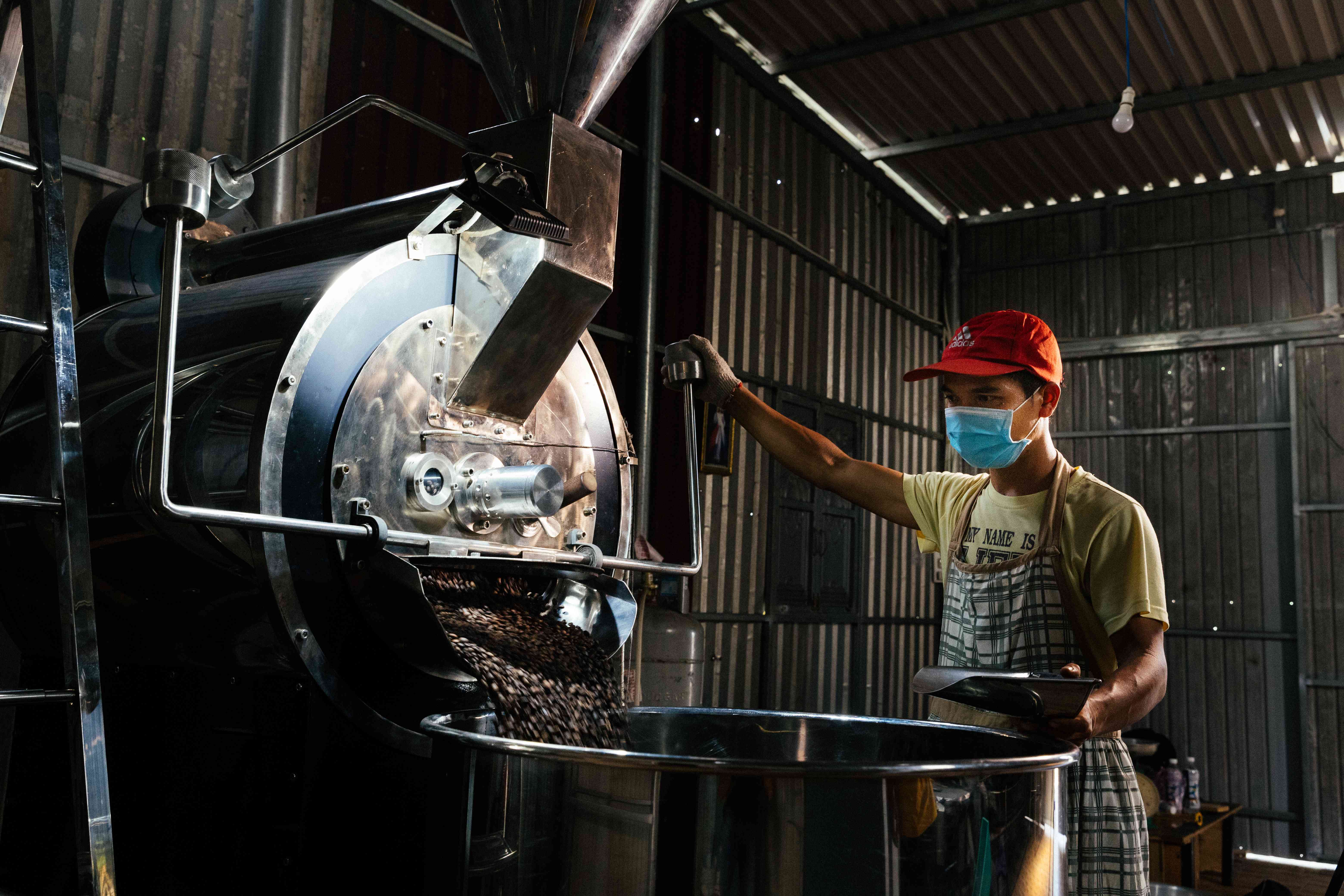
Khu vực tiếp nhận và nguyên liệu trước khi vào sản xuất
Điểm kiểm soát đầu tiên không nằm ở máy rang mà ở nơi nguyên liệu được tiếp nhận. Hạt xanh có thể mang theo bụi, tạp chất hoặc vật liệu lẫn từ quá trình thu hoạch, vận chuyển và đóng bao. Nếu khu vực nhận hàng không được tách và quản lý hợp lý, những vật liệu này có thể đi sâu hơn vào xưởng.
FAO nhấn mạnh nguy cơ tái nhiễm khi cà phê đã được làm sạch tiếp xúc trở lại với bụi, vỏ hoặc bao bì bẩn. Vì vậy, vệ sinh ở điểm này còn là cách phân khu, luồng di chuyển và cách đặt nguyên liệu.
Khu vực rang, làm nguội và nơi tích tụ tồn dư
Máy rang tạo ra bụi, vỏ lụa và các sản phẩm phụ của quá trình rang. Tùy thiết kế thiết bị, những vật liệu này có thể tích tụ ở đường dẫn, khu vực thu gom hoặc vị trí khó tiếp cận.
FDA xem thiết kế, bảo trì và vệ sinh thiết bị là một phần của điều kiện sản xuất phù hợp. Với xưởng rang, điều quan trọng là xác định những vị trí có khả năng giữ tồn dư và xây dựng lịch kiểm tra phù hợp với mức sử dụng.
Khu vực làm nguội cũng cần chú ý vì đây là lúc hạt đã rang tiếp xúc với môi trường trước bước tiếp theo.
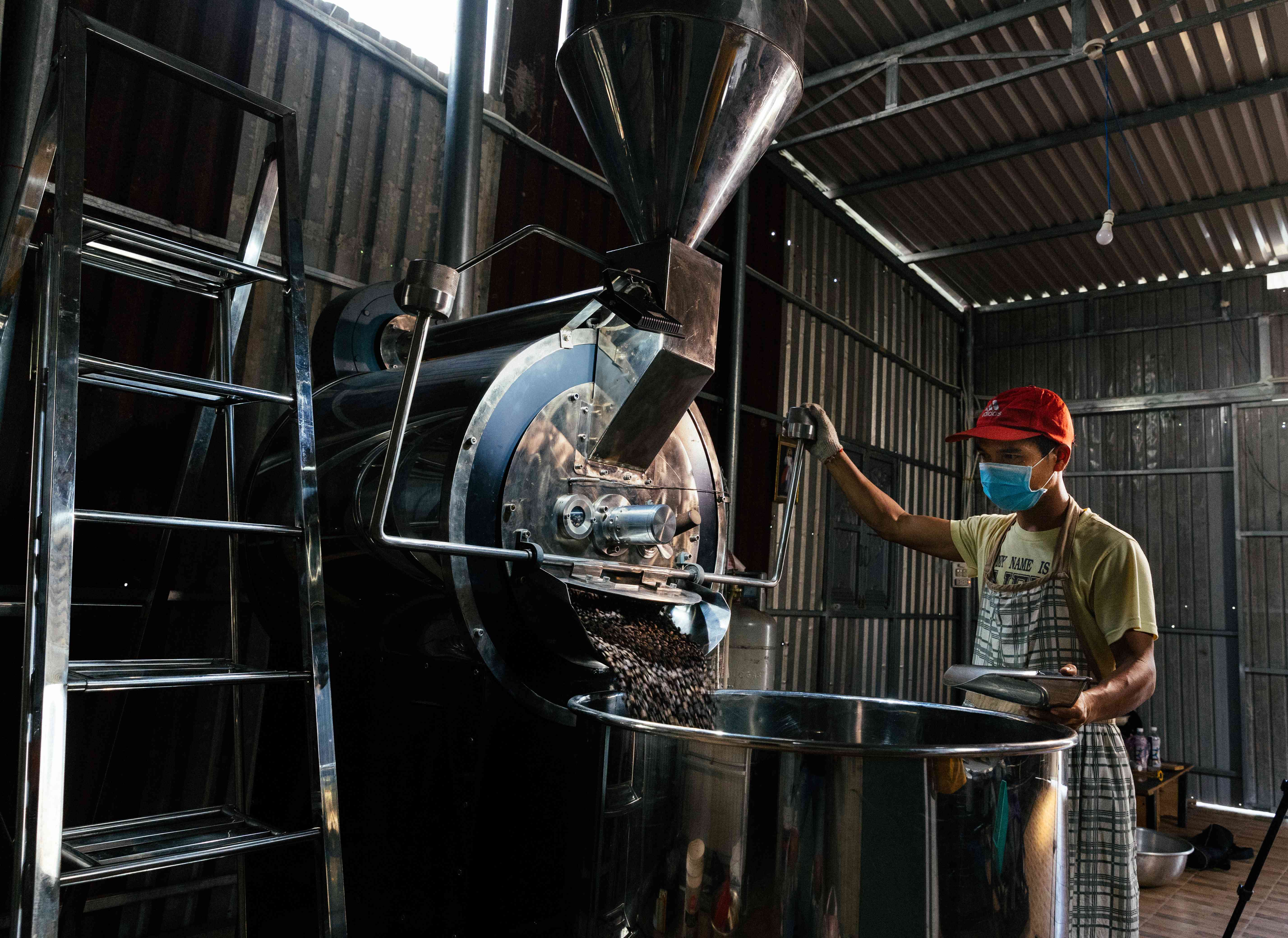
Máy xay và bề mặt tiếp xúc trực tiếp với thành phẩm
Máy xay là điểm kiểm soát khác vì cà phê sau rang đi qua thiết bị này ở trạng thái đã hoàn thiện. Bụi mịn và dầu cà phê có thể bám ở các vị trí khác nhau; nếu tồn dư tích tụ lâu ngày, việc làm sạch không còn đơn giản như lau một bề mặt phẳng.
Không phải cứ thấy dầu là kết luận máy không sạch, bởi hạt rang tự nhiên có lipid. Vấn đề là lượng tồn dư, tuổi của tồn dư, vị trí tích tụ và khả năng ảnh hưởng đến sản phẩm tiếp theo.
Lịch vệ sinh nên dựa trên lượng sản phẩm, mức tích tụ thực tế và hướng dẫn của nhà sản xuất thiết bị.
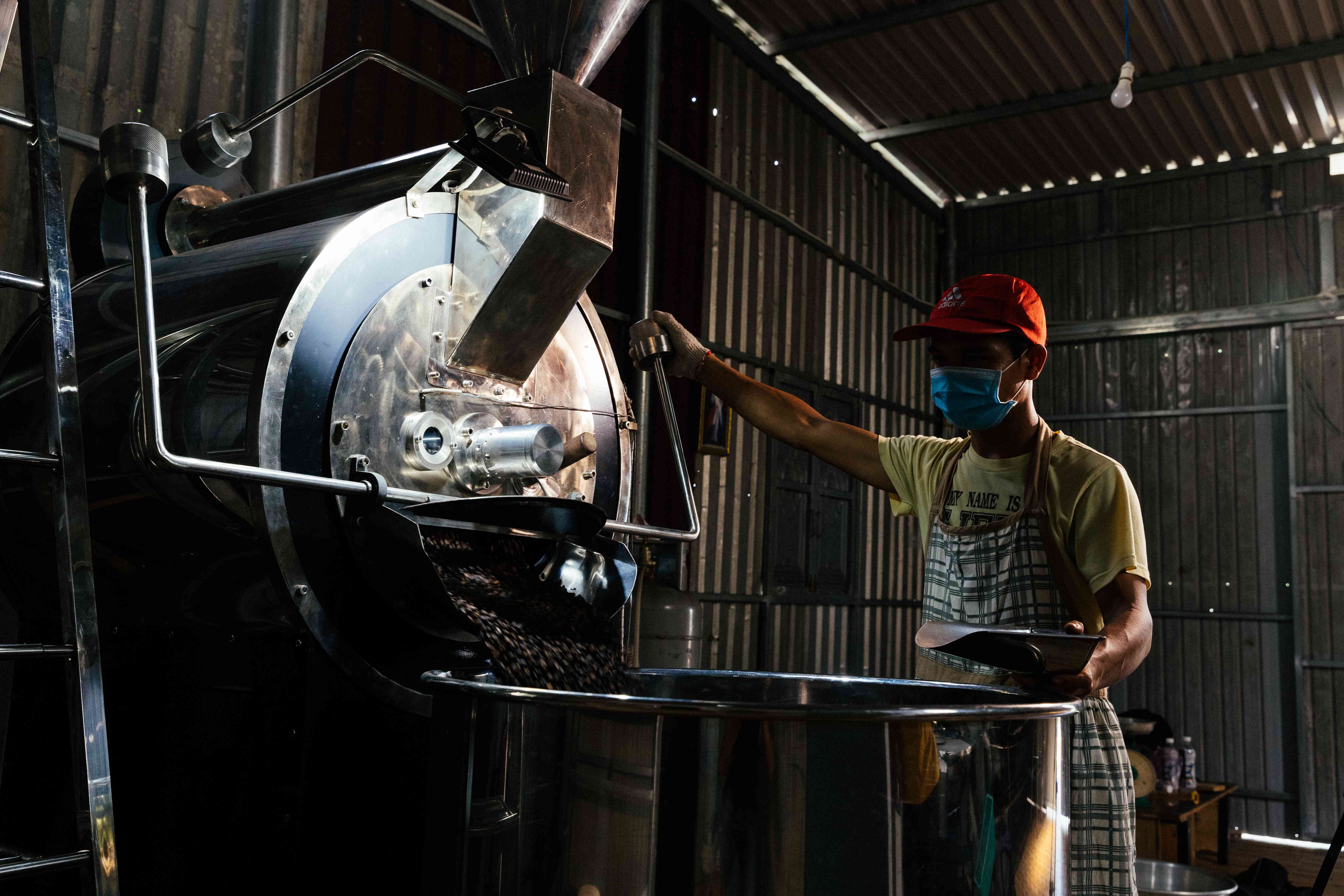
Dụng cụ vệ sinh, hóa chất và hồ sơ
Một xưởng có thể làm sạch thiết bị nhưng vẫn tạo rủi ro nếu dùng sai dụng cụ hoặc để hóa chất ở vị trí không phù hợp. FDA đưa kiểm soát hóa chất, vệ sinh, đào tạo và ghi chép vào các chương trình nền của hệ thống kiểm soát.
Dụng cụ vệ sinh nên được phân biệt theo mục đích và khu vực. Hóa chất phải được nhận diện rõ và tách khỏi nguyên liệu, bao bì và thành phẩm. Việc vệ sinh cũng cần để lại dấu vết đủ để biết đã làm gì, khi nào và ai thực hiện.
Nhìn toàn bộ xưởng theo các điểm tiếp xúc và đường đi của sản phẩm hữu ích hơn việc chỉ lập một danh sách những nơi cần lau.
Tài liệu tham khảo
- FDA — Current Good Manufacturing Practices for Food and Dietary Supplements
- FDA — HACCP Principles & Application Guidelines
- FAO — Global Perspectives in Coffee Quality Improvement
The receiving area and raw material before production
The first control point isn't the roaster — it's where raw material is received. Green beans can carry dust, foreign matter, or leftover material from harvest, transport, and bagging. If the receiving area isn't separated and properly managed, that material can travel deeper into the facility.
The FAO stresses the risk of re-contamination when already-cleaned coffee comes back into contact with dust, husk, or dirty packaging. So hygiene at this point is also about zoning, movement flow, and how raw material is placed.
The roasting area, cooling, and spots where residue accumulates
A roaster generates dust, silverskin, and other roasting by-products. Depending on the equipment's design, this material can build up in ducts, collection areas, or hard-to-reach spots.
The FDA treats equipment design, maintenance, and hygiene as part of suitable production conditions. For a roasting facility, what matters is identifying spots capable of holding residue and building an inspection schedule suited to actual usage.
The cooling area also deserves attention, since that's when the roasted beans meet the environment before the next step.
The grinder and surfaces in direct contact with the finished product
The grinder is another control point, since roasted coffee passes through this equipment in its near-finished state. Fine dust and coffee oil can cling to various spots; once residue builds up over time, cleaning stops being as simple as wiping a flat surface.
Seeing oil doesn't automatically mean the machine is dirty, since roasted beans naturally contain lipids. What matters is the amount of residue, its age, where it accumulates, and its potential to affect the next batch.
A cleaning schedule should be based on product volume, actual buildup levels, and the equipment manufacturer's guidance.
Cleaning tools, chemicals, and records
A facility might clean its equipment properly but still create risk if it uses the wrong tools or stores chemicals in an unsuitable spot. The FDA places chemical control, hygiene, training, and record-keeping among the foundational programs of a control system.
Cleaning tools should be distinguished by purpose and area. Chemicals need to be clearly identified and kept separate from raw material, packaging, and finished product. Cleaning also needs to leave enough of a trace to know what was done, when, and by whom.
Looking at the entire facility through its contact points and product flow is far more useful than just drawing up a list of surfaces to wipe.
References
- FDA — Current Good Manufacturing Practices for Food and Dietary Supplements
- FDA — HACCP Principles & Application Guidelines
- FAO — Global Perspectives in Coffee Quality Improvement