
Một dòng cà phê có cả hạt nguyên và cà phê xay nghe có vẻ là cách phục vụ đầy đủ mọi đối tượng. Nhưng hai phiên bản chỉ thực sự có ý nghĩa khi chúng giải quyết hai nhu cầu khác nhau. Hạt nguyên trao cho người dùng quyền quyết định thời điểm và cỡ xay; cà phê xay sẵn trao đổi một phần quyền kiểm soát ấy để lấy sự tiện lợi. Quyết định mở hai phiên bản vì thế nên dựa trên hành vi sử dụng, không phải trên suy nghĩ rằng sản phẩm nào cũng phải có đủ mọi dạng.
Hai phiên bản giải quyết hai bài toán khác nhau
Hạt nguyên phù hợp với người có khả năng xay tại chỗ và muốn điều chỉnh cỡ xay theo phương pháp pha. Cà phê xay sẵn phù hợp với người ưu tiên thao tác nhanh, không có máy xay hoặc muốn giảm số bước chuẩn bị.
Sự khác biệt này bắt nguồn từ chính quá trình nghiền. Khi hạt được nghiền, diện tích bề mặt tăng mạnh. Các chất khí và hợp chất dễ bay hơi liên quan đến hương có điều kiện tiếp xúc với môi trường nhiều hơn. Vì vậy, thời điểm xay có liên hệ với khả năng duy trì độ tươi của cà phê, dù tốc độ biến đổi thực tế còn phụ thuộc vào bao bì, môi trường và cách bảo quản.
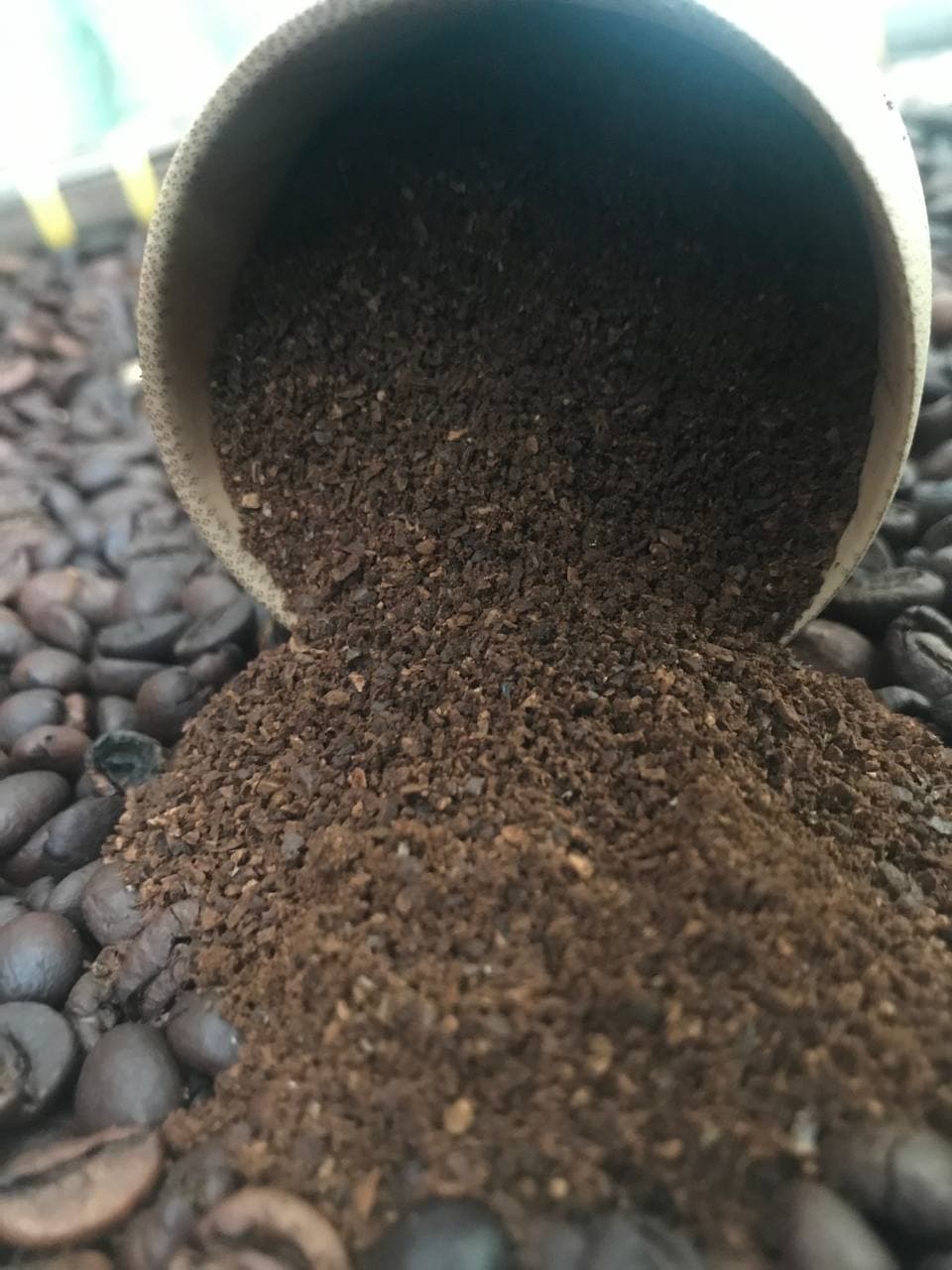
Độ tươi sau nghiền có ý nghĩa nhưng không nên biến thành khẩu hiệu
Tài liệu ngành cà phê thường nhấn mạnh rằng cà phê mới rang tiếp tục giải phóng khí sau rang và quá trình này thay đổi theo thời gian. Sau khi xay, diện tích tiếp xúc tăng lên khiến tốc độ biến đổi nhanh hơn so với hạt nguyên. Tuy nhiên, không nên biến thông tin đó thành một mốc thời gian tuyệt đối áp dụng cho mọi sản phẩm.
Nghiên cứu về bảo quản cà phê sau mở cho thấy cách đóng lại và môi trường bảo quản có ảnh hưởng đến độ ổn định. Vì vậy, khi so sánh hạt với xay sẵn, câu hỏi đúng không phải “loại nào luôn tươi hơn”, mà là “người dùng có thể kiểm soát thời điểm xay và bảo quản sau mở đến mức nào”.
Ai thực sự hưởng lợi từ phiên bản hạt?
Người có máy xay và thường thay đổi cách pha là nhóm hưởng lợi rõ nhất. Cỡ xay có thể được điều chỉnh theo dụng cụ, lượng cà phê và mục tiêu trích ly. Một người pha phin vào buổi sáng có thể chọn một vùng xay khác với người dùng máy pha áp lực.
Hạt nguyên cũng phù hợp với người mua lượng vừa đủ và có thói quen sử dụng đều. Tuy nhiên, nếu người dùng không có thiết bị xay hoặc không muốn thêm một bước chuẩn bị, lợi ích kiểm soát có thể không bù được sự bất tiện. Một phiên bản tốt trên lý thuyết nhưng không được sử dụng đúng cách không tạo ra trải nghiệm tốt hơn.
Ai hưởng lợi từ phiên bản xay?
Cà phê xay sẵn có giá trị rất rõ ở tính tiện dụng. Người mua có thể mở bao, định lượng và pha mà không cần đầu tư máy xay. Với gia đình hoặc người dùng muốn thao tác ổn định, đây có thể là lựa chọn hợp lý.
Điểm cần kiểm soát là cỡ xay phải phù hợp với phương pháp pha dự kiến. Một sản phẩm xay sẵn không thể phục vụ tốt mọi dụng cụ nếu kích thước hạt quá lệch nhau. Vì vậy, thông tin về cách pha phù hợp và quy cách bảo quản có giá trị hơn việc chỉ ghi “xay sẵn”.
Khi nào không nên mở cả hai phiên bản?
Không phải dòng sản phẩm nào cũng cần hai dạng. Nếu nhóm khách hàng chủ yếu không có máy xay, phiên bản hạt có thể khó tạo ra giá trị đủ lớn. Ngược lại, nếu nhóm khách hàng cần thay đổi cỡ xay thường xuyên và đã có thiết bị, chỉ có xay sẵn có thể hạn chế trải nghiệm.
Doanh nghiệp cũng cần tính đến vận hành: thêm phiên bản nghĩa là thêm tồn kho, bao bì, quản lý quy cách và kiểm soát chất lượng. Hai phiên bản nên được mở khi chúng tạo ra sự khác biệt có ý nghĩa trong nhu cầu người dùng. Nếu cả hai phục vụ gần như cùng một nhóm với cùng một cách sử dụng, việc mở rộng danh mục chỉ làm lựa chọn phức tạp hơn.
Vì vậy, quyết định hợp lý là bắt đầu từ nhóm người dùng, phương pháp pha, thiết bị và tần suất sử dụng; sau đó mới quyết định hạt nguyên, xay sẵn hoặc cả hai.
Một điểm thường bị bỏ qua là cỡ xay không chỉ ảnh hưởng đến độ tiện lợi mà còn ảnh hưởng đến khả năng điều chỉnh khi cách pha thay đổi. Người dùng có thể chuyển từ phin sang một phương pháp lọc khác và cần một cỡ xay khác. Với hạt nguyên, thay đổi này nằm trong khả năng của người dùng nếu máy xay đáp ứng được. Với xay sẵn, người dùng bị giới hạn bởi cỡ xay đã được quyết định trước.
Ở góc độ phát triển sản phẩm, hai phiên bản cũng nên được mô tả như hai cách sử dụng chứ không phải hai mức chất lượng. Nếu người mua hiểu hạt nguyên là “cao cấp” còn xay sẵn là “thấp hơn”, họ dễ đưa ra quyết định sai. Giá trị của mỗi dạng nằm ở mức độ phù hợp với người sử dụng.
Nếu mở cả hai dạng, thông tin trên trang sản phẩm cũng cần giúp người mua nhận ra khác biệt sử dụng ngay từ đầu.
Tài liệu tham khảo
- Hiệp hội Cà phê Đặc sản, “Giải mã cà phê: cà phê mới rang là gì?”, tài liệu ngành về khí sau rang và độ tươi.
- “Ảnh hưởng của các phương pháp bảo quản cà phê khác nhau sau khi mở”, Bao bì thực phẩm và thời hạn sử dụng, 2022, 33, 100893. DOI 10.1016/j.fpsl.2022.100893.
- Cotter và Hopfer (2018), “Ảnh hưởng của điều kiện bảo quản đến hương cà phê hạt”, Đồ uống, 4(3), 68. DOI 10.3390/beverages4030068.
- Córdoba và cộng sự (2020), “Trích ly cà phê: tổng quan về các thông số và ảnh hưởng đến đặc tính hóa lý và hương vị của cà phê pha”, Xu hướng trong khoa học thực phẩm và công nghệ, 96, 45–60. DOI 10.1016/j.tifs.2019.12.004.
A coffee line with both whole bean and ground versions sounds like a way to fully serve every kind of buyer. But the two versions only truly make sense when they solve two different needs. Whole beans hand the user the decision of grind timing and grind size; pre-ground coffee trades away part of that control for convenience. The decision to launch both versions should therefore be based on usage behavior, not on the assumption that every product must come in every form.
The two versions solve two different problems
Whole beans suit people who can grind on-site and want to adjust grind size to match their brewing method. Pre-ground coffee suits people who prioritize speed, don't have a grinder, or want to reduce the number of preparation steps.
This difference stems directly from the grinding process itself. Once ground, surface area increases sharply. Gases and volatile aroma-related compounds have more opportunity to contact the environment. So grind timing relates to the ability to maintain coffee's freshness, though the actual rate of change still depends on packaging, environment, and storage.
Post-grind freshness matters but shouldn't become a slogan
Coffee-industry documentation often emphasizes that freshly roasted coffee keeps releasing gas after roasting, and this process changes over time. After grinding, increased contact area speeds up the rate of change compared with whole beans. However, this information shouldn't be turned into an absolute timeframe applied to every product.
Research on coffee storage after opening shows that resealing method and storage environment affect stability. So when comparing beans to pre-ground, the right question isn't "which is always fresher," but "to what extent can the user control grind timing and post-opening storage."
Who actually benefits from the whole-bean version?
People with a grinder who frequently change brewing methods are the clearest group of beneficiaries. Grind size can be adjusted to match the equipment, amount of coffee, and extraction goal. Someone brewing phin in the morning may choose a different grind range than someone using a pressure-based machine.
Whole beans also suit people who buy a reasonable amount and use it consistently. However, if a user doesn't have grinding equipment or doesn't want an extra preparation step, the control benefit may not offset the inconvenience. A version that's good in theory but not used properly doesn't create a better experience.
Who benefits from the pre-ground version?
Pre-ground coffee has a clear value in convenience. Buyers can open the bag, measure, and brew without investing in a grinder. For families or users who want stable operations, this can be a sensible choice.
The point to control is that the grind size must suit the intended brewing method. A pre-ground product can't serve every device well if particle size is too far off. So information about the suitable brewing method and package storage is more valuable than simply labeling it "pre-ground."
When should you not launch both versions?
Not every product line needs both forms. If the target customer group mostly doesn't have a grinder, a whole-bean version may struggle to create enough value. Conversely, if the customer group needs to change grind size often and already has equipment, offering only pre-ground can limit the experience.
A business also needs to account for operations: adding a version means more inventory, packaging, package-size management, and quality control. Two versions should be launched when they create a meaningful difference for user needs. If both serve nearly the same group in nearly the same way, expanding the lineup just makes choosing more complicated.
So the sensible decision is to start from the user group, brewing method, equipment, and usage frequency; only then decide on whole bean, pre-ground, or both.
A point often overlooked is that grind size doesn't just affect convenience — it also affects the ability to adjust when brewing method changes. A user might switch from phin to a different filter method and need a different grind size. With whole beans, this change is within the user's ability if the grinder can handle it. With pre-ground coffee, the user is limited by the grind size already decided in advance.
From a product-development perspective, the two versions should also be described as two ways of using the product, not two quality tiers. If buyers understand whole bean as "premium" and pre-ground as "lower," they can easily make the wrong decision. The value of each form lies in how well it suits the user.
If both forms are launched, information on the product page also needs to help buyers recognize the usage difference right from the start.
References
- Specialty Coffee Association, "Decoding Coffee: What Is Freshly Roasted Coffee?", industry documentation on post-roast gas and freshness.
- Effects of different coffee storage methods on coffee freshness after opening of packages. Food Packaging and Shelf Life, 2022, 33, 100893. https://doi.org/10.1016/j.fpsl.2022.100893
- Cotter, A. T. & Hopfer, H. (2018). Effect of storage conditions on the aroma of whole bean coffee. Beverages, 4(3), 68. https://doi.org/10.3390/beverages4030068
- Córdoba, N. et al. (2020). Coffee extraction: A review of parameters and their influence on the physicochemical characteristics and flavour of coffee brews. Trends in Food Science & Technology, 96, 45–60. https://doi.org/10.1016/j.tifs.2019.12.004