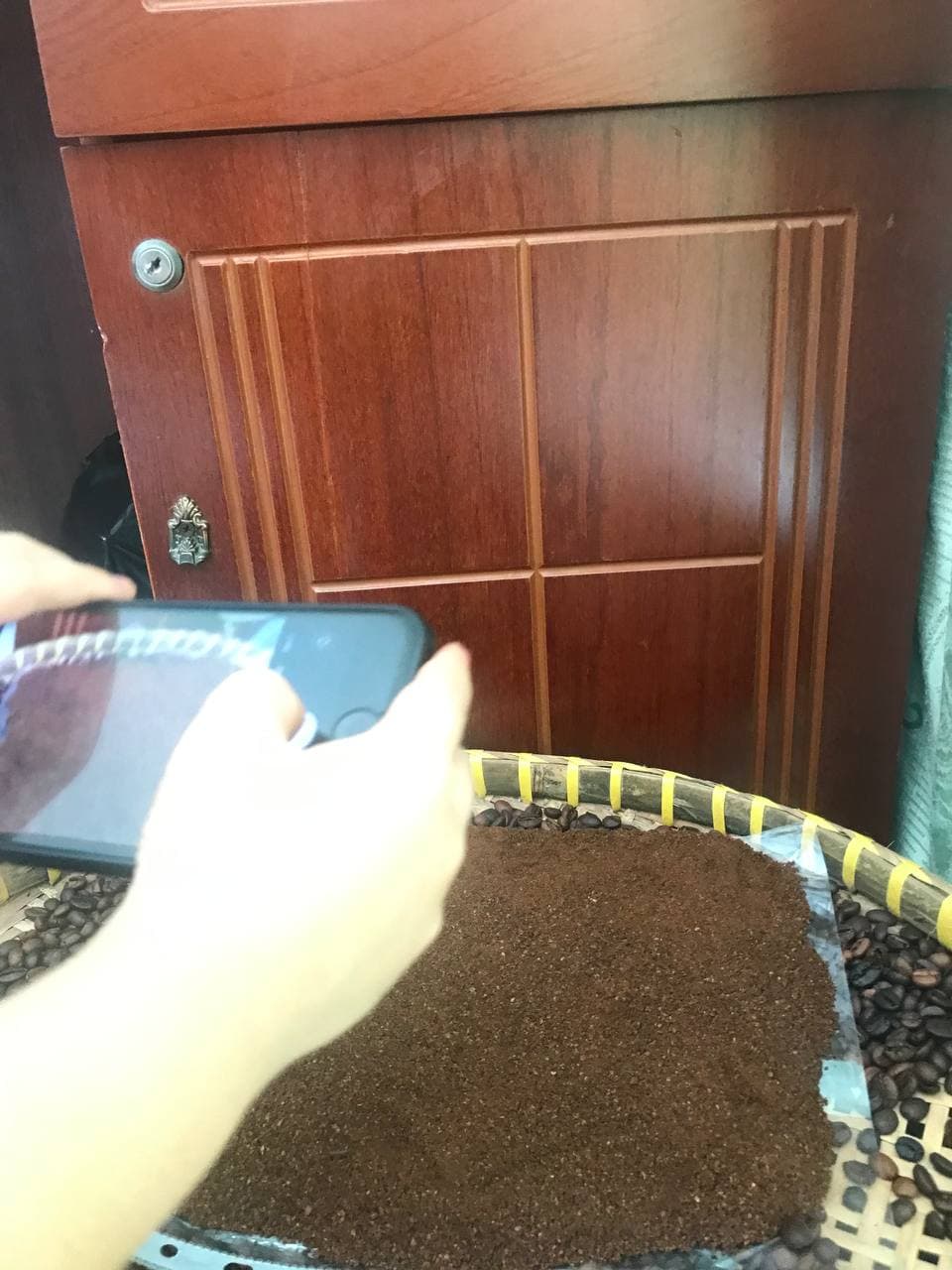
Trong sản xuất cà phê hòa tan, hương có thể bị mất ở nhiều điểm trước khi bột cuối cùng được đóng gói. Nếu chỉ phân tích bột cuối, không thể biết hợp chất đã mất ở công đoạn trích ly, cô đặc hay sấy. Khái niệm thu hồi hương vì vậy rộng hơn khả năng giữ hợp chất bay hơi của riêng công đoạn sấy: nó hỏi phần hợp chất hương ban đầu đã được giữ lại trong sản phẩm cuối với tỷ lệ nào và thất thoát ở đâu.
Hương có thể thất thoát ở nhiều dòng của dây chuyền
Ngay trong bước trích ly, không phải mọi hợp chất hương đi theo cùng một dòng. Một số chất dễ bay hơi có thể thoát khỏi pha nước, trong khi các chất ít bay hơi được giữ tốt hơn. Điều kiện nhiệt, áp suất và thời gian có thể thay đổi phân bố này. Nghiên cứu về trích ly áp suất tuần hoàn cho thấy phương án vận hành khác nhau không chỉ ảnh hưởng hiệu suất chất tan mà còn ảnh hưởng số lượng và khả năng giữ các chất bay hơi.
Cô đặc là điểm nhạy cảm vì nước được loại khỏi dịch và nhiệt truyền vào dòng có nồng độ chất rắn ngày càng cao. Khi nồng độ tăng, hệ số truyền khối và độ nhớt thay đổi. Nếu quá trình tạo ra hơi chứa hợp chất thơm, một phần hương có thể bị cuốn theo. Trong công nghiệp, việc thu hồi các phân đoạn hương từ dòng hơi có thể được xem như một chiến lược để đưa chúng trở lại sản phẩm, nhưng hiệu quả phụ thuộc vào thành phần và thiết kế thiết bị.
Recovery cần được xây dựng từ cân bằng vật chất và điểm lấy mẫu
Nếu chỉ nhìn vào bột cuối cùng, ta biết có mất hương nhưng khó biết mất ở đâu. Theo dõi từng dòng trung gian giúp biến bài toán cảm quan thành bài toán cân bằng vật chất có thể kiểm tra.
Để tính thu hồi, cần một cơ sở cân bằng vật chất. Có thể định lượng hợp chất mục tiêu trong nguyên liệu hoặc dịch chiết đầu, sau đó đo ở các dòng trung gian và sản phẩm. Không nhất thiết phải định lượng mọi hợp chất; một nhóm chỉ dấu có thể được chọn dựa trên ý nghĩa cảm quan và độ ổn định phân tích. Quan trọng là cùng một phương pháp và cơ sở tính được sử dụng ở các điểm lấy mẫu.
Một khó khăn là hàm lượng hợp chất mùi rất thấp và ma trận cà phê phức tạp. Sắc ký khí – khối phổ, sắc ký khí – đo mùi hoặc các kỹ thuật liên quan có thể được dùng để nhận diện và định lượng, nhưng cần kiểm soát thu hồi mẫu, chất chuẩn và độ lặp. Nếu không, sự khác biệt giữa hai công đoạn có thể chỉ phản ánh sai số phân tích.
Thu hồi hương cũng không đồng nghĩa với chất lượng cảm quan. Một sản phẩm có tổng lượng chất bay hơi cao vẫn có thể có hồ sơ mùi không cân bằng. Ngược lại, một số hợp chất bị giảm nhưng những chất có giá trị cảm quan cao được giữ tốt có thể tạo cảm nhận tốt hơn. Vì vậy, lựa chọn hợp chất mục tiêu nên dựa trên ngưỡng mùi và vai trò trong hồ sơ hương, không chỉ dựa trên nồng độ.
Thu hồi được nhiều chưa chắc tạo ra hồ sơ hương tốt
Dữ liệu dây chuyền nên được tổ chức theo dòng vật chất và dòng hương. Với mỗi điểm, ghi khối lượng dòng, chất rắn, nhiệt độ, áp suất và nồng độ các hợp chất chỉ dấu. Khi ghép các dữ liệu này, có thể xác định công đoạn nào gây mất mát lớn nhất và đánh giá tác động của thay đổi vận hành.
Thu hồi của hợp chất hương vì thế là một bài toán truy nguyên. Nó chuyển câu hỏi từ “bột cuối còn thơm không?” sang “hương đã đi đâu trong toàn bộ dây chuyền?”. Cách nhìn này hữu ích hơn cho cải tiến quy trình vì cho phép tìm đúng điểm cần can thiệp, đồng thời tránh nhầm hiệu ứng cô đặc với thu hồi hương thực sự.
Theo dõi mạng dòng để truy nguyên nguồn mất hương
Ở cấp độ công nghệ, có thể xem thu hồi hương như một mạng dòng. Hợp chất đi vào từ nguyên liệu, được giải phóng trong trích ly, phân bố giữa dịch và pha khí, sau đó tiếp tục đi qua cô đặc và sấy. Mỗi công đoạn tạo ra một hệ số thu hồi riêng. Tích các hệ số này cho thấy vì sao một tổn thất nhỏ lặp lại ở nhiều bước có thể tạo ra chênh lệch lớn ở sản phẩm cuối.
Các dòng hơi và dịch ngưng cũng có thể mang thông tin quan trọng. Nếu phân tích một số hợp chất chỉ dấu trong các dòng này, có thể xác định công đoạn nào thực sự là nguồn mất hương. Đây là cách tiếp cận thực tế hơn so với chỉ tăng lượng hương bổ sung vào cuối dây chuyền mà không biết nguyên nhân mất ở đâu.
Việc thu hồi hương cũng cần đánh giá tính ổn định của phần hương thu được. Một phân đoạn giàu chất thơm nhưng dễ biến đổi trong lưu trữ không nhất thiết tạo ra lợi ích tương ứng. Vì vậy, thu hồi nên đi cùng kiểm tra thành phần, độ ổn định và khả năng tái đưa vào dòng sản phẩm.
Chọn chất chỉ dấu và đánh giá độ ổn định của phần hương thu hồi
Khi thiết kế nghiên cứu, không nhất thiết phải định lượng toàn bộ hệ hương. Có thể chọn các chất chỉ dấu đại diện cho nhóm mùi quan trọng, miễn là lý do lựa chọn được nêu rõ. Cách làm này giảm độ phức tạp phân tích nhưng vẫn cho phép truy nguyên những thay đổi có ý nghĩa.
Một số lưu ý khi đọc dữ liệu
Khi tính thu hồi, cần kiểm tra xem tổng lượng hợp chất đo được ở các dòng có hợp lý so với lượng đưa vào hay không. Nếu phần chênh lệch quá lớn, nguyên nhân có thể nằm ở dòng chưa được lấy mẫu, tổn thất trong thao tác lấy mẫu hoặc sai số phân tích. Kiểm tra cân bằng này giúp tránh gán toàn bộ phần thiếu cho một công đoạn công nghệ.
Tài liệu tham khảo
- Fryer et al. (2020), Modeling Mass and Heat Transfer in Multiphase Coffee Aroma Extraction, Industrial & Engineering Chemistry Research, 59, 11099–11112. DOI: 10.1021/acs.iecr.0c01153.
- Mathematical modelling of the steam stripping of aroma from roast and ground coffee (2019), Energy Procedia, 161, 157–164.
- Volatile Aroma Recovery from Roasted Coffee by Steaming and its Effects on Soluble Coffee Products (1992), Journal of the Japanese Society for Food Science and Technology.
- Concentration of aroma compounds from an industrial solution of soluble coffee by pervaporation process (2015), Journal of Food Engineering, 159, 57–65.
In instant-coffee production, aroma can be lost at many points before the final powder is packaged. If only the final powder is analyzed, you can't know whether a compound was lost at extraction, concentration, or drying. The concept of aroma recovery is therefore broader than the drying step's own volatile-retention ability: it asks what portion of the original aroma compounds was retained throughout the whole line.
Aroma can be lost at many streams of the line
Right at the extraction step, not every aroma compound follows the same stream. Some volatile substances can escape the aqueous phase, while less-volatile substances are better retained. Thermal conditions, pressure, and time can change this distribution. Research on pressure-cycling extraction shows different operating configurations affect not only efficiency
Concentration is a sensitive point because water is removed from the liquid and heat is transferred into a stream with increasing solids concentration. As concentration rises, mass-transfer coefficient and viscosity change. If the process creates vapor containing aroma compounds, part of the aroma can be carried along. Industrially, recovering aroma fractions from the vapor stream can be used as a
Recovery needs to be built from mass balance and sampling points
If you only look at the final powder, you know aroma was lost but struggle to know where. Tracking each intermediate stream turns the sensory question into a checkable mass-balance problem.
To calculate recovery, you need a mass-balance basis. You can quantify the target compound in the raw material or initial extract, then measure at intermediate streams and the final product. You don't need to quantify every compound; a marker group can be chosen based on sensory significance and analytical stability. What matters is using the same method and calculation basis
One difficulty is that aroma-compound content is very low and the coffee matrix is complex. GC-MS, GC-olfactometry, or related techniques can be used for identification and quantification, but sample recovery, standards, and repeatability need to be controlled. Otherwise, the difference between two steps could just reflect analytical error.
Aroma recovery also doesn't equal sensory quality. A product with high total volatile-compound amount can still have an unbalanced odor profile. Conversely, some compounds may decrease while high-sensory-value compounds are well retained, potentially creating a better perception. So target-compound selection should be based on odor threshold and role in the aroma profile
High recovery doesn't necessarily create a good aroma profile
Line data should be organized by material stream and aroma stream. For each point, record stream mass, solids, temperature, pressure, and target-compound concentration. When these datasets are linked, you can identify which step causes the largest loss and assess the effect of an operating change.
Recovery of aroma compounds is therefore a traceback problem. It shifts the question from “is the final powder still aromatic?” to “where did the aroma go throughout the whole line?” This view is more useful for process improvement since it lets you find the right point for intervention, while avoiding confusing the concentration effect with genuine aroma recovery.
Tracking the flow network to trace the source of aroma loss
At the technology level, aroma recovery can be viewed as a flow network. Compounds enter from the raw material, are released during extraction, distribute between liquid and gas phase, then continue through concentration and drying. Each step creates its own recovery coefficient. Multiplying these coefficients shows why a small loss repeated across many steps can create a large difference in the final
Vapor and condensate streams can also carry important information. If some marker compounds in these streams are analyzed, you can identify which step is actually the source of aroma loss. This is a more practical approach than simply increasing added aroma at the end of the line without knowing where the loss occurs.
Aroma recovery also needs to assess the stability of the recovered aroma fraction. An aroma-rich fraction that's prone to change during storage doesn't necessarily create a corresponding benefit. So recovery should go together with checking composition, stability, and the ability to reintroduce it into the product stream.
Choosing marker compounds and assessing the stability of the recovered aroma fraction
When designing a study, you don't need to quantify the entire aroma system. You can choose marker compounds representing important odor groups, as long as the reason for selection is clearly stated. This approach reduces analytical complexity while still allowing traceback of meaningful changes.
Some notes when reading the data
When calculating recovery, you need to check whether the total compound amount measured across streams is reasonable relative to the amount fed in. If the discrepancy is too large, the cause could lie in an unsampled stream, loss during sampling, or analytical error. Checking this balance helps avoid attributing the entire shortfall to one technology step.
References
- Fryer et al. (2020), Modeling Mass and Heat Transfer in Multiphase Coffee Aroma Extraction, Industrial & Engineering Chemistry Research, 59, 11099–11112. DOI: 10.1021/acs.iecr.0c01153.
- Mathematical modelling of the steam stripping of aroma from roast and ground coffee (2019), Energy Procedia, 161, 157–164.
- Volatile Aroma Recovery from Roasted Coffee by Steaming and its Effects on Soluble Coffee Products (1992), Journal of the Japanese Society for Food Science and Technology.
- Concentration of aroma compounds from an industrial solution of soluble coffee by pervaporation process (2015), Journal of Food Engineering, 159, 57–65.