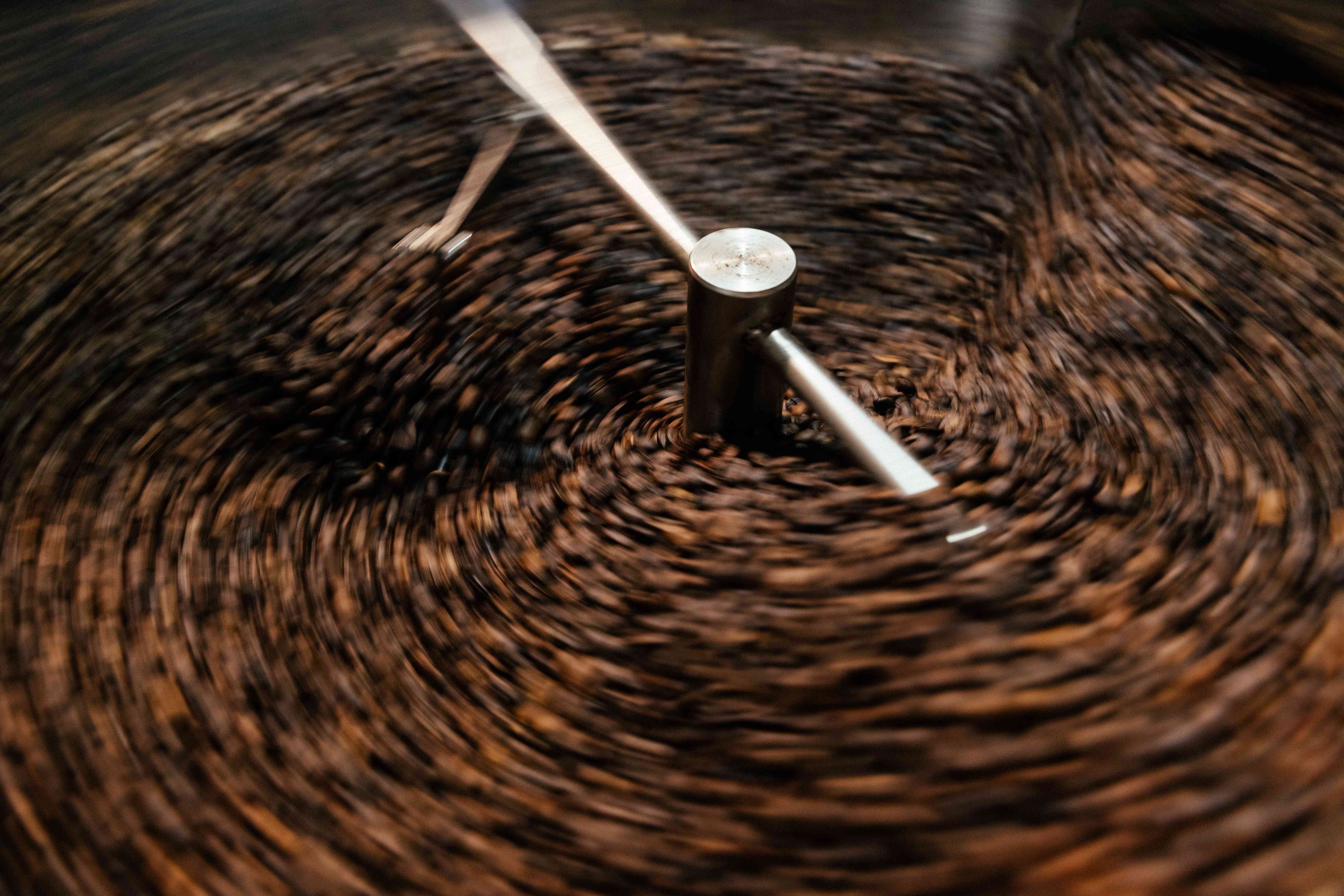
Nứt lần thứ nhất là một sự kiện vật lý có thể quan sát
Trong quá trình rang, tiếng nứt của hạt thường được người rang dùng như một mốc để theo dõi tiến trình. Nhưng nếu chỉ coi đó là âm thanh để nghe bằng tai, một phần thông tin có thể bị bỏ qua. Bản thân sự kiện nứt liên quan đến biến đổi cấu trúc bên trong hạt khi nhiệt, áp suất và khí tích tụ thay đổi.
Wilson đã ghi âm và phân tích tiếng nứt của cà phê, cho thấy tín hiệu của nứt lần thứ nhất và nứt lần thứ hai có những đặc điểm âm học khác nhau. Nghiên cứu sau đó tiếp tục cho thấy tín hiệu âm thanh có thể được dùng để theo dõi trạng thái rang trong những điều kiện thử nghiệm cụ thể.
Tại sao âm thanh có thể trở thành dữ liệu
Âm thanh là tín hiệu theo thời gian. Thay vì ghi “đã nghe tiếng nứt”, một hệ thống có thể ghi thời điểm bắt đầu, thời gian kéo dài, số lượng sự kiện và đặc trưng phổ của tín hiệu. Khi những thông tin này được ghi cùng nhiệt độ và thời gian rang, một mốc cảm tính trở thành dữ liệu có thể so sánh.
Wilson cho thấy nứt lần thứ nhất có biên độ và đặc trưng tần số khác nứt lần thứ hai, đồng thời tốc độ xuất hiện các tiếng nứt cũng khác. Điều đó mở ra khả năng dùng nhiều đặc trưng thay vì chỉ dựa vào một tiếng nổ riêng lẻ.
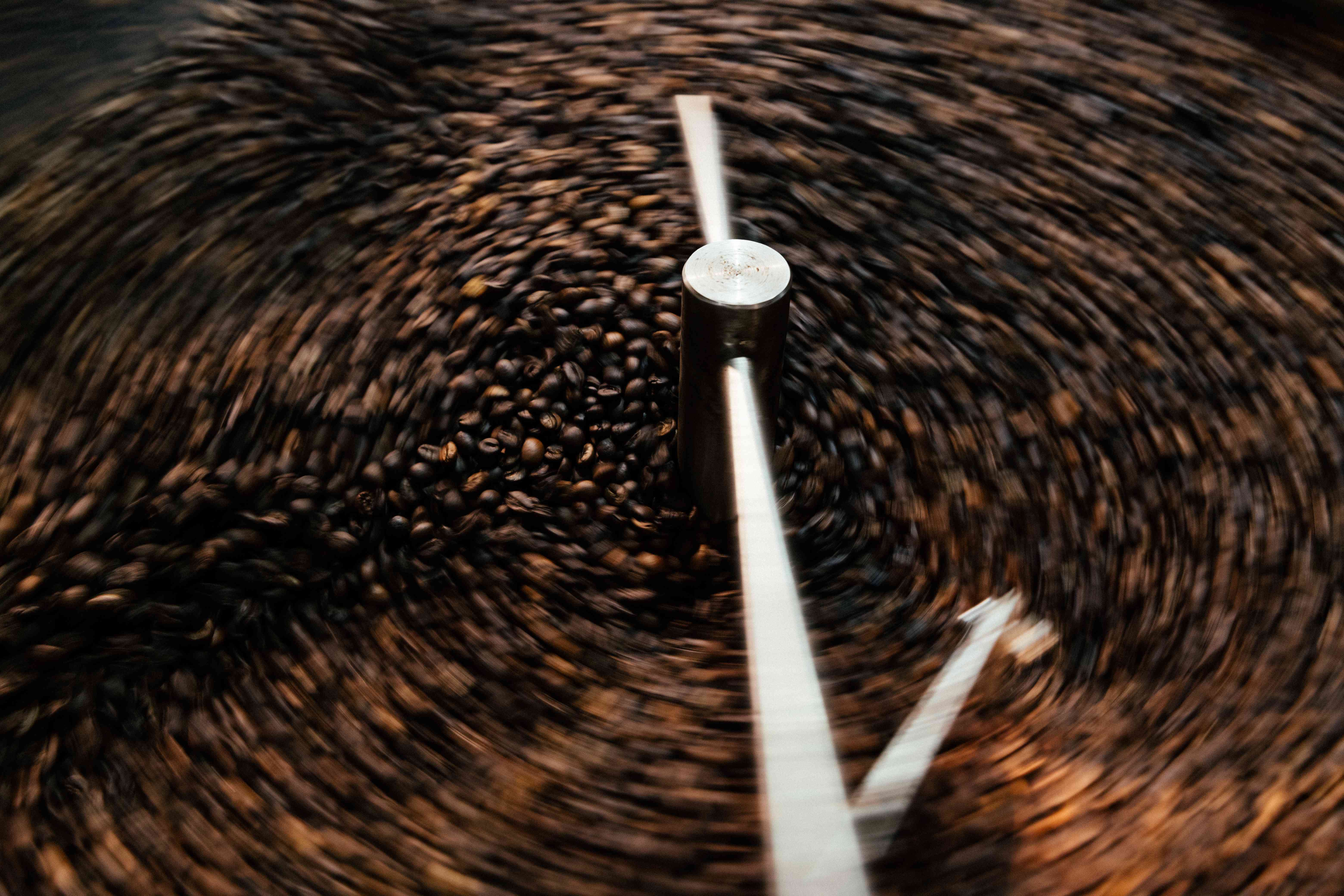
Không phải tiếng nứt nào cũng đại diện cho cả mẻ
Một mẻ gồm nhiều hạt, và mỗi hạt không nhất thiết biến đổi ở cùng thời điểm. Có thể nghe một vài tiếng nứt trước khi hình thành một chuỗi tiếng nứt rõ ràng. Vì vậy, “tiếng đầu tiên nghe được” và “mốc nứt của cả mẻ” là hai khái niệm cần phân biệt.
Nghiên cứu của Siebald và cộng sự sử dụng ghi âm trong các điều kiện rang khác nhau và cho thấy đặc trưng âm thanh có thể liên hệ với nhiệt độ hạt trong phần lớn quá trình được khảo sát. Nhưng chính thiết kế thử nghiệm đó cũng cho thấy tín hiệu phụ thuộc vào điều kiện ghi âm và máy rang.
Đối chiếu với nhiệt độ và tốc độ tăng nhiệt
Nếu chỉ ghi thời điểm nứt, dữ liệu vẫn còn thiếu ngữ cảnh. Một mốc âm thanh nên được đặt cạnh nhiệt độ hạt, nhiệt độ môi trường, thời gian rang và tốc độ tăng nhiệt. Khi đó, có thể biết sự kiện xảy ra ở vị trí nào trên đường cong và liệu hai mẻ có thực sự tương đồng hay chỉ tình cờ có cùng thời gian.
Münchow và cộng sự cho thấy điều kiện rang có liên hệ với kết quả cảm quan và cần được xem xét theo hệ thống thay vì dựa vào một mốc đơn lẻ. Vì vậy, nứt lần thứ nhất nên được xem là một biến sự kiện trong hồ sơ rang.
Không nên gắn nứt lần thứ nhất với một nhiệt độ cố định
Một sai lầm phổ biến là coi nứt lần thứ nhất luôn xuất hiện ở cùng một nhiệt độ. Nhiệt độ ghi nhận còn phụ thuộc vào vị trí cảm biến, cách đo, loại hạt, điều kiện rang và thiết bị. Một con số lấy từ một máy không thể trở thành chuẩn chung cho mọi hệ thống.
Điều có giá trị hơn là ghi nhận mối quan hệ giữa thời điểm nứt, nhiệt độ đo được và tốc độ tăng nhiệt trong chính hệ thống đang kiểm soát. Khi có đủ dữ liệu qua nhiều mẻ, doanh nghiệp mới có thể xác định một khoảng tham chiếu phù hợp.
Muốn ghi nhận nhất quán phải chuẩn hóa cách nghe và cách đo
Nếu dùng microphone, vị trí đặt, khoảng cách, hướng thu âm, mức nhiễu nền và cách xử lý tín hiệu cần được giữ tương đối ổn định. Nếu dùng tai người, người quan sát cần thống nhất tiêu chí thế nào được tính là mốc bắt đầu và thế nào chỉ là một tiếng nứt riêng lẻ.
Siebald và cộng sự đã sử dụng nhiều microphone và lặp lại các quy trình trong điều kiện kiểm soát để so sánh tín hiệu. Đây là điểm quan trọng khi chuyển ý tưởng từ nghiên cứu sang kiểm soát sản xuất: thiết bị đo cũng là một phần của phép đo.
Giá trị của mốc nứt nằm ở hồ sơ, không nằm ở một tiếng động
Khi được ghi cùng thời gian, nhiệt độ và tốc độ tăng nhiệt, nứt lần thứ nhất có thể giúp nhận diện sự khác biệt giữa các mẻ. Nó cũng có thể hỗ trợ tự động hóa nếu tín hiệu được thu và xử lý ổn định. Nhưng nó không nên thay thế toàn bộ dữ liệu rang.
Một hồ sơ rang tốt vì vậy có thể coi nứt lần thứ nhất như một sự kiện đã được định nghĩa, có thời điểm, điều kiện đo và liên hệ với các biến khác. Khi đó, một tín hiệu thường được nghe bằng tai trở thành dữ liệu có thể truy nguyên và phân tích.
Khi chưa có hệ thống tự động, người rang vẫn có thể ghi thời điểm nghe thấy chuỗi nứt rõ ràng cùng với nhiệt độ và thời gian. Cách ghi thủ công này chưa thay thế phân tích âm học, nhưng tạo ra dữ liệu có cấu trúc để so sánh các mẻ về sau.
Một micro đặt gần quạt hoặc trống rang có thể thu rất nhiều tiếng nền. Nếu vị trí microphone thay đổi giữa các mẻ, sự khác biệt trong tín hiệu có thể đến từ thiết bị ghi chứ không phải từ hạt. Vì vậy, một hồ sơ âm thanh có giá trị cần ghi vị trí cảm biến, điều kiện môi trường và cách xử lý tín hiệu.
Dữ liệu âm thanh cần có điều kiện ghi nhận
Mốc nứt cũng nên được ghi theo khoảng nếu tín hiệu không rõ. Trong một mẻ, tiếng nứt có thể kéo dài trong một giai đoạn chứ không xuất hiện tại một giây duy nhất. Ghi thời điểm bắt đầu chuỗi nứt, thời điểm đạt mật độ rõ và thời điểm giảm xuống có thể cung cấp nhiều thông tin hơn một dấu mốc duy nhất. Điều này đặc biệt hữu ích khi so sánh các mẻ có tốc độ tăng nhiệt khác nhau.
Tài liệu tham khảo
- [1] Wilson (2014), Coffee roasting acoustics, Journal of the Acoustical Society of America 135, EL265–EL269. DOI: 10.1121/1.4874355.
- [2] Siebald et al. (2024), Acoustic condition monitoring of coffee beans, during the roasting process, LWT 199, 116119. DOI: 10.1016/j.lwt.2024.116119.
- [3] Münchow et al. (2020), Roasting Conditions and Coffee Flavor: A Multi-Study Empirical Investigation, Beverages 6, 29.
First crack is an observable physical event
During roasting, the cracking sound of the beans is usually used by the roaster as a marker for tracking progress. But if treated only as a sound to be heard by ear, part of the information can be lost. The cracking event itself relates to structural change inside the bean as heat, pressure, and accumulated gas change.
Wilson recorded and analyzed coffee cracking sounds, showing the signals of first crack and second crack have different acoustic characteristics. Subsequent research went on to show acoustic signals can be used to track roast state under specific test conditions.
Why sound can become data
Sound is a time-based signal. Instead of recording "a crack was heard," a system can record the start time, duration, number of events, and the signal's spectral characteristics. When this information is recorded alongside temperature and roasting time, a subjective marker becomes comparable data.
Wilson showed first crack has different amplitude and frequency characteristics than second crack, and the rate at which cracks appear also differs. This opens up the ability to use multiple characteristics instead of relying on a single isolated pop.
Not every crack represents the whole batch
A batch contains many beans, and each bean doesn't necessarily change at the same moment. You might hear a few cracks before a clear sequence of cracking forms. So "the first sound heard" and "the crack marker for the whole batch" are two concepts worth distinguishing.
Research by Siebald and colleagues used recordings under various roasting conditions and found acoustic characteristics could relate to bean temperature across most of the process studied. But that same experimental design also showed the signal depends on recording conditions and the roaster.
Cross-referencing with temperature and rate of temperature rise
If only the crack timing is recorded, the data still lacks context. An acoustic marker should be placed alongside bean temperature, ambient temperature, roasting time, and rate of temperature rise. That way, you can know where the event falls on the curve and whether two batches are genuinely similar or just coincidentally had the same timing.
Münchow and colleagues showed roasting conditions relate to sensory results and need to be considered as a system rather than relying on a single isolated marker. So first crack should be treated as an event variable within the roast profile.
Don't tie first crack to a fixed temperature
A common mistake is treating first crack as always appearing at the same temperature. The recorded temperature also depends on sensor position, measurement method, bean type, roasting conditions, and equipment. A value taken from one machine can't automatically become a common standard for every system.
What's more valuable is recording the relationship between crack timing, measured temperature, and rate of temperature rise within the specific system being controlled. Once enough data exists across many batches, a business can then determine a suitable reference range.
Consistent recording requires standardizing how you listen and measure
If using a microphone, placement, distance, recording direction, background noise level, and signal processing need to be kept reasonably stable. If using human hearing, observers need to agree on what counts as the starting marker versus what's just an isolated crack.
Siebald and colleagues used multiple microphones and repeated procedures under controlled conditions to compare signals. This is an important point when moving the idea from research into production control: the measuring equipment is also part of the measurement.
The value of the crack marker lies in the profile, not a single sound
When recorded alongside time, temperature, and rate of temperature rise, first crack can help identify differences between batches. It can also support automation if the signal is captured and processed reliably. But it shouldn't replace the entire body of roasting data.
A good roast profile, then, can treat first crack as a defined event, with a timing, measurement conditions, and a relationship to other variables. At that point, a signal usually heard by ear becomes traceable, analyzable data.
Without an automated system, the roaster can still record the moment a clear sequence of cracks is heard, along with temperature and time. This manual recording doesn't replace acoustic analysis, but it creates structured data for comparing batches later.
A microphone placed near the fan or roasting drum can pick up a lot of background noise. If microphone placement changes between batches, differences in the signal could come from the recording equipment rather than the beans. So a valuable acoustic profile needs to record sensor position, environmental conditions, and signal-processing method.
Acoustic data needs recording conditions
The crack marker should also be recorded as a range if the signal isn't clear. Within a batch, cracking can span a period rather than appear in a single second. Recording the start of the crack sequence, the moment it reaches clear density, and the moment it declines can provide more information than a single marker. This is especially useful when comparing batches with different rates of temperature rise.
References
- Wilson (2014). Coffee roasting acoustics. Journal of the Acoustical Society of America, 135, EL265–EL269. https://doi.org/10.1121/1.4874355
- Siebald et al. (2024). Acoustic condition monitoring of coffee beans during the roasting process. LWT, 199, 116119. https://doi.org/10.1016/j.lwt.2024.116119
- Münchow et al. (2020). Roasting Conditions and Coffee Flavor: A Multi-Study Empirical Investigation. Beverages, 6, 29.