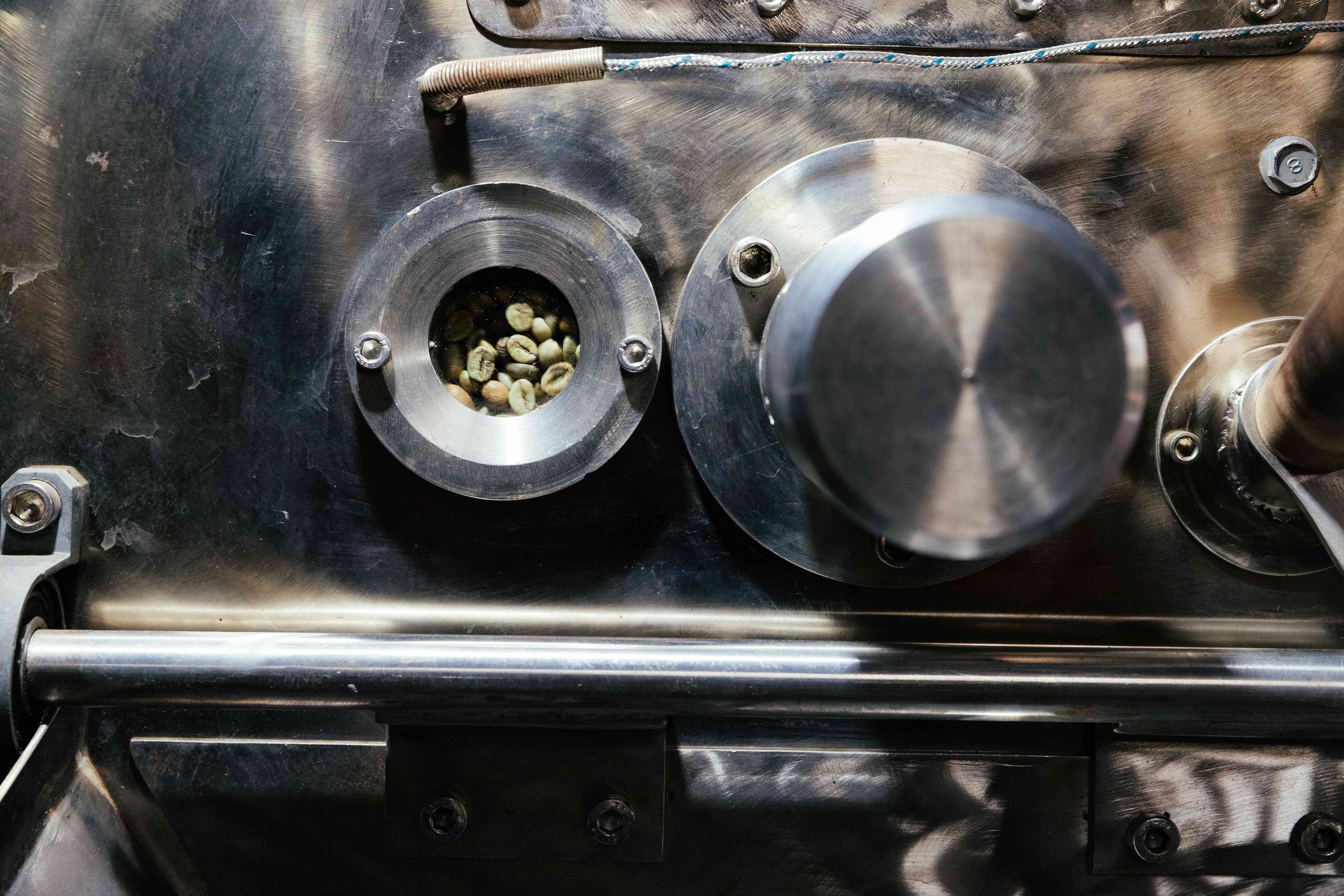
Mật độ hạt xanh là khối lượng trên một đơn vị thể tích của hạt cà phê chưa rang. Đây là một đặc tính vật lý phản ánh phần nào cấu trúc bên trong hạt, và theo tài liệu kỹ thuật của IKAWA phối hợp cùng Royal Coffee, mật độ có thể liên quan đến cách hạt hấp thụ và truyền nhiệt trong quá trình rang.
Mật độ nói lên điều gì
Hạt có mật độ cao thường có cấu trúc bên trong đặc hơn, trong khi hạt có mật độ thấp có thể xốp hơn hoặc chứa nhiều khoảng trống hơn ở cấp độ vi mô. Sự khác biệt này có thể liên quan đến điều kiện sinh trưởng, độ cao canh tác, hoặc quá trình sơ chế, nhưng bản thân con số mật độ không cho biết chính xác nguyên nhân đằng sau nó.
Cần phân biệt mật độ khối và mật độ hạt
Mật độ khối, đo bằng cách cân một thể tích hạt đổ tự do, khác với mật độ riêng của từng hạt, vốn cần loại trừ khoảng trống giữa các hạt khi đo. Hai cách đo cho ra hai con số khác nhau và phục vụ hai mục đích khác nhau. Khi trích dẫn một giá trị mật độ, cần nói rõ đó là mật độ khối hay mật độ hạt để tránh so sánh sai lệch giữa các nguồn dữ liệu.
Liên hệ mật độ với đáp ứng nhiệt
Về mặt cơ chế, hạt có mật độ khác nhau có thể cần thời gian khác nhau để nhiệt truyền từ bề mặt vào lõi hạt, do sự khác biệt về cấu trúc và khả năng dẫn nhiệt. Điều này có nghĩa là hai lô hạt có mật độ khác biệt rõ rệt có thể cần điều chỉnh chiến lược gia nhiệt để đạt được mức rang tương đương, thay vì áp dụng y hệt một profile rang đã tối ưu cho lô khác.
Mật độ nên được dùng ở giai đoạn nào
Mật độ phù hợp nhất để tham khảo ở bước lập kế hoạch trước khi rang, khi người vận hành cần quyết định có điều chỉnh profile so với lần rang trước hay không. Đây không phải một thông số cần theo dõi liên tục trong lúc rang, vì mật độ hạt không đổi trong suốt mẻ rang — nó là một đặc tính của nguyên liệu đầu vào, không phải một biến diễn biến theo thời gian.
Đọc mật độ cùng độ ẩm và kích thước
Mật độ không nên được xem xét tách rời khỏi độ ẩm và kích thước hạt. Ba yếu tố này cùng góp phần quyết định khối lượng nạp thực tế trên một mẻ và tốc độ hạt hấp thụ nhiệt. Một lô có mật độ cao nhưng độ ẩm thấp có thể phản ứng nhiệt khác với một lô có mật độ cao nhưng độ ẩm cao, dù cùng chỉ số mật độ.
Những gì mật độ không thể dự đoán
Mật độ là một chỉ số vật lý về nguyên liệu, không phải một thước đo hương vị. Không có cơ sở để suy luận trực tiếp từ một con số mật độ sang một mô tả cảm quan cụ thể. Muốn biết ảnh hưởng thực tế của một lô nguyên liệu đến hương vị, vẫn cần rang thử và đánh giá cảm quan trên chính lô đó.
Biến mật độ thành dữ liệu hữu ích
Để mật độ có giá trị thực hành, nên đo và ghi lại mật độ của từng lô nguyên liệu trước khi rang, cùng với độ ẩm và kích thước hạt, rồi đối chiếu với profile rang đã dùng và kết quả sau rang. Qua nhiều lô, dữ liệu này giúp nhận ra khi nào một sự thay đổi mật độ đáng kể xuất hiện và cần cân nhắc điều chỉnh cách rang.
Kết luận thực hành
Mật độ hạt xanh là một biến đầu vào hữu ích để lập kế hoạch rang, đặc biệt khi kết hợp với độ ẩm và kích thước hạt. Giá trị của nó nằm ở việc giúp nhận biết sự khác biệt giữa các lô nguyên liệu trước khi rang, chứ không phải ở khả năng dự đoán trực tiếp hương vị của tách cà phê sau cùng.
Tài liệu tham khảo
- IKAWA x Royal Coffee (2022). Green coffee density and its effect on coffee roasting.
- Heat and Mass Transfer Kinetics on the Chemical and Sensory Quality of Arabica Coffee Beans (2022). Agronomy, 12, 2880.
- Batch-Scale Simulation of Heat and Mass Transfer of Coffee Roasting in Spouted Bed Roasters (2025). Beverages, 11, 162.
Green-bean density is the mass per unit volume of unroasted coffee. It's a physical property that partly reflects the bean's internal structure, and according to technical material from IKAWA in partnership with Royal Coffee, density can relate to how a bean absorbs and conducts heat during roasting.
What density tells you
Beans with higher density usually have a denser internal structure, while lower-density beans can be more porous or contain more microscopic void space. This difference can relate to growing conditions, cultivation altitude, or processing method, but the density number itself doesn't reveal the exact cause behind it.
Distinguishing bulk density from bean density
Bulk density, measured by weighing a free-poured volume of beans, differs from the density of an individual bean, which needs to exclude the space between beans when measured. The two methods produce two different numbers and serve two different purposes. When citing a density value, it's worth specifying whether it's bulk density or bean density to avoid mismatched comparisons between data sources.
Relating density to thermal response
Mechanistically, beans of different densities may need different amounts of time for heat to travel from the surface into the bean's core, due to differences in structure and thermal conductivity. This means two lots with noticeably different density may need adjusted heating strategies to reach an equivalent roast level, rather than applying the exact same profile optimized for a different lot.
When density should be used
Density is most relevant at the planning stage before roasting, when the operator needs to decide whether to adjust the profile compared with the previous roast. It's not a parameter that needs continuous tracking during the roast itself, since bean density doesn't change over the course of a single batch — it's an input-material characteristic, not a variable that evolves over time.
Reading density alongside moisture and size
Density shouldn't be considered separately from moisture and bean size. These three factors together help determine the actual charge weight per batch and the rate at which the bean absorbs heat. A lot with high density but low moisture may respond differently to heat than a lot with high density but high moisture, even with the same density figure.
What density can't predict
Density is a physical indicator of the raw material, not a flavor measurement. There's no basis for directly inferring a specific sensory description from a density number alone. To know the real impact of a raw-material lot on flavor, you still need to roast a test batch and evaluate it sensorially.
Turning density into useful data
For density to have practical value, it should be measured and recorded for each raw-material lot before roasting, alongside moisture and bean size, and then cross-referenced with the roast profile used and the post-roast results. Across many lots, this data helps identify when a significant density shift appears and warrants considering an adjustment to the roasting approach.
Practical conclusion
Green-bean density is a useful input variable for roast planning, especially when combined with moisture and bean size. Its value lies in helping recognize differences between raw-material lots before roasting, not in directly predicting the flavor of the final cup.
References
- IKAWA x Royal Coffee (2022). Green coffee density and its effect on coffee roasting.
- Heat and Mass Transfer Kinetics on the Chemical and Sensory Quality of Arabica Coffee Beans (2022). Agronomy, 12, 2880.
- Batch-Scale Simulation of Heat and Mass Transfer of Coffee Roasting in Spouted Bed Roasters (2025). Beverages, 11, 162.