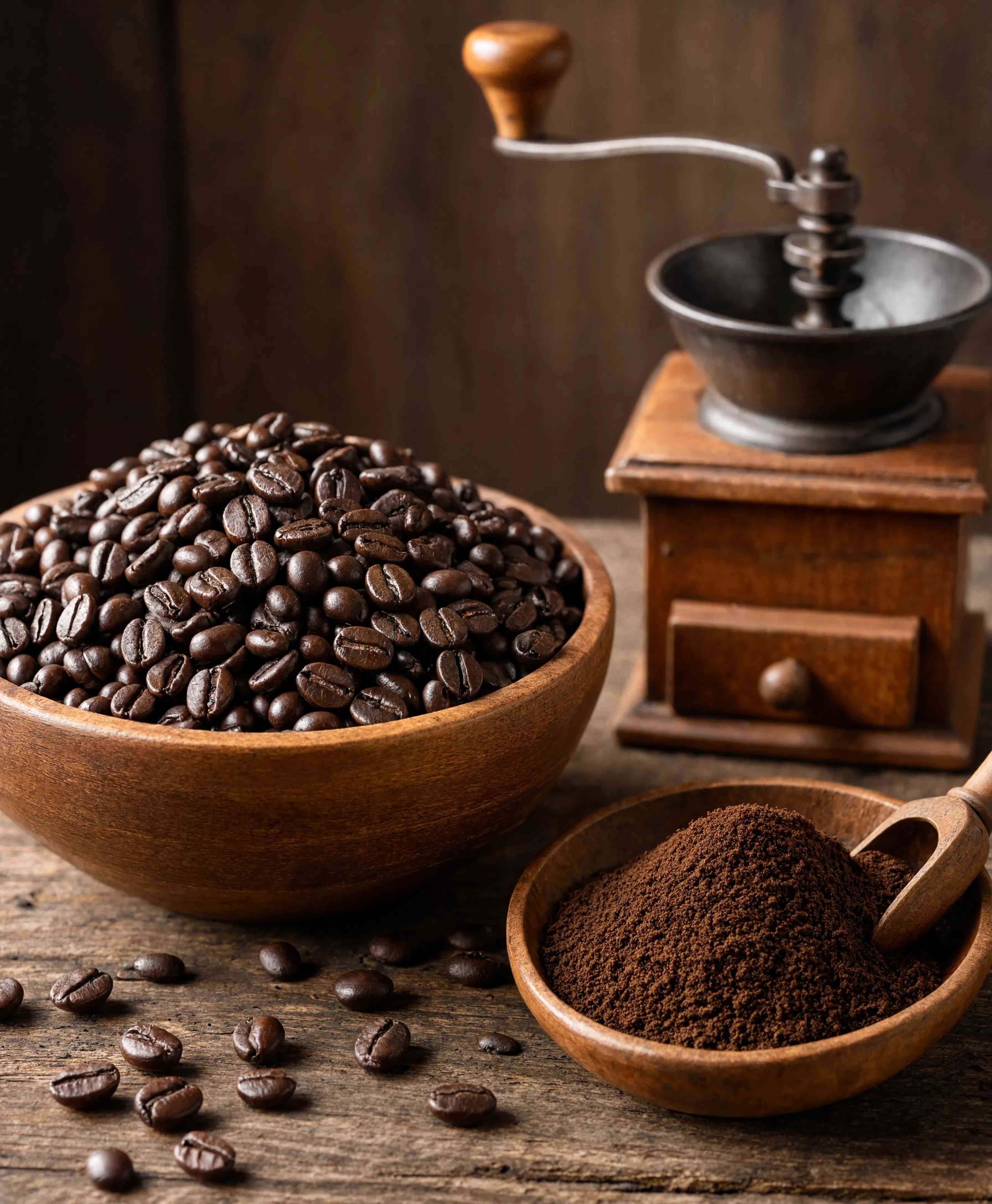
Bột và trao đổi ẩm
Cà phê xay có diện tích bề mặt lớn hơn nhiều so với hạt nguyên, vì vậy trao đổi ẩm với môi trường là một biến cần được xem xét khi nghiên cứu trạng thái bột. Khi độ ẩm tương đối thay đổi, bột có thể hấp phụ nước và thay đổi tính chất vật lý. Điều đó không đồng nghĩa mọi biến đổi đều do hoạt độ nước, bởi còn có ảnh hưởng của nhiệt độ, thời gian cân bằng, bao bì và cách xử lý mẫu. Một phép đo tốt cần tách các khái niệm này.
Ảnh hưởng đến tính chất vật lý
Nước có thể tác động đến tính cơ học của vật liệu cà phê. Nghiên cứu của Pittia và cộng sự cho thấy tính chất cơ học của hạt rang phụ thuộc mạnh vào hoạt độ nước; ở mức đủ cao, hiện tượng hóa dẻo làm mất tính giòn đặc trưng. Với bột, sự hấp phụ ẩm còn có thể làm các hạt kết tụ, thay đổi ma sát và khả năng chảy. Vì vậy, một mẫu bột ẩm hơn có thể không chỉ khác về thành phần nước mà còn khác về cách nó phân tán và đi qua hệ thống đo.
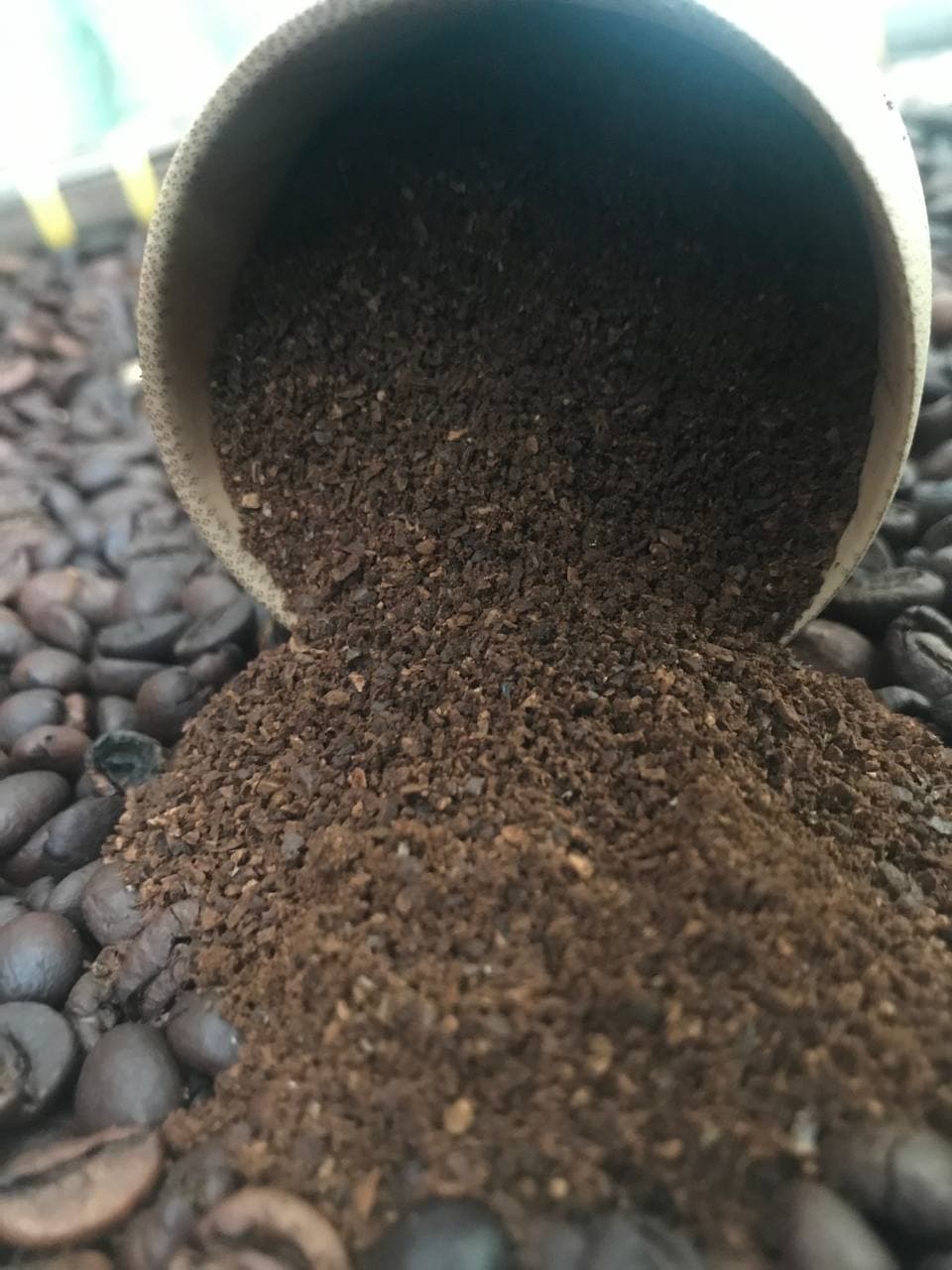
Ẩm và PSD đo được
Độ ẩm cũng có thể làm thay đổi PSD đo được mà không nhất thiết làm từng hạt riêng lẻ thay đổi kích thước. Nếu các hạt kết tụ, phương pháp đo có thể nhận một cụm như một hạt lớn hơn. Ngược lại, nếu quá trình phân tán mẫu phá vỡ các cụm, kết quả có thể khác với trạng thái vật liệu khi nó được lưu trữ. Đây là lý do phải ghi rõ phương pháp phân tán và điều kiện đo khi so sánh PSD của các mẫu có độ ẩm khác nhau.
Thiết kế thử nghiệm
Một thử nghiệm độ ẩm–PSD nên kiểm soát nhiệt độ, độ ẩm tương đối, thời gian cân bằng, khối lượng mẫu và phương pháp đo. Các mẫu có thể được đặt ở những điều kiện ẩm xác định rồi đo theo các mốc thời gian để biết tốc độ thay đổi. Nếu mục tiêu là mô phỏng bảo quản, bao bì và khoảng không đầu gói cũng cần được tính đến. Không nên lấy một mẫu đã phơi ngoài môi trường trong vài giờ rồi coi đó là đại diện cho toàn bộ một hệ thống đóng gói.
Áp dụng vào bảo quản
Các nghiên cứu về bảo quản cà phê cho thấy nhiệt độ và điều kiện đóng gói có thể ảnh hưởng đến các chỉ báo chất lượng trong thời gian dài. Với cà phê rang, các phép đo cảm quan và hợp chất bay hơi có thể thay đổi theo điều kiện lưu trữ. Điều đó cho thấy ẩm là một phần của hệ thống, không phải một biến đứng riêng. Nếu mục tiêu cuối cùng là chất lượng đồ uống, cần liên hệ dữ liệu vật lý của bột với kết quả pha hoặc cảm quan thay vì dừng ở việc “bột hút ẩm”.
Giới hạn khi áp dụng kết quả là rất rõ: động học trao đổi ẩm phụ thuộc bao bì, diện tích tiếp xúc, lượng cà phê, nhiệt độ và thời gian. Một giá trị độ ẩm tương đối tạo ra kết quả trong phòng thí nghiệm không thể tự động chuyển thành thời gian bảo quản ngoài thực tế. Cách tiếp cận an toàn hơn là mô tả hệ thống cụ thể, đo sự thay đổi trong hệ thống đó và giữ kết luận trong phạm vi dữ liệu. Khi làm như vậy, độ ẩm trở thành một biến có thể kiểm soát thay vì một nguyên nhân được viện dẫn cho mọi thay đổi của bột.
Trong một phép thử thực tế, nên phân biệt “độ ẩm của môi trường” với “độ ẩm cuối cùng của bột”. Hai mẫu được đặt cùng độ ẩm tương đối nhưng có lịch sử xử lý khác nhau có thể chưa đạt cùng trạng thái cân bằng. Vì vậy, thời gian tiếp xúc và điều kiện ban đầu phải được ghi lại. Nếu cần, có thể đo trực tiếp độ ẩm hoặc hoạt độ nước của mẫu thay vì chỉ suy ra từ độ ẩm phòng.
Bao bì là yếu tố đặc biệt quan trọng khi chuyển kết quả sang sản phẩm thương mại. Một gói nhỏ mở nhiều lần có lịch sử trao đổi ẩm rất khác một gói lớn được mở một lần rồi đóng lại. Khoảng không, số lần mở, vật liệu và nhiệt độ đều ảnh hưởng. Vì vậy, dữ liệu phòng thí nghiệm nên được dùng để hiểu cơ chế và xây dựng giả thuyết, còn kết luận về bảo quản phải được xác nhận trên đúng hệ thống bao bì và cách sử dụng.
Với bột cà phê, kết tụ là một vấn đề đặc biệt khi đọc PSD. Một phép đo có thể phản ánh kích thước cụm thay vì kích thước hạt nguyên thủy nếu phương pháp phân tán không đủ. Vì vậy, khi độ ẩm tăng, cần xác định liệu kết quả thay đổi do vật liệu thực sự thay đổi hay do phép đo nhìn thấy nhiều cụm hơn. Đây là lý do phải mô tả phương pháp chuẩn bị mẫu cùng với kết quả PSD.
Trong bảo quản thực tế, số lần mở gói có thể quan trọng không kém độ ẩm trung bình của môi trường. Mỗi lần mở tạo một lần trao đổi khí và ẩm mới. Một mô hình chỉ dùng nhiệt độ và độ ẩm môi trường mà không đưa lịch sử mở gói vào có thể không mô tả đúng hành vi người dùng. Kết luận nên giữ trong điều kiện đã kiểm tra và nêu rõ biến nào chưa được mô phỏng.
Khi độ ẩm tăng, cần theo dõi cả hiện tượng kết tụ vì kết tụ có thể làm sai lệch phép đo kích thước hạt. Nếu phương pháp đo có bước phân tán mẫu, điều kiện phân tán phải giống nhau giữa các nhóm. Nếu không, sự khác biệt giữa hai kết quả có thể do cách phá cụm chứ không phải do vật liệu. Đây là lý do phương pháp chuẩn bị mẫu phải được ghi cùng với kết quả.
Khi kết quả PSD thay đổi theo ẩm, nên kiểm tra cả độ chảy và khả năng kết tụ của bột. Hai mẫu có cùng PSD đo được nhưng khác tính chảy vẫn có thể vận hành khác nhau trong phễu hoặc máy pha. Điều này cho thấy một chỉ tiêu không nên được xem là đại diện cho toàn bộ hành vi vật liệu. Đo thêm một đặc tính liên quan có thể giúp giải thích tại sao cùng kích thước hạt lại cho trải nghiệm vận hành khác.
Tài liệu tham khảo
- Pittia, Nicoli & Sacchetti (2007), Journal of Texture Studies 38, 116–134, DOI 10.1111/j.1745-4603.2007.00089.x.
- Singh et al. (1997), Thermophysical Properties of Fresh and Roasted Coffee Powders, Journal of Food Process Engineering 20, 31–50, DOI 10.1111/j.1745-4530.1997.tb00409.x.
- Błaszkiewicz et al. (2023), Scientific Reports 13, 6447, DOI 10.1038/s41598-023-33609-x.
- The Craft and Science of Coffee (2017), The Grind—Particles and Particularities.
Grounds and moisture exchange
Ground coffee has a much larger surface area than whole beans, so moisture exchange with the environment is a variable worth considering when studying grounds state. When relative humidity changes, grounds can absorb water and change physical properties. That doesn't mean every change is due to water activity, since temperature, equilibration time, packaging, and sample handling also have an effect. A good measurement needs to separate these concepts.
Effect on physical properties
Water can affect the mechanical properties of coffee material. Research by Pittia and colleagues shows roasted-bean mechanical properties depend strongly on water activity; at a sufficiently high level, a plasticizing effect removes the characteristic brittleness. For grounds, moisture absorption can also cause particles to clump, changing friction and flow ability. So a more humid grounds sample can differ not just in water content but also in how it disperses and passes through a measuring system.
Moisture and measured PSD
Moisture can also change the measured PSD without necessarily changing individual particle size. If particles clump together, a measurement method might register a cluster as a single larger particle. Conversely, if the sample-dispersion process breaks apart clumps, the result may differ from the material's stored state. This is why dispersion method and measurement conditions need to be clearly recorded when comparing PSD across samples with different moisture levels.
Designing the test
A moisture-PSD test should control temperature, relative humidity, equilibration time, sample mass, and measurement method. Samples can be placed at defined humidity conditions then measured at time milestones to know the rate of change. If the goal is simulating storage, packaging and headspace also need to be accounted for. You shouldn't take a sample exposed to the environment for a few hours and treat it as representative of an entire packaging system.
Applying to storage
Coffee-storage research shows temperature and packaging conditions can affect quality indicators over long periods. For roasted coffee, sensory and volatile-compound measurements can change with storage conditions. This shows moisture is part of a system, not a standalone variable. If the ultimate goal is beverage quality, physical grounds data needs to be related to brewing or sensory results rather than stopping at “grounds absorb moisture.”
The limit when applying results is clear: moisture-exchange kinetics depend on packaging, contact area, coffee amount, temperature, and time. A relative-humidity value producing a lab result can't automatically translate into a real-world storage time. A safer approach is describing the specific system, measuring the change within that system, and keeping conclusions within the scope of the data. Done this way, moisture becomes a controllable variable rather than a cause invoked for every grounds change.
In a practical test, you should distinguish “ambient humidity” from “the grounds' final moisture.” Two samples placed at the same relative humidity but with different handling histories may not have reached the same equilibrium state. So contact time and starting conditions need to be recorded. If needed, you can directly measure the sample's moisture or water activity rather than just inferring it from room humidity.
Packaging is especially important when transferring results to a commercial product. A small bag opened many times has a very different moisture-exchange history from a large bag opened once and resealed. Headspace, number of openings, material, and temperature all have an effect. So lab data should be used to understand mechanism and build hypotheses, while storage conclusions must be confirmed on the actual packaging system and usage pattern.
For ground coffee, clumping is a particular issue when reading PSD. A measurement can reflect cluster size rather than original particle size if the dispersion method isn't adequate. So when moisture increases, you need to determine whether the result changed because the material genuinely changed or because the measurement is seeing more clusters. This is why the sample-preparation method must be described alongside PSD results.
In real storage, the number of times a bag is opened can matter just as much as average ambient humidity. Each opening creates a new gas-and-moisture exchange. A model using only ambient temperature and humidity without factoring in opening history may not accurately describe user behavior. Conclusions should stay within tested conditions and clearly state which variables haven't been simulated.
As moisture increases, you need to track clumping as well, since clumping can distort particle-size measurement. If the measurement method has a dispersion step, dispersion conditions must be the same across groups. Otherwise, the difference between two results could be due to how clumps were broken apart rather than the material itself. This is why sample-preparation method must be recorded alongside results.
When PSD results change with moisture, it's worth checking both flowability and clumping tendency of the grounds. Two samples with the same measured PSD but different flow characteristics can still behave differently in a hopper or brewing machine. This shows one indicator shouldn't be treated as representative of the entire material behavior. Measuring an additional related property can help explain why the same particle size gives a different operating experience.
References
- Pittia, Nicoli & Sacchetti (2007), Journal of Texture Studies 38, 116–134, DOI 10.1111/j.1745-4603.2007.00089.x.
- Singh et al. (1997), Thermophysical Properties of Fresh and Roasted Coffee Powders, Journal of Food Process Engineering 20, 31–50, DOI 10.1111/j.1745-4530.1997.tb00409.x.
- Błaszkiewicz et al. (2023), Scientific Reports 13, 6447, DOI 10.1038/s41598-023-33609-x.
- The Craft and Science of Coffee (2017), The Grind—Particles and Particularities.