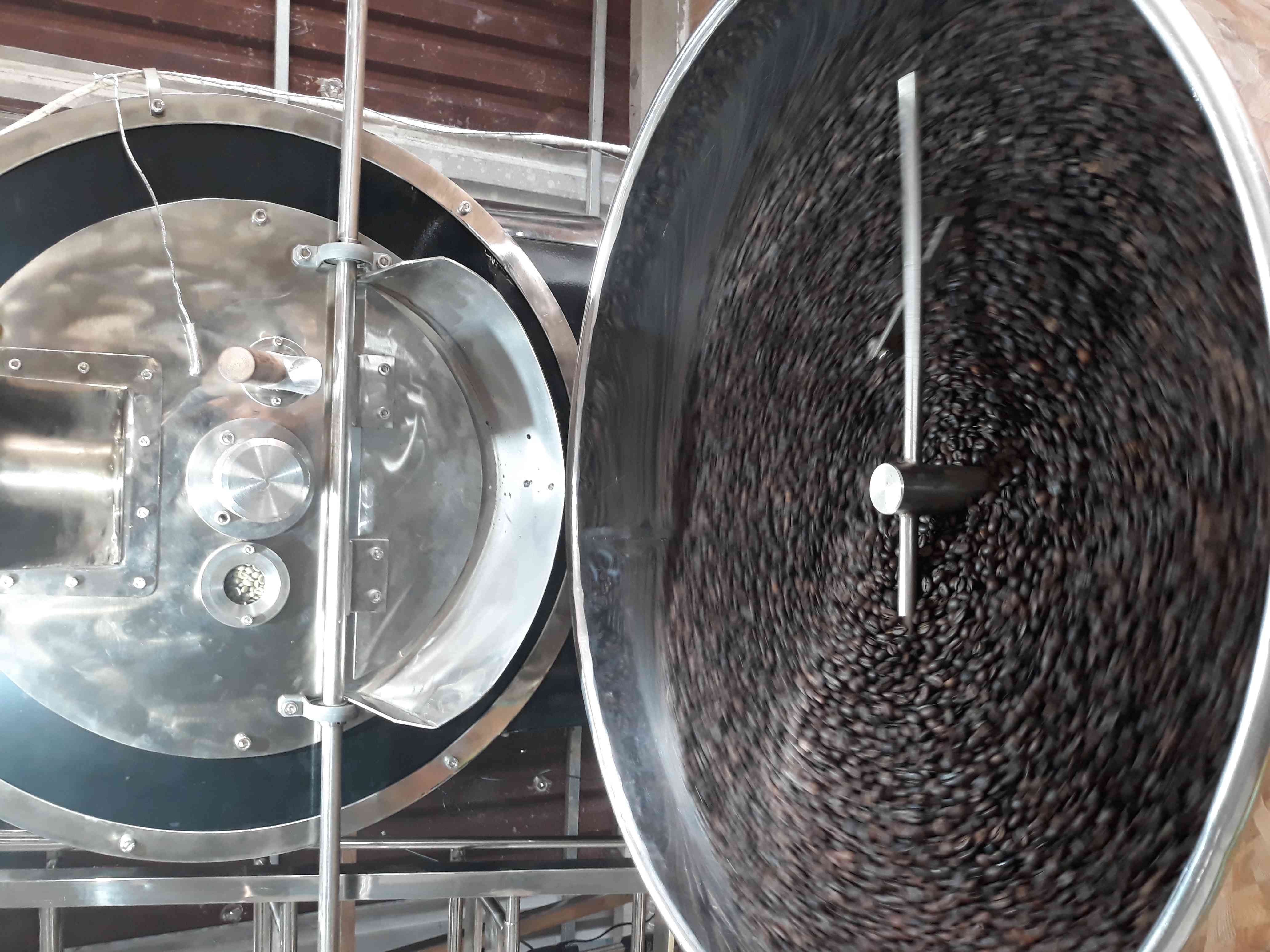
mức độ rang và nền hóa học
Mức độ rang làm thay đổi nền hóa học của cà phê, vì vậy nó cũng có thể ảnh hưởng đến hồ sơ hợp chất bay hơi trong giai đoạn bảo quản. Nhưng “mức độ rang” không phải một biến có thể tách khỏi mọi thứ khác. Nhiệt độ lưu trữ, thời gian, dạng hạt hay bột và bao bì đều có thể làm tốc độ biến đổi thay đổi. Vì vậy, muốn nghiên cứu quan hệ giữa mức rang và mất hương, trước hết phải giữ những biến này trong thiết kế.
Hồ sơ hợp chất trong bảo quản
Nghiên cứu trên cà phê Arabica Thái năm 2025 cho thấy các mức rang khác nhau có hồ sơ hợp chất bay hơi khác nhau và thời hạn chất lượng thay đổi khi điều kiện lưu trữ thay đổi. Ở nghiên cứu đó, nhiệt độ bảo quản cao làm thời hạn chất lượng ngắn hơn và nhiều nhóm hợp chất bay hơi giảm theo thời gian. Kết quả này cho thấy roast level có vai trò, nhưng nó không đủ để tạo một quy luật đơn giản kiểu “rang đậm luôn mất hương nhanh hơn”. Kết quả phụ thuộc hệ thống thử nghiệm.
Phép đo và cảm quan
Khi theo dõi mất hương, cần phân biệt sự thay đổi thành phần với sự thay đổi mà con người nhận biết. Một hợp chất có thể giảm đáng kể về mặt phân tích nhưng ảnh hưởng cảm quan nhỏ nếu nồng độ vẫn trên hoặc dưới một ngưỡng thích hợp. Ngược lại, thay đổi nhỏ ở một hợp chất có mùi mạnh có thể đáng chú ý. Vì vậy, phân tích hợp chất bay hơi nên được đặt cạnh đánh giá cảm quan nếu mục tiêu là kết luận về chất lượng.
Tách mức rang khỏi điều kiện bảo quản
Thiết kế so sánh có thể sử dụng cùng một nguồn cà phê, chia thành các mức rang khác nhau, sau đó đóng gói và lưu trữ ở cùng nhiệt độ. Lấy mẫu theo thời gian để đo hồ sơ hợp chất bay hơi và một bộ chỉ báo cảm quan. Khi các điều kiện được giữ ổn định, khác biệt giữa các đường cong có cơ sở hơn để liên hệ với mức độ rang. Nếu thay đổi cả bao bì hoặc nhiệt độ, rất khó xác định phần biến đổi nào thuộc về mức rang.
Giới hạn khi dự đoán thời hạn chất lượng
Nhiệt độ bảo quản đặc biệt quan trọng vì nó có thể làm thay đổi tốc độ phản ứng và khuếch tán. Nghiên cứu về mất hương của cà phê pha ở các nhiệt độ khác nhau cũng cho thấy hồ sơ hợp chất bay hơi biến đổi theo điều kiện lưu trữ. Vì vậy, một mức độ rang có thể biểu hiện khác nhau ở nhiệt độ thấp và cao. Điều này cũng giải thích tại sao không nên lấy một thử nghiệm tăng tốc rồi chuyển trực tiếp số ngày sang bảo quản thông thường mà không có mô hình hoặc kiểm chứng thích hợp.
Giới hạn cuối cùng là không thể dự đoán thời hạn chất lượng chỉ từ mức độ rang. Mức rang là một biến giải thích quan trọng, nhưng chất lượng sau rang còn phụ thuộc bao bì, nhiệt độ, oxy, độ ẩm và trạng thái sản phẩm. Cách diễn giải an toàn là nói rằng mức độ rang có thể làm thay đổi nền hợp chất và do đó tương tác với quá trình mất hương trong bảo quản; còn tốc độ cụ thể phải được đo trong điều kiện xác định. Đây là khác biệt giữa một giả thuyết có cơ sở và một quy luật áp dụng chung.
Một thiết kế có giá trị là giữ cùng nguồn hạt và cùng quy trình sau rang, sau đó tạo nhiều mức độ rang trong một phạm vi kiểm soát. Các mẫu được đóng gói giống nhau và bảo quản ở nhiều nhiệt độ. Khi đó có thể kiểm tra cả hiệu ứng của mức rang và tương tác với nhiệt độ. Nếu chỉ dùng một nhiệt độ, khó biết liệu khác biệt giữa các mức rang có bền vững hay chỉ là đặc điểm của điều kiện đó.
Cũng cần phân biệt cà phê nguyên hạt và cà phê xay. Xay làm tăng diện tích bề mặt và thay đổi tốc độ trao đổi khí, nên tốc độ mất hương của bột không thể mặc định giống hạt. Nếu bài toán thời hạn chất lượng tập trung vào sản phẩm rang xay, trạng thái xay phải được giữ cố định từ đầu. Đây là một ví dụ về việc phạm vi sản phẩm quyết định cách diễn giải dữ liệu mức độ rang.
Hồ sơ hợp chất bay hơi cũng không nên được đọc như một danh sách dài không có trọng tâm. Có thể chọn các nhóm hoặc chất chỉ thị đã có cơ sở liên quan đến hương thơm, sau đó theo dõi sự thay đổi của chúng. Nếu quá nhiều biến được đưa vào, việc tìm một vài tương quan ngẫu nhiên trở nên dễ dàng. Một thiết kế có giả thuyết rõ giúp hạn chế việc diễn giải sau khi nhìn dữ liệu.
Khi so sánh các mức rang, màu sắc có thể là một chỉ báo hữu ích để mô tả mức độ rang nhưng không phải bản thân chất lượng hương thơm. Hai mẫu có màu gần nhau vẫn có thể khác về lịch sử nhiệt và hồ sơ hợp chất. Vì vậy, nếu nghiên cứu mức rang, nên mô tả bằng phương pháp đo phù hợp và giữ điều kiện rang được kiểm soát, thay vì chỉ dựa vào cảm quan màu hạt.
Mức độ rang nên được mô tả bằng phương pháp đo nhất quán thay vì chỉ dùng tên gọi nhẹ, vừa hoặc đậm. Các tên gọi này có thể không hoàn toàn tương đương giữa các hệ thống. Khi có dữ liệu màu hoặc lịch sử nhiệt, chúng có thể giúp mô tả nhóm mẫu rõ hơn. Tuy nhiên, ngay cả khi mức độ rang được xác định tốt, tốc độ mất hương vẫn phụ thuộc nhiệt độ, oxy, bao bì và trạng thái sản phẩm. Vì vậy, kết luận cần giữ trong điều kiện đã thử nghiệm.
Nếu mục tiêu là nghiên cứu mất hương, thời điểm xay nên được cố định tương đối với thời điểm rang. Một mẫu rang lâu hơn trước khi đóng gói đã có lịch sử biến đổi khác dù cùng mức rang. Tương tự, nếu một nhóm được xay trước khi bảo quản và nhóm khác xay sau, diện tích bề mặt khác nhau sẽ tạo ra một nguồn sai lệch lớn. Phạm vi thí nghiệm phải xác định rõ trạng thái sản phẩm ngay từ đầu.
Tài liệu tham khảo
- Effect of Temperature and Storage on Coffee’s Volatile Compound Profile and Sensory Characteristics (2024), Foods.
- Impact of roasting and storage conditions on the shelf stability of Thai Arabica coffee (2025), Journal of Agriculture and Food Research 22, 102060, DOI 10.1016/j.jafr.2025.102060.
- Changes in volatile compounds and overall aroma profile during storage of coffee brews at 4 and 25 °C (2008), J. Agric. Food Chem., DOI 10.1021/jf703731x.
- Modeling of Greek coffee aroma loss during storage at different temperatures and water activities (2011), Procedia Food Science 1, 1111–1117, DOI 10.1016/j.profoo.2011.09.166.
Roast level and the chemical baseline
Roast level changes coffee's chemical baseline, so it can also affect the volatile-compound profile during storage. But “roast level” isn't a variable that can be separated from everything else. Storage temperature, time, whole-bean or ground form, and packaging can all change the rate of transformation. So to study the relationship between roast level and aroma loss, these variables need to be held within a controlled range first.
Compound profile during storage
A 2025 study on Thai Arabica found different roast levels have different volatile-compound profiles, and shelf life changes as storage conditions change. In that study, high storage temperature shortened shelf life and many volatile-compound groups decreased over time. This result shows roast level plays a role, but it isn't enough to create a simple rule like “darker roast means faster or slower aroma loss” applicable to every coffee.
Measurement and sensory perception
When tracking aroma loss, you need to distinguish compositional change from change humans perceive. A compound can decrease significantly analytically but have a small sensory effect if the concentration stays above or below a relevant threshold. Conversely, a small change in a strong-smelling compound can be noticeable. So volatile-compound analysis should be placed alongside sensory evaluation if the goal is a conclusion about drinker-perceived change.
Separating roast level from storage conditions
A comparison design can use the same coffee source, divide it into different roast levels, then pack and store at the same temperature. Sample over time to measure volatile-compound profile and a set of sensory indicators. When conditions are held stable, differences between the curves have a stronger basis for being linked to roast level. If both packaging and temperature change too, it becomes very hard to determine which part of the change belongs to roast level.
Limits when predicting shelf life
Storage temperature is especially important because it can change reaction and diffusion rates. Research on aroma loss in brewed coffee at different temperatures also shows the volatile-compound profile changes with storage conditions. So one roast level can behave differently at low versus high temperature. This also explains why you shouldn't take an accelerated test and directly convert the numbers to normal storage conditions.
The final limit is that shelf life can't be predicted from roast level alone. Roast level is an important explanatory variable, but post-roast quality also depends on packaging, temperature, oxygen, moisture, and product state. The safe way to interpret this is to say roast level can change the compound baseline and therefore interact with the aroma-loss process during storage; the specific rate must be measured under the actual conditions used.
A valuable design is keeping the same bean source and the same post-roast process, then creating multiple roast levels within a controlled range. Samples are packed identically and stored at multiple temperatures. This lets you check both the effect of roast level and its interaction with temperature. If only one temperature is used, it's hard to know whether the difference between roast levels is robust or just a feature of that specific condition.
You also need to distinguish whole-bean coffee from ground coffee. Grinding increases surface area and changes the rate of gas exchange, so the rate of aroma loss for grounds can't be assumed to match whole beans by default. If the shelf-life question focuses on roasted-ground product, the grind state must be held constant from the start. This is an example of how product scope determines how roast-level data should be interpreted.
The volatile-compound profile also shouldn't be read as an unfocused long list. You can choose groups or marker compounds already established as relevant to aroma, then track their change. If too many variables are included, it becomes easy to find a few random correlations. A design with a clear hypothesis helps limit interpretation after simply looking at the data.
When comparing roast levels, color can be a useful indicator for describing roast level but isn't itself a measure of aroma quality. Two samples with similar color can still differ in thermal history and compound profile. So if studying roast level, you should describe it using a suitable measurement method and keep roasting conditions controlled, rather than relying only on visual bean color.
Roast level should be described using a consistent measurement method rather than just labels like light, medium, or dark. These labels may not be fully equivalent across systems. When color or thermal-history data is available, they can help describe the sample group more clearly. However, even when roast level is well defined, the rate of aroma loss still depends on temperature, oxygen, packaging, and product state. So conclusions need to stay within the tested conditions.
If the goal is studying aroma loss, the grinding time should be fixed relative to the roasting time. A sample roasted longer before packing already has a different transformation history even at the same roast level. Similarly, if one group is ground before storage and another after, the difference in surface area creates a major source of error. The experiment's scope must clearly define product state from the very start.
References
- Effect of Temperature and Storage on Coffee's Volatile Compound Profile and Sensory Characteristics (2024), Foods.
- Impact of roasting and storage conditions on the shelf stability of Thai Arabica coffee (2025), Journal of Agriculture and Food Research 22, 102060, DOI 10.1016/j.jafr.2025.102060.
- Changes in volatile compounds and overall aroma profile during storage of coffee brews at 4 and 25 °C (2008), J. Agric. Food Chem., DOI 10.1021/jf703731x.
- Modeling of Greek coffee aroma loss during storage at different temperatures and water activities (2011), Procedia Food Science 1, 1111–1117, DOI 10.1016/j.profoo.2011.09.166.