Phản ứng Maillard bắt đầu từ những thành phần nào?
Phản ứng Maillard là nhóm phản ứng hóa học giữa đường khử và các hợp chất chứa nhóm amino, trong đó có amino acid. Trong thực phẩm, đây là một trong những nền tảng của quá trình tạo màu nâu và hình thành nhiều hợp chất hương. Các nghiên cứu hóa học của ACS mô tả tương tác giữa đường và amino acid là cơ sở của phản ứng tạo màu nâu không enzym, đồng thời cho thấy chuỗi phản ứng có thể tạo ra nhiều sản phẩm trung gian và sản phẩm cuối khác nhau.
Trong hạt cà phê xanh có carbohydrate và các hợp chất chứa nitrogen, nên khi điều kiện nhiệt phù hợp, phản ứng Maillard có thể diễn ra mạnh. Không nên hình dung nó như một phản ứng duy nhất có một sản phẩm duy nhất. Đây là một mạng phản ứng phức tạp, tạo ra nhiều chất trung gian rồi tiếp tục biến đổi.
Điểm quan trọng là sự hiện diện của đường và amino acid chưa đủ để dự đoán hương vị. Tốc độ phản ứng còn phụ thuộc nhiệt độ, thời gian, độ ẩm, môi trường hóa học và thành phần ban đầu của hạt.
Nó diễn ra ở giai đoạn nào của quá trình rang?
Maillard bắt đầu có vai trò rõ trong giai đoạn gia nhiệt khi nước tự do giảm và nhiệt độ hạt tăng. Tổng quan về rang cà phê cho biết ở các giai đoạn đầu, amino acid tự do và đường khử được tiêu thụ nhanh trong phản ứng Maillard; đồng thời sucrose cũng bắt đầu bị phân hủy. Khi nhiệt tiếp tục tăng, nhiều phản ứng khác cùng tham gia.
Điều này giải thích vì sao không nên gắn Maillard với một mốc nhiệt độ duy nhất. Hạt không chuyển từ “không Maillard” sang “có Maillard” tại một điểm cố định. Các phản ứng chồng lấn và tốc độ thay đổi theo điều kiện của mẻ rang.
Thời gian cũng quan trọng. Một nhiệt độ cao trong thời gian ngắn không tương đương một nhiệt độ thấp hơn kéo dài. Cách hạt nhận nhiệt, lượng nước còn lại và sự thay đổi cấu trúc làm môi trường phản ứng liên tục biến đổi.
Các sản phẩm của phản ứng liên quan đến màu và hương ra sao?
Một kết quả dễ nhận biết của Maillard là sự hình thành các hợp chất màu nâu, trong đó có melanoidin. Nhưng màu nâu chỉ là một phần của câu chuyện. Chuỗi phản ứng còn tạo ra nhiều chất trung gian và chất dễ bay hơi liên quan đến mùi.
Nghiên cứu động học trên hạt cà phê rang cho thấy các sản phẩm phản ứng Maillard thay đổi đáng kể theo thời gian rang; hàm lượng melanoidin tăng theo thời gian trong các phương pháp rang được nghiên cứu. Một tổng quan khác mô tả sự hình thành melanoidin, hợp chất thơm và nhiều sản phẩm khác trong quá trình rang.
Vì thế, khi nói Maillard góp phần tạo màu và hương, nên hiểu đó là tác động của cả một mạng phản ứng. Không có cơ sở để quy một mùi cụ thể của một loại cà phê cho riêng một phản ứng mà không có phân tích hóa học phù hợp.
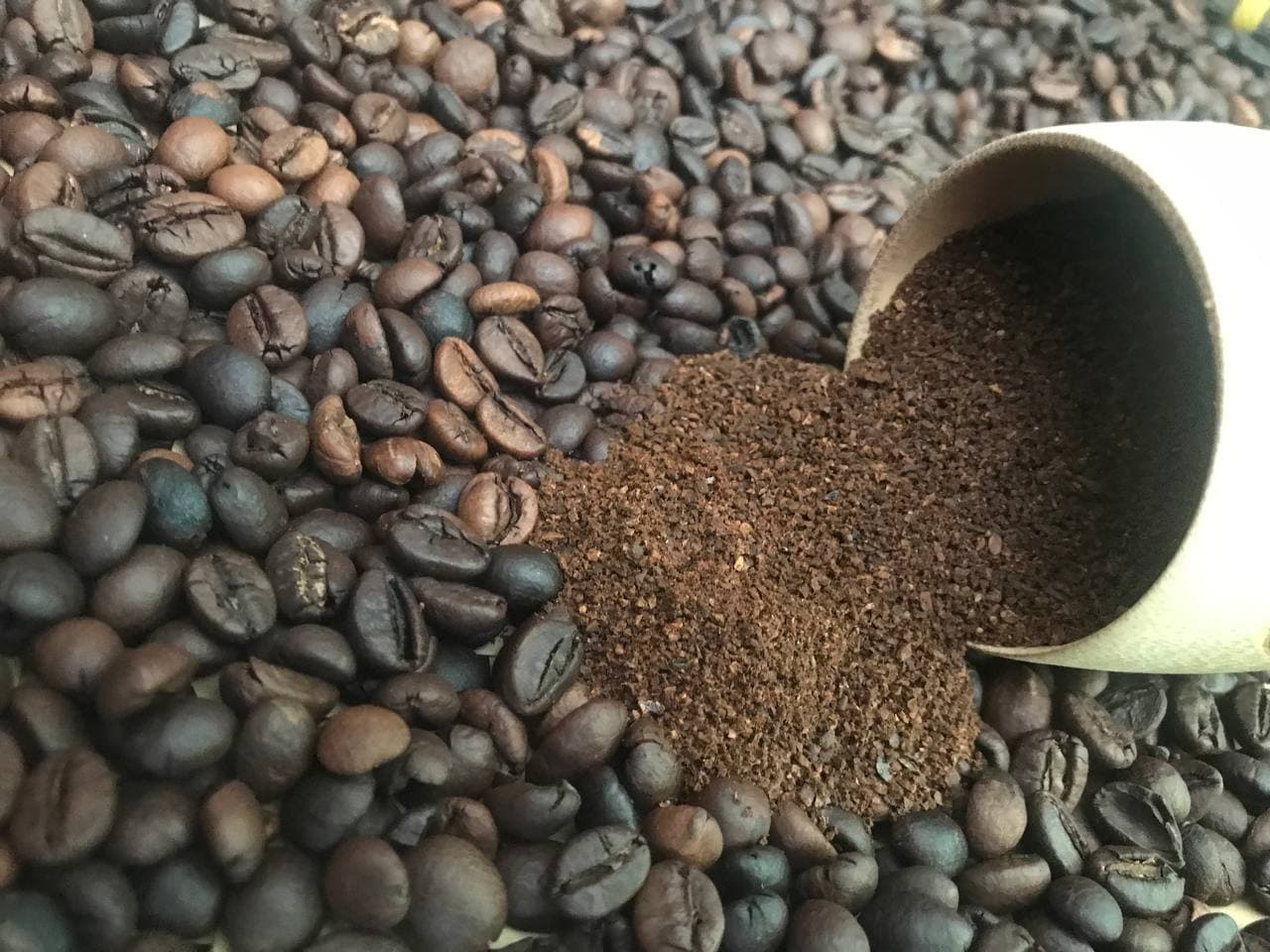
Nhiệt độ, thời gian và độ ẩm ảnh hưởng phản ứng thế nào?
Nhiệt độ làm thay đổi tốc độ phản ứng, nhưng thời gian và độ ẩm quyết định môi trường mà phản ứng diễn ra. Khi hạt còn nhiều nước, năng lượng cung cấp một phần được dùng cho quá trình thoát ẩm. Khi hạt khô dần, nhiệt độ bên trong và tốc độ các phản ứng hóa học thay đổi.
Nghiên cứu về động học Maillard trong cà phê cho thấy phương pháp gia nhiệt khác nhau có thể tạo ra tốc độ hình thành sản phẩm phản ứng khác nhau. Điều đó cho thấy chỉ ghi lại nhiệt độ cuối cùng là chưa đủ để mô tả mẻ rang.
Độ ẩm ban đầu của hạt cũng làm thay đổi đường đi của nhiệt và thời gian ở từng trạng thái. Vì vậy, hai mẻ có cùng thời gian và nhiệt độ hiển thị trên máy vẫn có thể tạo ra kết quả hóa học khác nếu nguyên liệu và cách truyền nhiệt khác nhau.
Maillard không phải là toàn bộ hóa học của rang: cần phân biệt gì?
Rang cà phê còn có caramel hóa, nhiệt phân, phân hủy axit chlorogenic, biến đổi lipid, polysaccharide và nhiều phản ứng khác. ScienceDirect mô tả hóa học rang là một hệ phức tạp, trong đó Maillard, caramel hóa và nhiệt phân cùng tham gia theo các điều kiện khác nhau.
Caramel hóa khác Maillard ở chỗ nó liên quan chủ yếu đến biến đổi nhiệt của đường, không yêu cầu đường phản ứng với amino acid theo cùng cơ chế. Tuy nhiên, trong hạt cà phê, các quá trình này có thể xảy ra đồng thời nên cảm nhận cuối cùng là kết quả tổng hợp.
Cách nói “Maillard tạo ra toàn bộ hương vị cà phê” vì vậy quá rộng. Maillard có vai trò rất lớn trong màu, hương và thành phần hóa học của hạt rang, nhưng nó chỉ là một phần của hệ phản ứng. Hiểu đúng giới hạn này giúp người rang đọc quá trình bằng dữ liệu và quan sát thay vì gán mọi thay đổi cho một cơ chế duy nhất.
Ở góc độ thực hành, người rang không cần đo trực tiếp mọi sản phẩm của Maillard trong từng mẻ. Điều quan trọng hơn là hiểu rằng thời gian lưu nhiệt, độ ẩm ban đầu và cách truyền nhiệt có thể thay đổi mức độ phản ứng. Khi hồ sơ rang được lặp lại trên cùng loại hạt, việc ghi nhận màu, mùi, thời điểm nứt và kết quả trong cốc giúp tạo mối liên hệ thực nghiệm với những biến đổi hóa học.
Tài liệu tham khảo
- https://www.acs.org/
- https://www.sciencedirect.com/topics/food-science/coffee-roasting
- https://www.mdpi.com/search?q=coffee+roasting+Maillard
- https://www.sciencedirect.com/science/article/pii/S0023643824012337
What Components Start the Maillard Reaction?
The Maillard reaction refers to a family of chemical reactions involving reducing sugars and compounds containing amino groups, including amino acids. In food chemistry it is a major route to non-enzymatic browning and the formation of many aroma-related compounds. Green coffee contains carbohydrates and nitrogen-containing compounds, so suitable heating conditions allow these reactions to proceed. It is better understood as a network than as one reaction with one product. Intermediate compounds can continue reacting and form a wide range of substances. The presence of sugar and amino acids alone does not predict a particular flavor because reaction rate and product distribution depend on temperature, time, moisture, chemical environment, and the original composition of the bean.
At What Stage Does It Become Important?
Maillard chemistry becomes increasingly relevant as the bean heats and free water decreases, but it should not be assigned to one universal temperature threshold. Roasting conditions overlap: sugar degradation, Maillard reactions, caramelization, and other thermal transformations can proceed at different rates during the same period. Early heating also involves moisture removal, which changes the environment in which chemical reactions occur. This is why two roasts that share a nominal temperature endpoint can develop differently if their heat-transfer profiles or starting moisture differ. The reaction is a process unfolding through changing conditions, not a switch that turns on at a fixed point.
How Do Its Products Relate to Color and Aroma?
One visible consequence is the development of brown compounds, including melanoidins. Yet color represents only part of the reaction network. Maillard pathways also generate intermediates and volatile compounds that contribute to aroma. Research on roasted coffee has shown that reaction products change with roasting time, and melanoidin formation can increase as roasting progresses under studied conditions. That evidence supports a broad role for Maillard chemistry in roast development, but it does not justify assigning a particular aroma solely to Maillard without appropriate chemical analysis. Sensory descriptors and chemical mechanisms are related, but they are not interchangeable measurements.
How Do Temperature, Time, and Moisture Affect It?
Temperature affects reaction rates, while time and moisture shape the environment in which the reactions occur. When the bean still contains substantial water, part of the supplied energy is used in moisture removal. As the bean dries, internal temperature and chemical reaction rates change. Heating method also matters because different heat-transfer conditions can produce different reaction trajectories. Initial moisture therefore becomes an important variable. A roast profile cannot be described adequately by its final temperature alone. Time spent in different thermal regions, the rate of heating, and the changing physical structure all contribute to the chemical history of the bean.
Why Maillard Is Not the Whole Chemistry of Roasting
Maillard chemistry is only one part of roasting. Caramelization, thermal decomposition, degradation of chlorogenic acids, lipid transformations, polysaccharide changes, and other reactions occur under overlapping conditions. At deeper roast levels, thermal decomposition becomes increasingly important and many compounds are further transformed or volatilized. For the roaster, the useful lesson is not to measure every Maillard product in every batch, but to understand the relationship between heat application, moisture, color, crack timing, aroma, and cup result. Maillard is central to roast chemistry, but saying that it creates the whole flavor of coffee would be an overstatement. For practical roasting, Maillard chemistry is best understood as part of the bean’s changing thermal environment. As moisture falls and the structure develops, the conditions available to the reacting compounds change. This means that a profile with a rapid temperature rise is not chemically equivalent to a slower profile that reaches the same final temperature. Time, moisture, and heat transfer all contribute to the reaction history. The sensory result should also be interpreted carefully. Roasted coffee contains a large mixture of volatile and non-volatile compounds, and many can contribute to aroma or taste at the same time. A nutty, toasted, roasted, or brown-sugar-like impression cannot automatically be assigned to one Maillard product. Chemical analysis can identify compounds and pathways more precisely; sensory evaluation tells us what the finished coffee presents to the drinker. This broader view prevents a common oversimplification in roast education: treating Maillard as a single stage with one target temperature. In reality, it overlaps with other reactions and changes as the bean continues to heat. The useful objective is to understand how roast time, heat application, moisture, and development influence the combined chemical outcome and then confirm that outcome through repeatable sensory evaluation. The practical implication is that roast development should be evaluated as a trajectory rather than a single temperature target. Changes in moisture, heat application, bean structure, and reaction time continuously alter the environment in which Maillard chemistry proceeds. A repeatable roast record can therefore be more informative than a single endpoint number. When sensory results are linked to those records over multiple batches, the roaster can identify useful relationships without claiming that one reaction explains every aroma or flavor. That balance between chemical understanding and sensory evidence is what makes the concept useful in practice. For professional analysis, the most useful habit is to keep the causal chain visible. Start with the observable condition, identify the mechanism through which it can affect coffee, and then state which additional evidence is needed before drawing a market conclusion. This avoids confusing a background variable with a direct price driver. It also makes the analysis easier to update when new information arrives. In practice, the same discipline means recording the relevant time period, defining important terms, and distinguishing observed data from forecasts or interpretations. A careful reader should be able to see where the source evidence ends and where analytical judgment begins. That boundary is especially important in coffee because physical production, trade, finance, weather, and consumer behavior interact across different time horizons. A concise market statement can therefore be useful, but only when its assumptions and evidence remain traceable. That discipline is what allows a conclusion to remain useful after the market environment changes. It also makes the reasoning easier to compare with later evidence, because the reader can see which observation changed, which assumption changed, and which part of the conclusion remains supported. In a professional research workflow, this traceability is as important as the conclusion itself. A well-structured article should leave enough context for a later reader to understand the evidence without reconstructing the original analysis from memory. This is the difference between a plausible story and an analysis that can withstand comparison with later data. Overall.
References
- https://www.acs.org/
- https://www.sciencedirect.com/topics/food-science/coffee-roasting
- https://www.mdpi.com/search?q=coffee+roasting+Maillard
- https://www.sciencedirect.com/science/article/pii/S0023643824012337