Ba cơ chế truyền nhiệt trong máy rang
Nhiệt đi từ nguồn gia nhiệt vào hạt cà phê chủ yếu qua ba cơ chế: dẫn nhiệt, đối lưu và bức xạ. Trong máy rang thực tế, ba cơ chế này thường cùng tồn tại, chỉ khác nhau về tỷ trọng tùy thiết kế máy và cách vận hành.
Dẫn nhiệt xảy ra khi hạt tiếp xúc trực tiếp với bề mặt nóng. Đối lưu xảy ra khi dòng khí nóng truyền năng lượng vào hạt. Bức xạ là truyền năng lượng dưới dạng bức xạ nhiệt từ các bề mặt nóng mà không cần tiếp xúc trực tiếp. cà phê nhân Collective mô tả cả ba cơ chế và lưu ý rằng sự cân bằng giữa chúng giúp giải thích vì sao cùng một loại hạt có thể cho kết quả khác nhau trên các loại máy khác nhau.
Điểm cần nhớ là máy rang không “chọn” một cơ chế duy nhất. Thiết kế lồng rang, luồng khí, nhiệt độ bề mặt và chuyển động của hạt cùng quyết định đường truyền năng lượng.
Dẫn nhiệt: năng lượng đi qua tiếp xúc như thế nào?
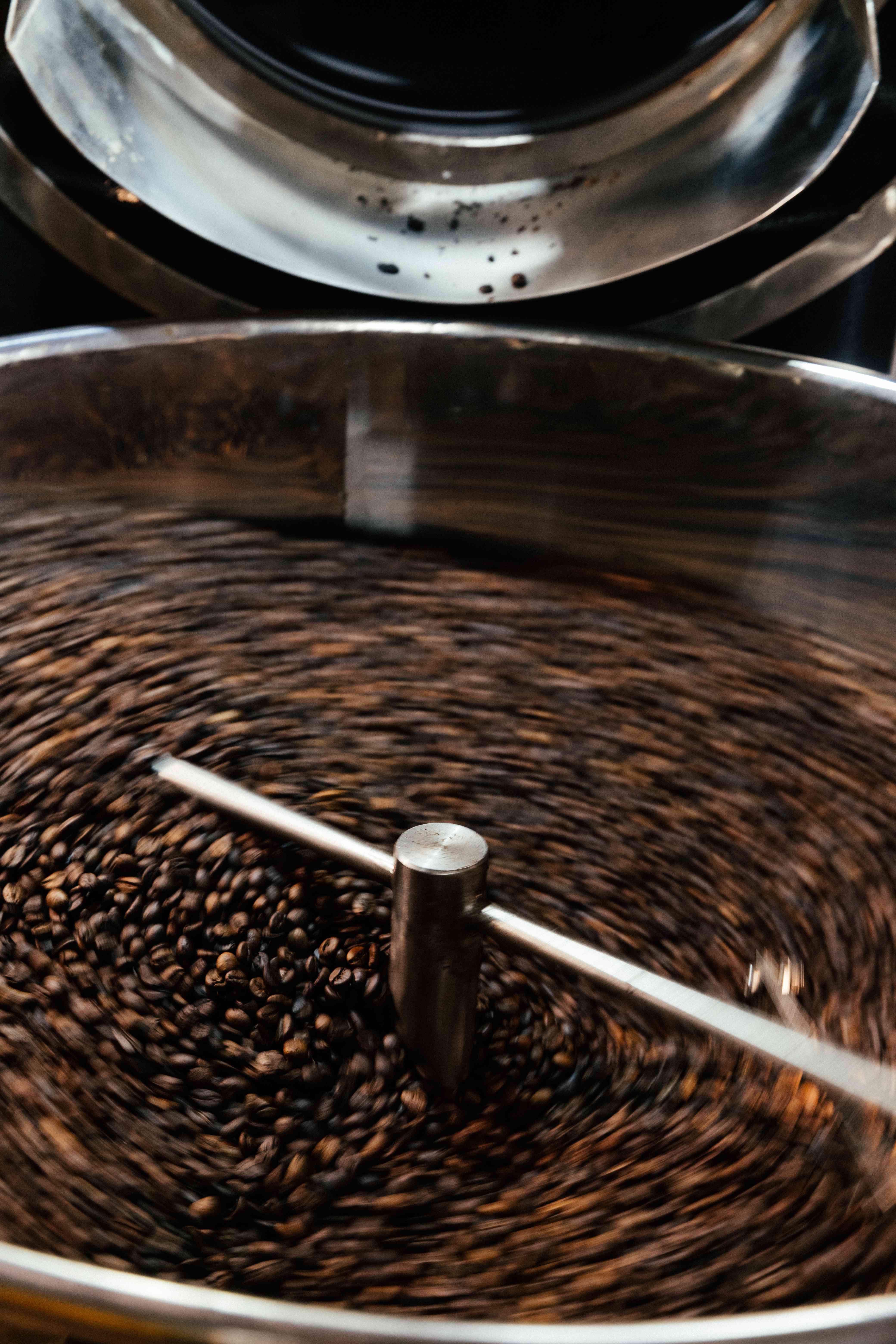
Dẫn nhiệt là con đường dễ hình dung nhất: hạt tiếp xúc với bề mặt nóng và nhận năng lượng qua vùng tiếp xúc. Trong máy rang dạng trống, thành trống nóng truyền nhiệt cho những hạt chạm vào bề mặt. cà phê nhân Collective cho biết cơ chế này thường đáng kể ở giai đoạn đầu khi hạt còn lạnh và bề mặt trống nóng.
Hiệu quả dẫn nhiệt phụ thuộc diện tích và thời gian tiếp xúc, nhiệt độ bề mặt, chuyển động của hạt và khả năng dẫn nhiệt của vật liệu. Nếu hạt tiếp xúc quá lâu với bề mặt nóng trong điều kiện truyền nhiệt không cân bằng, bề mặt hạt có thể nhận năng lượng nhanh hơn phần bên trong.
Đây là lý do tốc độ quay trống và cách phân bố hạt có thể ảnh hưởng đường cong rang. Dẫn nhiệt không phải tốt hay xấu một cách tuyệt đối; vấn đề là nó được phối hợp với các đường truyền khác như thế nào.
Đối lưu: luồng khí truyền nhiệt vào hạt ra sao?
Đối lưu truyền nhiệt qua dòng khí chuyển động. Khi không khí nóng đi qua khối hạt, năng lượng được truyền từ khí sang bề mặt hạt rồi tiếp tục đi vào bên trong. Trong máy rang tầng sôi, đối lưu thường giữ vai trò rất lớn; trong máy rang trống, mức độ đóng góp thay đổi theo tốc độ quạt và thiết kế đường khí.
Ưu điểm của đối lưu là người vận hành có thể tác động đến lượng khí đi qua khối hạt. Tăng hoặc giảm luồng khí có thể thay đổi cách nhiệt và khói được đưa ra khỏi buồng rang. Nhưng tăng quạt không đồng nghĩa lúc nào cũng “truyền nhiệt tốt hơn”, vì nhiệt độ khí và các điều kiện khác cũng thay đổi.
Đối lưu cũng liên quan đến việc kiểm soát môi trường trong buồng rang. Dòng khí mang theo hơi ẩm và các chất dễ bay hơi, nên nó vừa là con đường truyền nhiệt vừa là một phần của quá trình thoát khí.
Bức xạ đóng góp ở đâu trong quá trình rang?
Bức xạ nhiệt truyền năng lượng từ bề mặt nóng tới hạt mà không cần tiếp xúc trực tiếp. Trong máy rang, thành trống và các bề mặt nóng có thể phát bức xạ tới hạt. cà phê nhân Collective xem đây là cơ chế tồn tại xuyên suốt quá trình nhưng thường khó điều khiển trực tiếp hơn dẫn nhiệt và đối lưu.
Mức đóng góp của bức xạ phụ thuộc nhiệt độ và hình học của máy, khoảng cách giữa bề mặt nóng và hạt, vật liệu và thiết kế buồng rang. Vì vậy, không nên đưa ra một tỷ lệ cố định cho mọi máy.
Trong thực hành, bức xạ thường được hiểu như một phần của tổng ngân sách năng lượng. Người rang không cần tách riêng nó trong mọi mẻ, nhưng hiểu cơ chế giúp giải thích vì sao hai máy có cùng nhiệt độ khí vẫn có thể truyền nhiệt khác nhau.
Sự phối hợp các cơ chế ảnh hưởng điều khiển mẻ rang thế nào?
Ba cơ chế phối hợp tạo ra tốc độ tăng nhiệt của hạt. Khi người vận hành thay đổi công suất, tốc độ quạt hoặc tốc độ quay, họ không chỉ thay đổi một con số trên máy mà đang thay đổi cách năng lượng được phân bố.
cà phê nhân Collective nhấn mạnh rằng cân bằng giữa dẫn nhiệt, đối lưu và bức xạ giúp giải thích sự khác biệt giữa máy rang trống và máy tầng sôi, cũng như ảnh hưởng của tốc độ quạt, tốc độ trống và công suất lên đường cong rang.
Đối với người đọc đường cong rang, điều quan trọng là không coi nhiệt độ hiển thị là nhiệt độ đồng nhất của hạt. Nhiệt độ môi trường, nhiệt độ khối hạt và tốc độ truyền năng lượng là những thứ liên quan nhưng không giống nhau.
Hiểu truyền nhiệt cũng giúp tránh áp dụng máy móc một công thức rang. Một thay đổi công suất trên máy này có thể tạo hiệu ứng khác trên máy khác vì tỷ trọng của ba cơ chế truyền nhiệt khác nhau. Vì vậy, kiểm soát mẻ rang tốt cần dựa trên đặc tính thiết bị, phản ứng thực tế của hạt và dữ liệu của chính máy đó.
Có thể coi ba cơ chế truyền nhiệt là ba con đường cùng đưa năng lượng vào hạt. Khi một con đường thay đổi, hai con đường còn lại không nhất thiết giữ nguyên vai trò. Vì vậy, điều khiển công suất và quạt nên được đánh giá qua phản ứng của hạt, chứ không chỉ qua cảm giác máy đang “nóng hơn” hay “nhiều gió hơn”. Việc lưu lại các thông số cùng kết quả từng mẻ giúp người rang hiểu đặc tính riêng của thiết bị và xây dựng hồ sơ rang có khả năng lặp lại.
Heat does not enter a coffee bean through one single route. In a working roaster, energy reaches the beans through conduction, convection, and radiation, while the relative contribution of each mechanism changes with machine design, airflow, surface temperature, bean movement, and operating decisions. Understanding these pathways is more useful than trying to label a roaster as purely conductive or purely convective.
The Three Heat-Transfer Mechanisms
Conduction transfers energy through direct contact between materials at different temperatures. In a drum roaster, a bean can receive heat when it touches a hot drum surface. Convection transfers energy through moving fluid, in this case hot air passing around the beans.
Radiation transfers energy through electromagnetic emission from hot surfaces without requiring direct contact. All three can occur at the same time. The roaster does not switch from one mechanism to another as though they were separate operating modes.
Instead, machine geometry, airflow, surface temperatures, and bean movement create a particular balance of heat-transfer pathways at each moment. This explains why the same green coffee can behave differently on different roasters even when the displayed temperature appears similar. The displayed number describes one measured condition, not the complete energy balance experienced by every bean.
Conduction Through Contact
Conduction is the most intuitive pathway to visualize. A bean touches a hot surface and receives energy across the contact area. In a drum roaster, the heated drum wall is one important contact surface.
The actual amount of energy transferred depends on the temperature difference, contact area, duration of contact, material properties, and movement of the bean. Bean movement matters because contact is constantly changing. A bean may touch the drum for a short interval, move away, contact another bean, and then return to the hot surface.
Drum speed and the way the coffee bed is distributed therefore influence the pattern of contact over time. Conduction is not inherently good or bad. The relevant question is how it interacts with convection and radiation.
If the surface transfers energy much faster than the bean interior can redistribute it, the outer region can experience a different thermal history from the center. Balanced heat transfer is therefore a system problem, not a question of maximizing one pathway.
Convection Through Moving Air
Convection transfers energy from moving hot air to the bean surface and then into the bean. In fluid-bed systems, convection can make up a large share of the heat delivered to the coffee. In drum roasters, its contribution depends strongly on airflow, air temperature, chamber design, and the movement of the coffee.
Airflow also does more than transfer heat. Moving air carries moisture and volatile products away from the roasting chamber. Changing the fan therefore changes the thermal environment and the gas environment around the beans at the same time.
Increasing airflow does not automatically mean “more heat.” The outcome depends on the temperature and energy content of the incoming air, the machine’s heat source, pressure conditions, and how the altered airflow changes the rest of the system. This is why airflow adjustments should be interpreted through the response of the roast rather than through a simple rule.
Where Radiation Fits
Radiation transfers energy from hot surfaces to other objects without direct contact. Hot drum surfaces and other heated components can emit thermal radiation toward the beans. The contribution depends on surface temperature, geometry, distance, materials, and what the beans can “see” inside the roasting chamber.
Radiation is often harder for an operator to control directly than airflow or burner input, but it remains part of the total energy balance. A useful mental model is therefore not “conduction versus convection,” but a combination in which radiation completes the picture of how heat can reach the coffee. There is no universal percentage that can be assigned to radiation for every roaster.
Machine geometry and operating conditions matter too much for such a fixed value to be reliable across equipment.
How the Mechanisms Work Together
The bean responds to the combined energy entering its surface and moving through its structure. When burner power, airflow, drum speed, or batch size changes, the operator can alter more than one heat-transfer pathway at once. This is why a roast profile cannot be copied mechanically from one machine to another.
A reduction in burner power on one roaster may not produce the same thermal response as the same numerical change on another because the machines distribute energy differently. Similarly, a fan adjustment can change both convection and the removal of moisture and volatile compounds. For a roaster reading a curve, it is important to distinguish the measured air temperature, measured bean temperature, and the actual rate at which energy is moving into the coffee.
These signals are related, but they are not identical.
Why Machine Design Matters
Drum speed, airflow design, heat-source placement, chamber geometry, and the thermal mass of the equipment all influence how energy reaches the beans. The same coffee can therefore show a different rate of heating and a different response to controls on two machines with different designs. The practical lesson is to avoid assigning a sensory outcome directly to one heat-transfer mechanism.
Aroma and flavor are the result of many physical and chemical processes. A more defensible analysis connects machine settings to the thermal conditions they create, then connects those conditions to observed changes in the bean and finally to sensory results. Conduction, convection, and radiation are best understood as three routes through the same system.
They overlap continuously, and changing one control can alter the balance among them. A useful roasting record therefore includes machine conditions, airflow, power changes, bean response, and sensory results. That combination tells the roaster much more than a label such as “conductive machine” or “convection machine” ever could.
For practical troubleshooting, the three mechanisms can be considered as a connected energy budget. If a roast responds unexpectedly to a burner change, the explanation may involve the air system, hot surfaces, stored heat, or bean movement rather than the burner setting alone. Recording these variables across repeated batches helps reveal the machine-specific response.
This is especially important when transferring a profile from one roaster to another: matching displayed temperatures is not the same as matching the physical route by which energy reaches the coffee.