
Máy đo màu biến đặc tính quang học của cà phê rang thành dữ liệu định lượng. Với một quy trình lấy mẫu ổn định, con số này giúp người rang kiểm tra mức rang và phát hiện những mẻ lệch khỏi khoảng đã đặt ra.
Agtron E20-CP III được thiết kế chuyên cho cà phê rang và sử dụng vùng cận hồng ngoại để xác định mức rang dựa trên đặc tính liên quan đến hóa học của cà phê. Agtron mô tả thiết bị như một công cụ giúp biến đánh giá trực quan thành dữ liệu có thể theo dõi giữa các mẻ. citeturn0search0turn0search2
Điểm mạnh của máy đo màu nằm ở tính lặp lại của phép đo. Nó không mệt, không đổi khẩu vị theo ca làm việc và cho một giá trị số thuận tiện cho hồ sơ chất lượng.
Đo màu giúp kiểm soát độ lặp lại
Khi một nhà rang muốn giữ sản phẩm ổn định, việc so sánh bằng mắt thường có thể gặp giới hạn. Ánh sáng môi trường, người đánh giá và cách nhìn đều có thể ảnh hưởng đến nhận xét.
Một chỉ số đo giúp giảm một phần biến động đó. Nếu các mẻ cùng loại cà phê được rang trong điều kiện tương tự nhưng màu đo lệch đáng kể, người vận hành có lý do để kiểm tra lại hồ sơ rang, nhiệt, luồng khí hoặc thời điểm xả.
Nó cũng hữu ích khi nhiều người cùng vận hành. Một nhóm có thể thống nhất rằng một khoảng giá trị nhất định là vùng kiểm soát nội bộ, thay vì mỗi người hiểu “rang vừa” theo một cách.

Những điều không thể suy ra chỉ từ màu
Một tách cà phê còn phụ thuộc vào nguyên liệu, sơ chế, bảo quản, mức xay, nước và phương pháp pha. Ngay trong quá trình rang, màu cuối cùng không chứa đầy đủ thông tin về cách nhiệt đã đi vào hạt.
Các nghiên cứu về màu cà phê cho thấy màu có liên hệ với mức rang nhưng không phải là bản sao của trải nghiệm trong tách. Nghiên cứu trên Tạp chí Khoa học Thực phẩm chỉ ra rằng màu của bột không trực tiếp quyết định màu của đồ uống và quá trình pha làm thay đổi biểu hiện màu. citeturn0search14
Vì vậy, không thể dùng một chỉ số màu để kết luận đầy đủ rằng cà phê có hương thơm tốt, vị cân bằng hay hậu vị mong muốn.
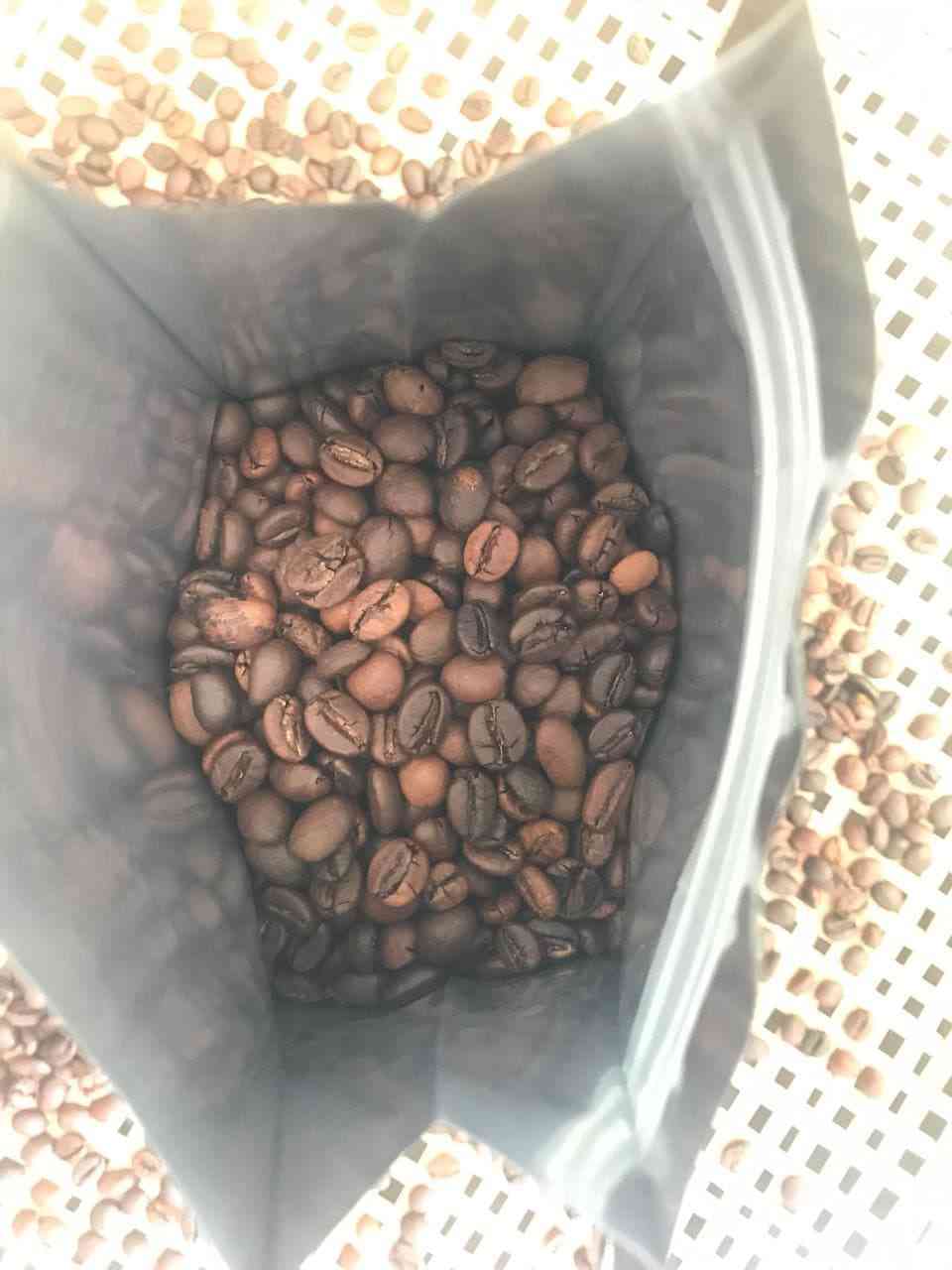
Cùng màu vẫn có thể khác trải nghiệm
Hai mẻ có thể đạt màu gần nhau nhưng đi đến màu đó bằng những hồ sơ nhiệt khác nhau. Nguồn gốc và cấu trúc hạt cũng có thể khác. Một nghiên cứu năm 2025 cho thấy màu rang có thể hội tụ theo những mốc nhất định ngay cả khi hồ sơ rang và nguồn gốc thay đổi, cho thấy màu là một biến hữu ích nhưng không phải toàn bộ câu chuyện. citeturn0search7turn0search8
Điều này đặc biệt quan trọng khi so sánh các loại cà phê khác nhau. Cùng một giá trị màu không đồng nghĩa với cùng mức phát triển hóa học hoặc cùng cảm nhận trong tách.
Máy đo màu nên giúp người rang đặt câu hỏi tốt hơn: mẻ này có lệch khỏi chuẩn không, và nếu lệch thì nguyên nhân ở đâu? Nó không nên được dùng như câu trả lời duy nhất.

Cảm quan bổ sung cho dữ liệu máy
Đánh giá cảm quan có nhiệm vụ mà máy đo màu không thể thay thế: kiểm tra kết quả cuối cùng bằng giác quan trong tách. Người thử nếm có thể nhận ra khác biệt về hương, vị, độ chua, độ đắng, hậu vị và cảm giác miệng mà một chỉ số màu không thể biểu diễn đầy đủ.
Điều quan trọng là cảm quan cũng cần có cấu trúc. Khi thử nếm được thực hiện với quy trình nhất quán, nó trở thành dữ liệu để so sánh chứ không chỉ là nhận xét chủ quan.
Vì thế, máy đo màu và cảm quan không nên được đặt ở hai phía đối lập. Một bên giúp định lượng biến động vật lý; bên kia kiểm tra xem biến động đó có thực sự tạo ra khác biệt đáng kể trong tách hay không.
Mô hình kiểm soát kết hợp hai phương pháp
Một hệ thống kiểm soát hợp lý có thể bắt đầu bằng hồ sơ rang, sau đó kiểm tra màu và cuối cùng xác nhận bằng thử nếm. Nếu màu lệch, cần điều tra quy trình. Nếu màu nằm trong giới hạn nhưng cảm quan thay đổi, cần xem xét những yếu tố khác của nguyên liệu và quá trình.
Lợi ích lớn nhất của cách kết hợp này là tránh hai cực đoan. Chỉ dựa vào cảm quan khiến dữ liệu khó chuẩn hóa giữa nhiều người. Chỉ dựa vào máy khiến cơ sở dễ bỏ qua chất lượng thực tế trong tách.
Máy đo màu vì vậy là công cụ rất hữu ích cho kiểm soát rang, nhưng không phải một “người thử nếm tự động”. Giá trị của nó tăng lên khi được đặt trong một hệ thống gồm dữ liệu quá trình, phép đo đầu ra và đánh giá cảm quan.
Khi nào máy đo màu đặc biệt hữu ích
Máy đo màu có giá trị cao trong những quy trình cần theo dõi nhiều mẻ liên tiếp, nhiều ca vận hành hoặc nhiều người rang. Nó giúp tạo một ngôn ngữ chung để trao đổi về mức rang. Trong kiểm soát sản xuất, khả năng phát hiện một mẻ lệch khỏi vùng thông thường cũng có thể giúp khoanh vùng vấn đề sớm hơn trước khi sản phẩm được đưa đi phân phối.
Giới hạn của một con số đơn
Một số đo có ưu điểm là rõ ràng nhưng cũng có nguy cơ tạo cảm giác chắc chắn quá mức. Nếu hai mẫu có cùng giá trị màu, điều đó chỉ cho biết chúng tương đồng trên biến được đo. Nó không chứng minh chúng có cùng hương thơm hoặc cùng độ cân bằng. Cách sử dụng thận trọng là luôn đặt dữ liệu màu cạnh dữ liệu quá trình và cảm quan.
- https://www.agtroninc.com/product-applications/coffee/
- https://www.agtroninc.com/analyzers/e20cpiii/
- https://sca.coffee/sca-news/25/issue-21/what-color-is-your-coffee-37lk7
- https://sca.coffee/sca-news/25/issue-5/modulating-perception-25-magazine-issue-5-dxzar
- https://www.nature.com/articles/s41598-025-06601-w
- https://ift.onlinelibrary.wiley.com/doi/full/10.1111/1750-3841.16089
A color meter can turn an optical property of roasted coffee into a numerical measurement. Under a consistent sampling method, that number can help a roaster monitor roast degree and identify batches that move outside an established range. What it cannot do is describe the complete sensory experience of the coffee. Instrumental measurement and sensory evaluation answer different questions, which is why replacing one with the other would create a weaker quality-control system.
What a Color Meter Can Tell You
A color meter provides a quantitative signal related to the optical characteristics of roasted coffee. Agtron’s E20-CP III, for example, is designed for roasted coffee and uses near-infrared measurement to support roast-degree assessment. The strength of the instrument is repeatability.
It does not become tired between production shifts, and it does not change its visual judgment because lighting or personal preference has changed. When sampling and measurement are standardized, the resulting value provides a useful reference for comparing batches. That makes the instrument particularly useful for process control.
If a batch falls outside the normal range, the result can trigger an investigation into the roast profile, heat input, airflow, discharge point, or raw material.
How It Supports Repeatability
Visual assessment can vary with ambient light, the observer, and the way the coffee is presented. A numerical measurement can reduce part of that variation and create a common language for a roasting team. This is especially useful when several people operate the same equipment.
Instead of relying on everyone to interpret “medium roast” in exactly the same way, a team can establish an internal range based on a defined instrument, scale, and sample method. The measurement becomes even more useful when it is linked to batch records. A color value alone is limited; a color value attached to a batch number, green-coffee identity, roast curve, and sensory result becomes evidence that can be compared over time.
What Color Alone Cannot Tell You
A brewed coffee depends on much more than final roast color. Green-coffee characteristics, processing, storage, grind size, water, temperature, pressure, brew method, and the thermal path of the roast all influence the cup. Research on coffee color also shows that the color of ground coffee does not directly determine the color of the beverage.
Brewing changes the way color appears in the drink, so the optical measurement of the roasted material should not be treated as a direct measurement of beverage quality. For the same reason, a color reading cannot prove that a coffee has good aroma, balanced acidity, pleasant bitterness, or a desirable aftertaste. Those are sensory questions.
Why Similar Color Can Produce Different Cups
Two batches can reach similar color values through different thermal histories. They may also come from different origins, varieties, processing methods, or storage conditions. A color meter will correctly report similarity on the measured optical variable while remaining silent about those other differences.
This is particularly important when comparing different coffees. The same numerical color value does not guarantee the same degree of chemical development or the same sensory expression. The best question for a color meter is therefore not “Is this coffee good?” but “Is this batch behaving differently from the range we normally expect?” The answer can then guide further investigation.
Why Sensory Evaluation Remains Necessary
Sensory evaluation tests the final result in a way an instrument cannot. A structured tasting can identify differences in aroma, flavor, acidity, bitterness, mouthfeel, aftertaste, cleanliness, and overall balance. Sensory evaluation itself should be systematic.
When the preparation and assessment method are consistent, sensory observations become useful comparative data rather than isolated personal impressions. This creates a complementary relationship. Instrumental measurement quantifies one physical property of the roasted coffee, while sensory evaluation determines whether changes in the process actually matter in the cup.
A Combined Quality-Control Model
A practical quality-control system can begin with the roast profile, check roast color, and then confirm the finished coffee through sensory evaluation. If color moves outside its normal range, the process should be investigated. If color remains within range but sensory results change, attention should shift to green coffee, storage, brewing, or other process variables.
This combined model avoids two extremes. Relying only on sensory evaluation can make production records difficult to standardize across people and shifts. Relying only on a meter can create false confidence because the instrument measures only the variable it was designed to measure.
The color meter is therefore best understood as a quality-control instrument, not an automated taster.
Where Color Measurement Is Especially Valuable
Color measurement is particularly valuable when a roasting operation handles many consecutive batches, multiple shifts, or several operators. It creates a shared numerical language and can reveal a batch that departs from normal production before the coffee moves further into the distribution chain. Its greatest value appears when the number is interpreted in context.
A measurement can tell the team that something changed; the roast record and sensory evaluation can help explain whether the change matters and where it originated. A color meter should therefore sit inside a larger system: standardized sampling, stable measurement conditions, process records, and structured sensory evaluation. Used that way, it improves consistency without pretending to replace the human assessment of coffee in the cup.
The distinction becomes especially important when a roasting operation uses color values as release criteria. A batch can meet a numerical color target and still require sensory review before it is accepted as a finished product. Conversely, a small color deviation may not have the same significance if the sensory result remains within the intended profile.
The right response is therefore not to ignore the meter or to distrust tasting, but to use each as evidence about a different layer of the process. Instrumental consistency and sensory consistency become stronger when they confirm one another.
- https://www.agtroninc.com/product-applications/coffee/
- https://www.agtroninc.com/analyzers/e20cpiii/
- https://sca.coffee/sca-news/25/issue-21/what-color-is-your-coffee-37lk7
- https://sca.coffee/sca-news/25/issue-5/modulating-perception-25-magazine-issue-5-dxzar
- https://www.nature.com/articles/s41598-025-06601-w
- https://ift.onlinelibrary.wiley.com/doi/full/10.1111/1750-3841.16089