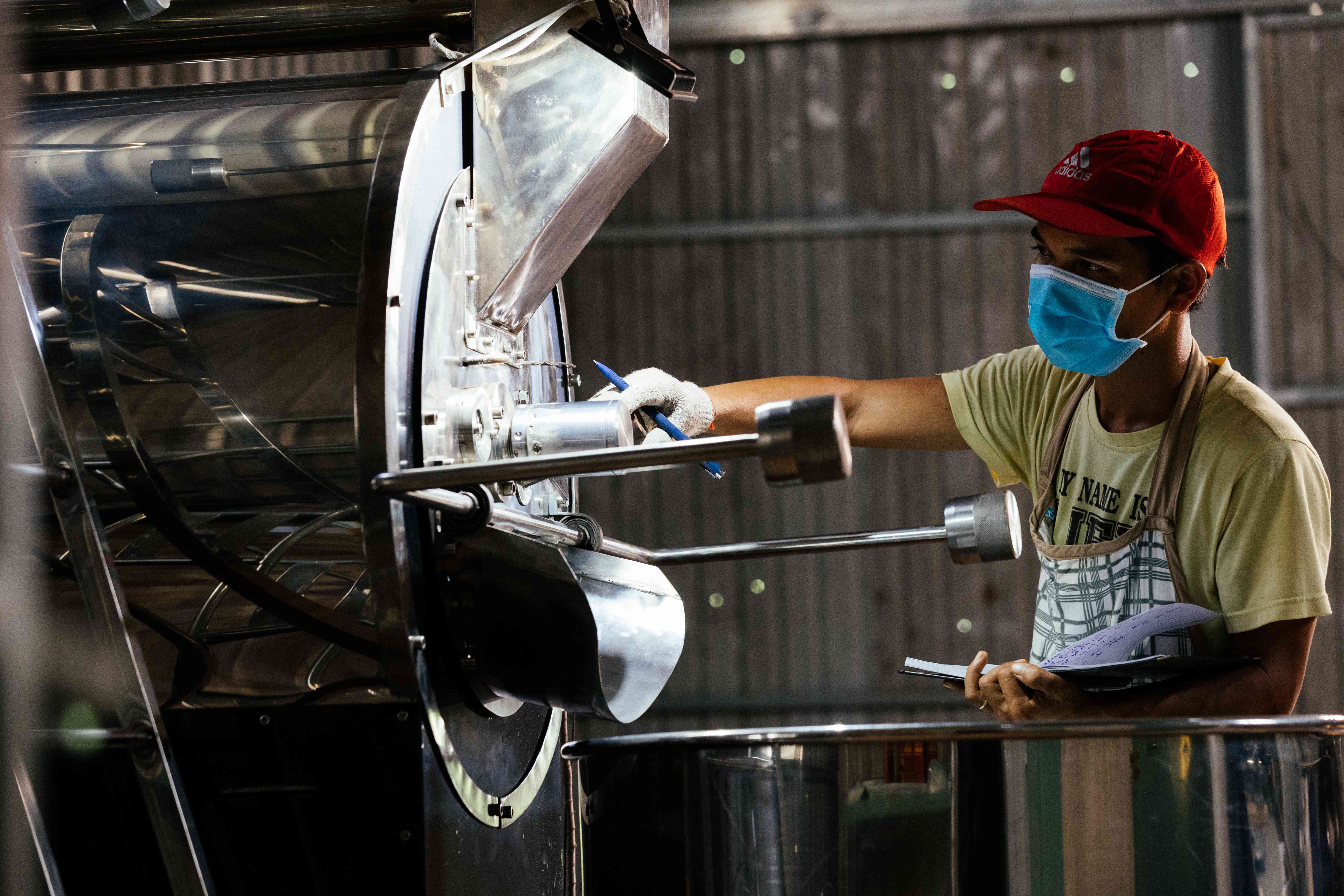
Một hồ sơ rang có thể được ghi thành các con số: nhiệt độ, thời gian, nhiệt cung cấp, luồng khí và các mốc sự kiện. Nhưng việc nhập lại những con số đó không đảm bảo cà phê sẽ cho cùng kết quả.
Tái lập thực sự là khả năng tạo ra kết quả tương đương trong tách dưới những điều kiện được kiểm soát. Đây là khác biệt giữa “lặp lại thao tác” và “lặp lại kết quả”. Một bài viết của Loring cập nhật năm 2026 nhấn mạnh rằng hồ sơ rang chỉ là điểm khởi đầu; tính ổn định còn phụ thuộc trạng thái máy, nguyên liệu, khối lượng mẻ, điều kiện môi trường và thói quen vận hành. citeturn0search1
Vì vậy, một hồ sơ tốt không phải một công thức bất biến. Nó là một hệ thống giúp người rang nhận ra biến động và điều chỉnh có cơ sở.
Những biến số quyết định khả năng tái lập
Khối lượng mẻ là một biến quan trọng vì nó thay đổi tải nhiệt. Độ ẩm, mật độ, kích thước hạt và phương pháp sơ chế cũng ảnh hưởng cách hạt nhận năng lượng. Nhiệt độ ban đầu của máy, điều kiện môi trường, luồng khí, công suất nhiệt và tình trạng cảm biến cũng làm thay đổi phản ứng của hệ thống.
Một hồ sơ rang được xây dựng trên một loại cà phê không thể mặc nhiên áp sang một lô khác chỉ vì cùng tên vùng trồng. Các dữ liệu gần đây về nguyên liệu xanh cũng nhấn mạnh rằng độ ẩm, mật độ và kích thước hạt có thể thay đổi cách cà phê tiếp nhận nhiệt. citeturn0search5turn0search6
Điều này giải thích vì sao cùng một thao tác có thể tạo ra đường cong khác nhau.
Dữ liệu cần ghi để so sánh các mẻ
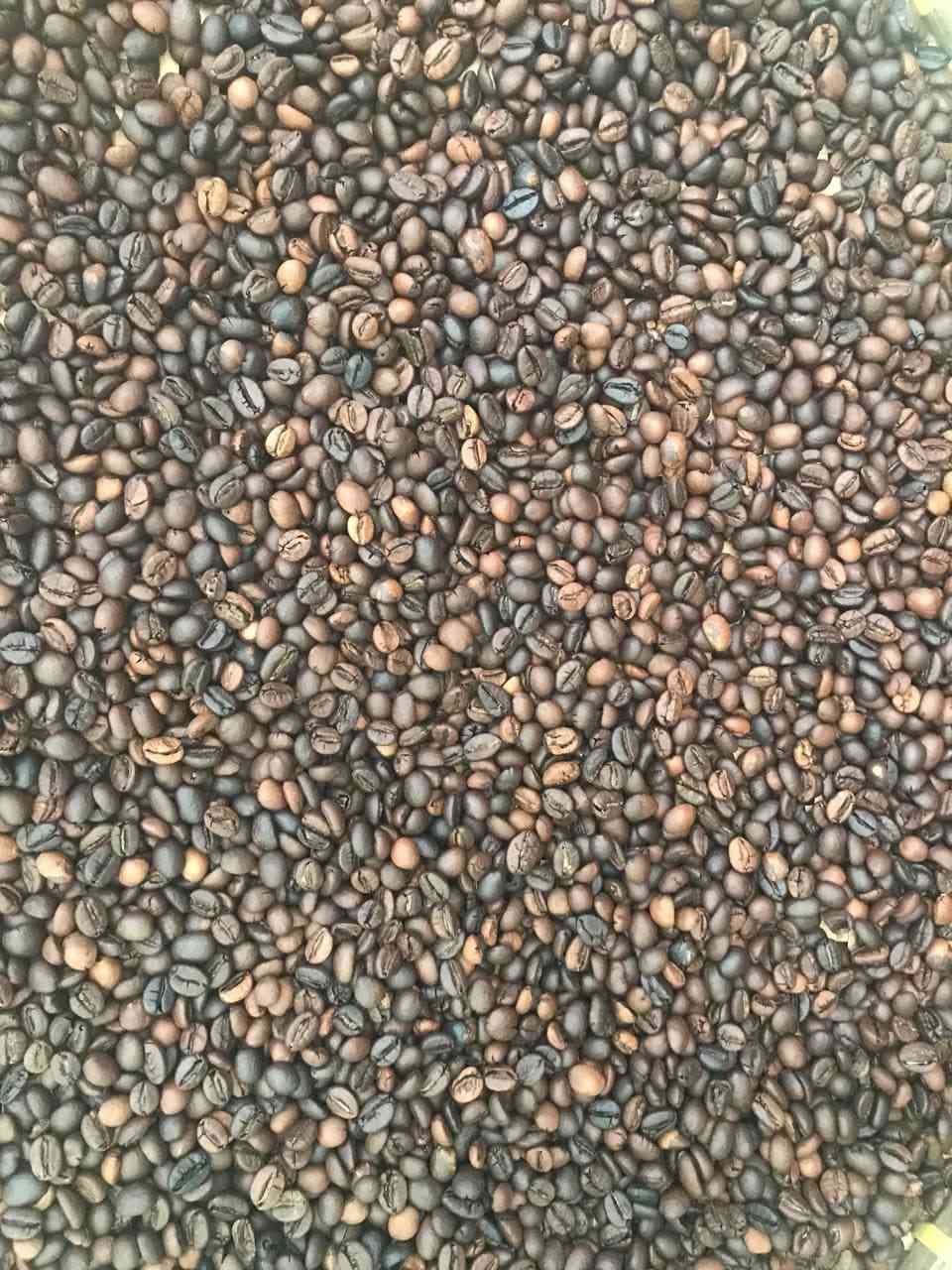
Một hồ sơ đủ dùng nên ghi mã nguyên liệu, khối lượng xanh, tình trạng máy, nhiệt độ nạp, đường nhiệt độ hạt, nhiệt độ môi trường nếu có, ROR, thay đổi nhiệt và luồng khí, thời điểm tiếng nổ lần đầu, thời gian phát triển và nhiệt độ xả.
Ngoài dữ liệu máy, nên ghi màu rang và kết quả thử nếm. Một đường cong không thể hiện đầy đủ kết quả trong tách.
Khi các trường dữ liệu này được ghi đều qua nhiều mẻ, người rang có thể phân biệt hai tình huống: quy trình thật sự ổn định nhưng cảm quan nguyên liệu thay đổi, hoặc quy trình vận hành đang trôi khỏi chuẩn.
Vì sao cùng hồ sơ rang vẫn cho kết quả khác
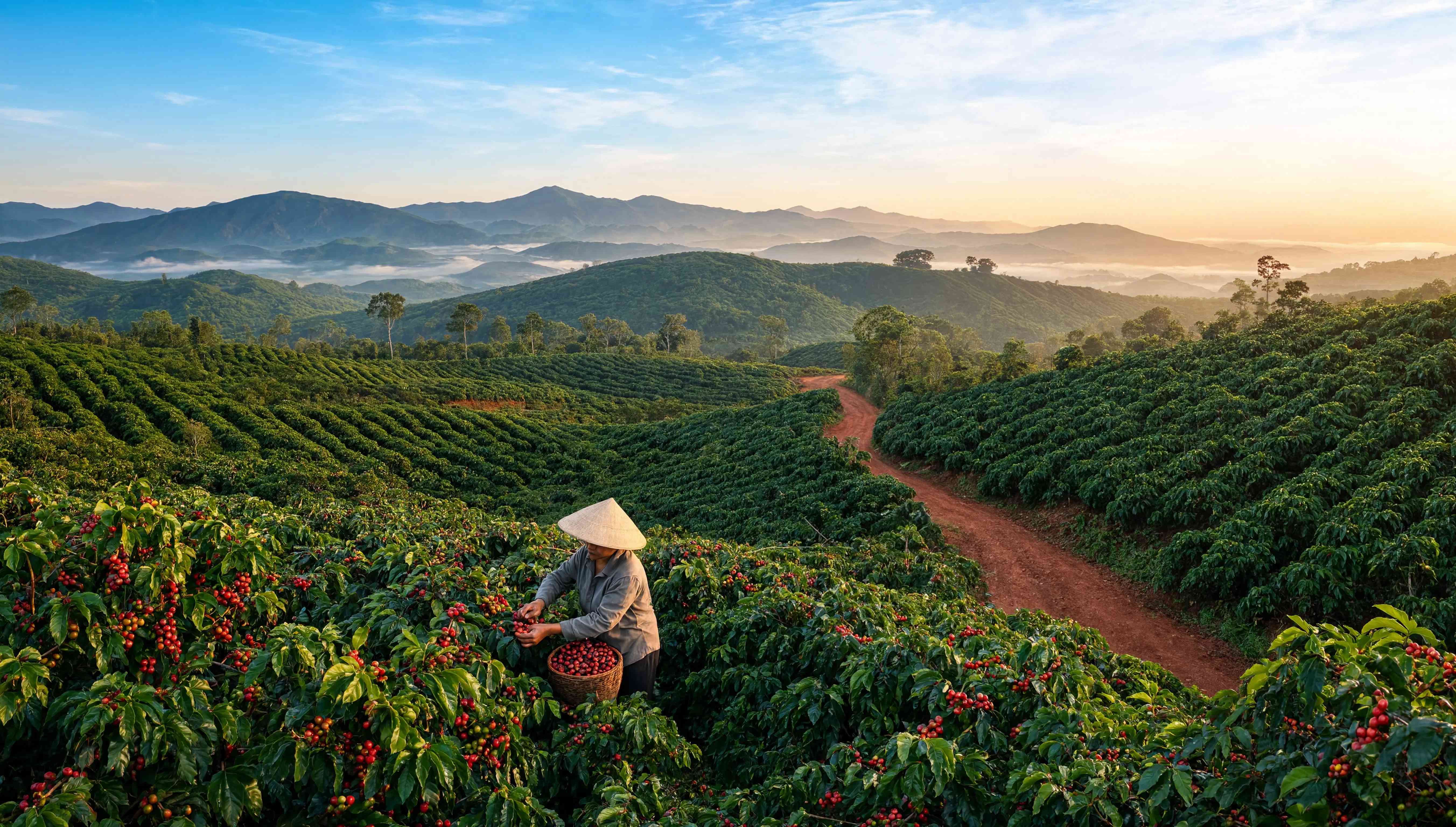
Hạt cà phê là nguyên liệu nông nghiệp. Độ ẩm và mật độ không hoàn toàn cố định; điều kiện bảo quản và tuổi lô cũng có thể thay đổi. Trong khi đó, máy rang là một hệ thống vật lý: nhiệt lượng tích trữ trong trống, luồng khí, độ sạch của đường khí và độ chính xác của đầu dò đều có thể biến đổi.
Loring lưu ý rằng trạng thái nhiệt của máy, quy trình làm nóng, kích thước mẻ, điều kiện môi trường và thói quen người vận hành đều ảnh hưởng đến khả năng lặp lại. citeturn0search1
Vì vậy, nếu hai đường cong gần giống nhưng kết quả tách khác, không nên vội kết luận rằng thử nếm sai. Có thể hồ sơ rang đã được lặp lại nhưng hệ thống đầu vào chưa được lặp lại.
Màu rang và cảm quan xác nhận mức tái lập
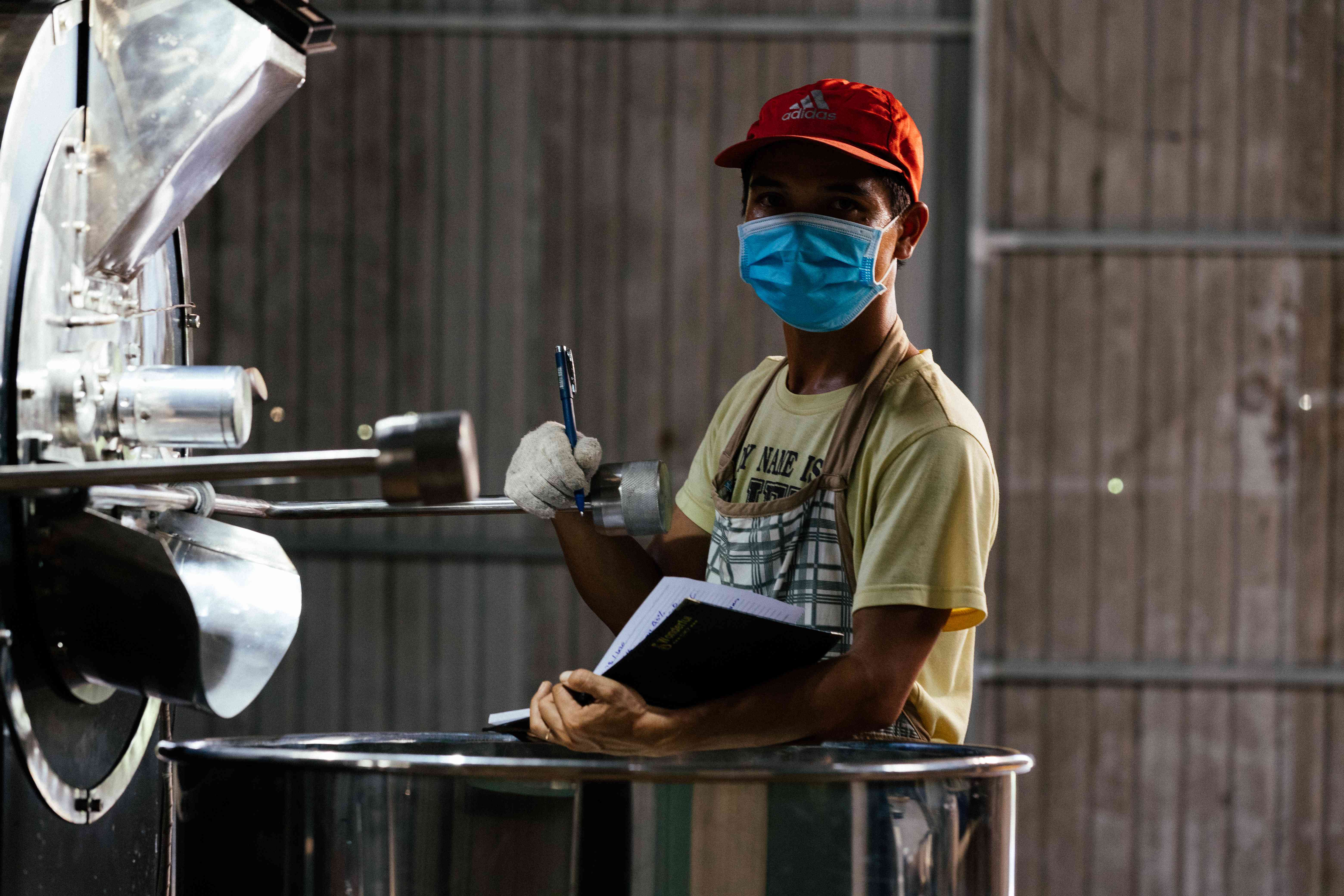
Màu rang là một lớp kiểm tra khách quan hữu ích. Agtron cung cấp thiết bị chuyên cho cà phê rang để định lượng mức phát triển và hỗ trợ theo dõi độ ổn định. citeturn0search0turn0search2
Cảm quan lại kiểm tra câu hỏi quan trọng hơn: kết quả có thực sự giống nhau khi uống hay không. Khi màu, đường cong và cảm quan cùng ổn định, mức độ tin cậy của hồ sơ rang tăng rõ rệt.
Ngược lại, nếu đường cong giống nhưng màu khác, cần kiểm tra phép đo hoặc quá trình. Nếu màu giống nhưng cảm quan khác, cần xem xét nguyên liệu, sơ chế, bảo quản và pha.
Đặt giới hạn sai lệch như thế nào
Không có một mức sai lệch duy nhất phù hợp cho mọi nhà rang. Một cơ sở có thể cần giới hạn chặt ở màu rang nhưng cho phép dao động nhỏ ở một số mốc thời gian; cơ sở khác có thể ưu tiên độ ổn định của hương vị.
Giới hạn nên được xây dựng từ dữ liệu lịch sử. Sau khi có đủ mẻ tốt, cơ sở có thể xác định khoảng biến động thường gặp và đặt ngưỡng cảnh báo. Khi một mẻ vượt ngưỡng, đó là tín hiệu để điều tra chứ chưa phải bằng chứng rằng mẻ đó chắc chắn lỗi.
Cách này thực tế hơn việc lấy một con số từ máy khác rồi áp nguyên vào quy trình của mình.
Cải thiện khả năng tái lập qua nhiều mẻ
Bắt đầu từ những thứ có thể kiểm soát: cân chính xác khối lượng mẻ, chuẩn hóa quy trình làm nóng máy, giữ cách nạp hạt nhất quán, kiểm tra cảm biến, vệ sinh đường khí và ghi lại mọi thay đổi.
Sau đó xây dựng vòng phản hồi: rang, đo, thử nếm, ghi nhận và điều chỉnh. Loring mô tả chính vòng lặp giữa dữ liệu máy và trải nghiệm trong tách là nền tảng để xây dựng hiểu biết vận hành lâu dài. citeturn0search1
Tái lập tốt không có nghĩa mọi đường cong phải trùng khít từng điểm. Mục tiêu là giảm những biến động không cần thiết và giữ kết quả trong một khoảng chất lượng có thể chấp nhận.
Tái lập giữa các ca vận hành
Nếu nhiều người cùng rang, hồ sơ cần mô tả cả những điều người vận hành thường làm bằng kinh nghiệm: thời điểm điều chỉnh nhiệt, cách xác định tiếng nổ lần đầu, điều kiện xả và cách ghi nhận màu. Khi những điểm này được chuẩn hóa, sự khác biệt giữa các ca giảm xuống. Đây là lý do đào tạo và cách ghi chép có ý nghĩa ngang với việc lưu đường cong.
Vai trò của bảo trì
Bảo trì thường bị xem là việc tách khỏi chất lượng rang, nhưng thực tế tình trạng thiết bị có thể làm thay đổi phản ứng nhiệt. Đường khí bẩn, quạt suy giảm, cảm biến lệch hoặc các bộ phận truyền nhiệt thay đổi đều có thể làm một hồ sơ rang cũ không còn phản ứng như trước. Vì vậy, lịch bảo trì phải được xem như một phần của hệ thống tái lập, không chỉ là công việc kỹ thuật.
Tái lập theo từng cấp độ
Có thể nhìn tính ổn định ở nhiều cấp: ổn định của dữ liệu máy, ổn định của màu rang và ổn định của cảm quan. Ba cấp này không phải lúc nào cũng trùng nhau. Một hệ thống tốt nên xác định trước cấp độ nào là quan trọng nhất đối với sản phẩm. Với một số sản phẩm, màu là giới hạn kiểm soát chính; với sản phẩm khác, kết quả trong tách mới là tiêu chí quyết định.
- https://loring.com/repeatable-coffee-roasting-consistency/
- https://www.agtroninc.com/analyzers/e20cpiii/
- https://new.sca.coffee/entries/ikawa-pro100x
- https://www.sonofresco.com/what-your-green-coffee-is-trying-to-tell-you/
- https://www.lilrednhà rang xay.com/blog/green-coffee-moisture-and-density-roasting
Reproducing a roast profile is not the same as typing the same numbers into a machine. A profile can be recorded as temperatures, times, heat settings, airflow, and roast events, yet the coffee can still behave differently when the input conditions change. True replication is better understood as the ability to produce a sufficiently consistent result under controlled conditions.
Replication Is More Than Repeating a Recipe
A roast profile is a useful starting point, not an immutable recipe. The same numerical trajectory can produce a different result when the machine begins from a different thermal state, when the batch size changes, or when the green coffee has different moisture or density. Loring’s recent discussion of repeatability emphasizes that profile consistency depends on machine condition, green coffee, batch size, environmental conditions, and operator habits.
This is an important distinction: repeating the procedure is only valuable if the conditions that matter to the coffee are also reasonably repeatable. A good profile therefore acts as a reference system that helps the roaster recognize variation and respond to it.
Variables That Control Consistency
Batch mass affects the thermal load placed on the roaster. Moisture, density, bean size, and processing method affect how the coffee absorbs and distributes heat. The starting temperature of the machine, ambient conditions, airflow, burner response, and sensor condition can also change the thermal response.
A profile created for one lot cannot automatically be transferred to another lot merely because the coffees share a regional name. Agricultural materials vary, and storage conditions can change over time. A consistent roasting system must therefore distinguish what belongs to the profile from what belongs to the green coffee.
The practical implication is that a change in the input can justify an adjustment to the process even when the nominal target profile has not changed.
What to Record for Comparison
A useful roasting record should include the green-coffee identification, batch weight, machine condition, charge temperature, temperature curves, environmental temperature where available, rate of rise, heat changes, airflow changes, first-crack time, development time, and discharge temperature. Roast color and sensory results should be recorded alongside the machine data. A curve describes the process, but it does not fully describe the finished cup.
When these fields are recorded consistently across many batches, the roaster can distinguish between process drift and raw-material variation. That distinction is essential for deciding what to change.
Why the Same Profile Can Produce Different Results
Coffee is an agricultural material, not an industrially identical input. Moisture and density vary, storage conditions change, and different lots respond differently to heat. The roaster itself is also a physical system whose stored heat, airflow, cleanliness, and sensor accuracy can change.
This explains why two curves can look similar while the cup changes. The profile may have been reproduced, but the input conditions were not. Conversely, a small curve difference does not necessarily mean the coffee will taste meaningfully different if the final color and sensory result remain within the accepted range.
The goal should therefore be controlled consistency, not graphical perfection.
Color and Sensory Evaluation as Confirmation
Roast color provides an objective physical checkpoint. Instruments such as Agtron systems can help quantify roast development and identify batches that move away from an established range. Sensory evaluation answers a different question: did the coffee actually produce a comparable experience in the cup?
When the curve, roast color, and sensory result are all stable, confidence in the replicated profile increases. If the curve is similar but color changes, the process or measurement method deserves investigation. If color is similar but the cup changes, the investigation may need to include green coffee, storage, grinding, brewing, or other factors outside the curve itself.
Setting Practical Tolerances
There is no single tolerance range that fits every roasting operation. One production system may need tight control of roast color; another may prioritize sensory stability. Tolerances should be built from historical data rather than copied from another machine.
After enough successful batches have been recorded, the operation can identify normal variation and establish warning ranges. A batch outside the range should be treated as a signal for investigation, not automatically as proof of failure. This approach is more useful than choosing an arbitrary target and assuming that every machine, coffee, and environment should match it exactly.
Improving Repeatability Across Batches and Operators
Start with variables that can be controlled directly: weigh the batch accurately, standardize the machine warm-up procedure, charge the coffee consistently, verify sensors, maintain airflow paths, and record process changes. Then create a feedback loop: roast, measure, taste, record, and adjust. Over time, this produces a body of machine-specific knowledge that is more reliable than a single idealized curve.
If multiple operators roast the same product, the profile should also describe actions that experienced roasters may otherwise perform by intuition: when heat is adjusted, how first crack is identified, when the batch is discharged, and how roast color is recorded. Maintenance belongs inside the same system. Dirty air paths, declining fan performance, sensor drift, or changes in heat-transfer surfaces can make an old profile behave differently even when the programmed settings have not changed.
Reliable replication does not mean every curve must overlap point for point. It means unnecessary variation is reduced and the finished coffee remains inside a defined, acceptable quality range. The best system therefore measures the process, measures the output, and uses sensory evaluation to confirm that numerical similarity corresponds to meaningful consistency in the cup.
A practical replication system can also separate control limits from investigation limits. A narrow range may be appropriate for a critical output such as roast color, while a wider range may be acceptable for a process variable that has little effect on the finished cup. These limits should come from the operation's own history.
When a value crosses a warning boundary, the first task is to identify the source of variation. Only after repeated evidence should a process limit be changed. This turns profile replication into a learning system rather than a demand for identical graphs.