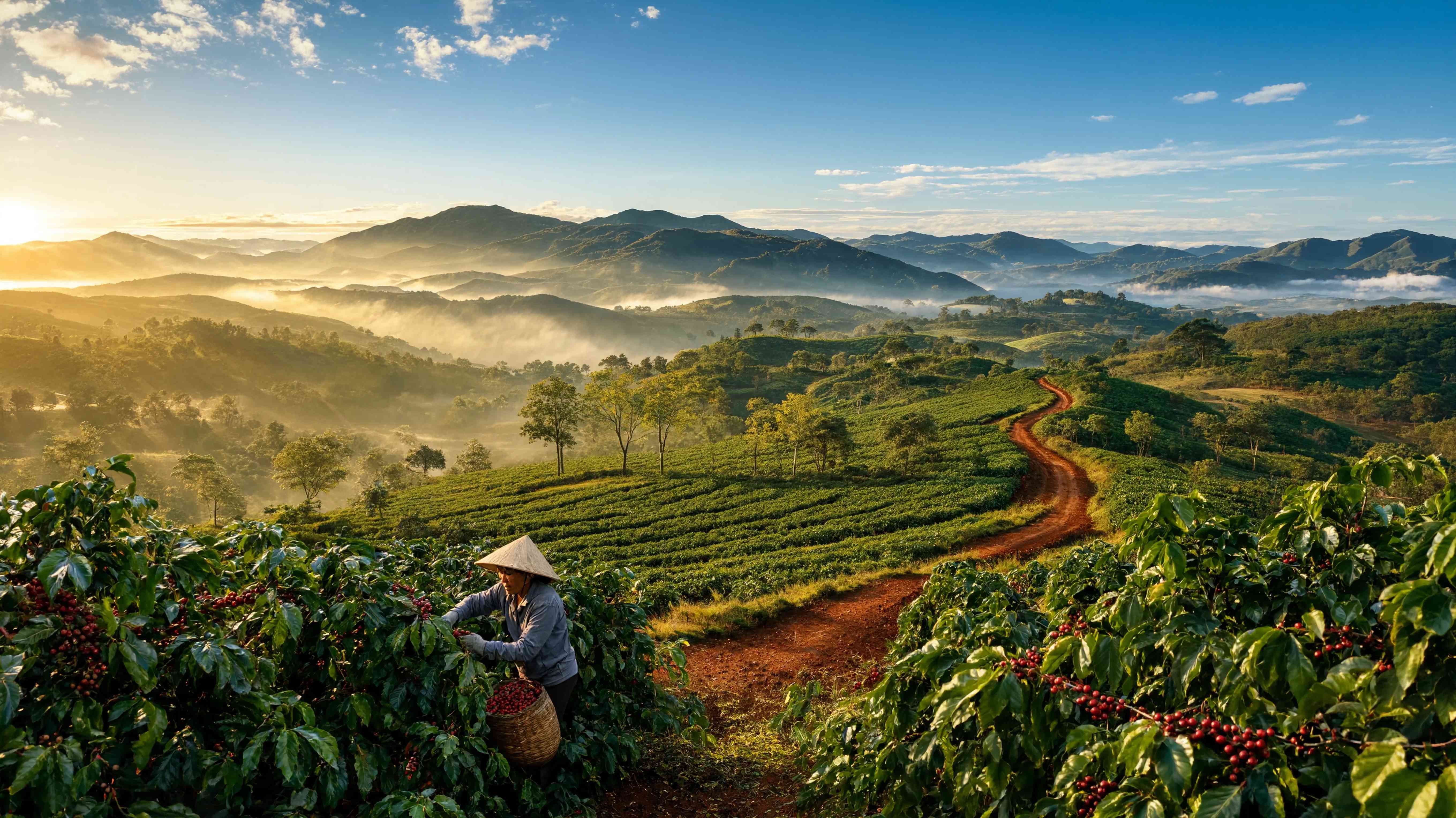
Quy mô một nông hộ cà phê không hình thành từ một con số chuẩn áp dụng cho mọi vùng. Hai hộ cùng trồng cà phê nhưng có thể có diện tích rất khác nhau vì lịch sử đất đai, địa hình, nguồn nước, số lao động, khả năng đầu tư và cách gia đình tổ chức sinh kế khác nhau. Vì vậy, muốn hiểu vì sao một hộ có 1 ha, 3 ha hay lớn hơn, cần nhìn vào cả quỹ đất lẫn khả năng duy trì diện tích đó trong điều kiện thực tế.
Cấu trúc đất đai đặt giới hạn đầu tiên
Quy mô cà phê trước hết bị giới hạn bởi cách đất được phân bổ trong từng địa phương. Quyền sử dụng đất, quá trình chia tách đất giữa các thế hệ, lịch sử khai phá và khả năng tích tụ hoặc thuê thêm đất đều ảnh hưởng đến diện tích mà một hộ có thể canh tác.
Một hộ có quyền sử dụng một khu đất rộng không có nghĩa toàn bộ khu đất đều phù hợp để trồng cà phê. Đất có thể được chia thành nhiều thửa, nằm cách xa nhau hoặc được dành cho cây trồng khác. Ngược lại, một hộ sở hữu ít đất vẫn có thể duy trì diện tích cà phê lớn hơn nếu có khả năng thuê hoặc nhận chuyển giao quyền sử dụng thêm đất. Vì thế, khi nói về quy mô nông hộ cần phân biệt diện tích hộ có quyền sử dụng với diện tích thực sự dành cho cà phê.
Nghiên cứu tại Đắk Lắk cho thấy các hộ cà phê trong một mẫu nghiên cứu năm 2019 có diện tích trung bình khoảng 1,4 ha và dao động từ 0,3 đến 4 ha. Đây là đặc điểm của mẫu nghiên cứu, không phải mức chuẩn cho toàn bộ vùng cà phê Việt Nam. Một nghiên cứu khác tại Đắk Lắk cũng cho thấy quan hệ giữa quy mô trang trại, hạ tầng tưới và hiệu quả sản xuất cần được xem xét cùng nhau. [1][2]
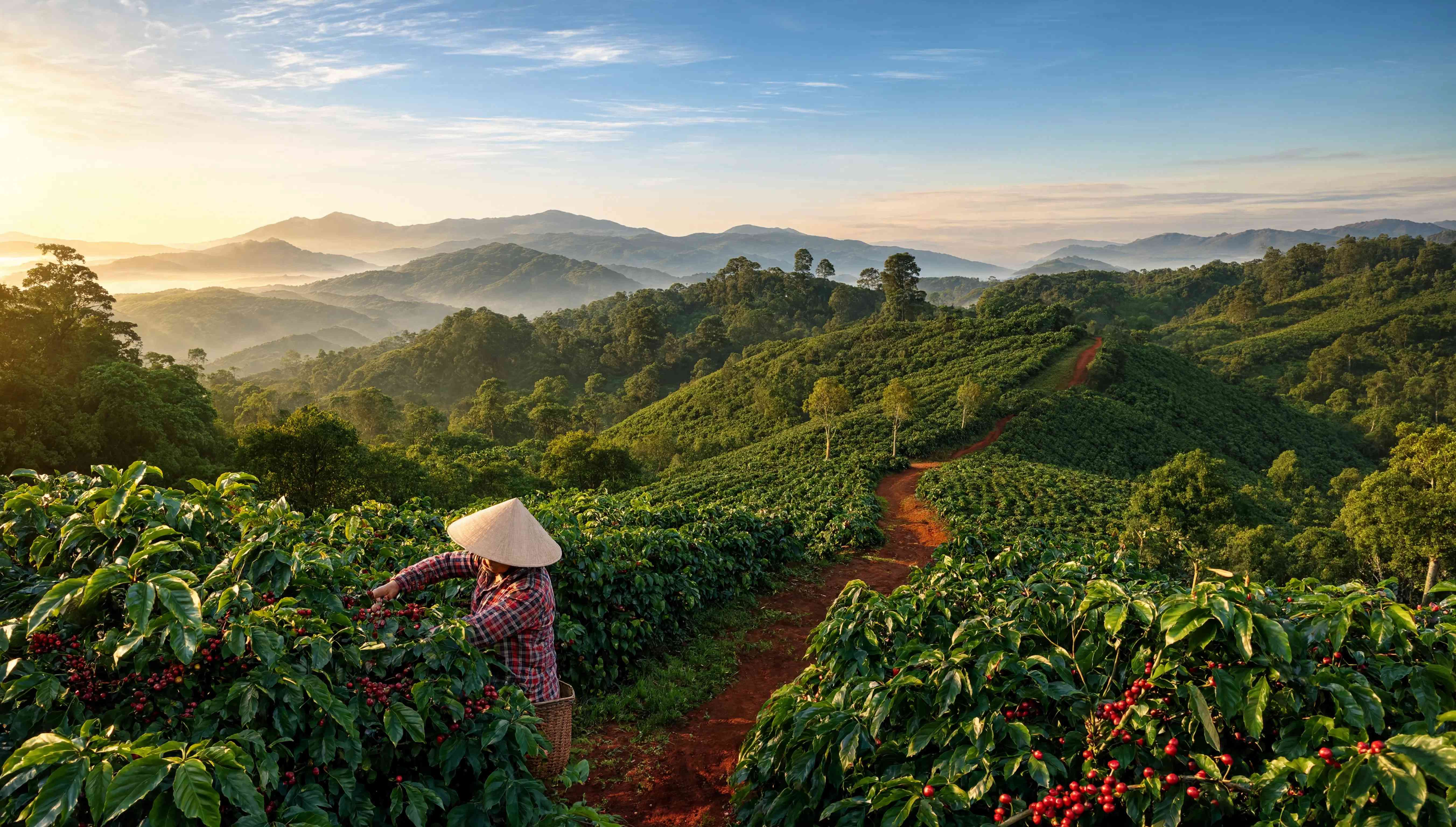
Điều kiện tự nhiên quyết định diện tích cà phê khả thi
Đất đai chỉ là điều kiện ban đầu. Địa hình, lượng mưa, khả năng tiếp cận nước, chất lượng đất và điều kiện khí hậu quyết định phần đất nào có thể duy trì một vườn cà phê với mức đầu tư hợp lý.
Ở nơi có địa hình dốc, chi phí vận chuyển vật tư và thu hoạch có thể tăng, trong khi việc bố trí tưới hoặc cơ giới hóa khó hơn. Ở nơi thiếu nước, diện tích cà phê có thể bị giới hạn bởi khả năng cung cấp nước trong giai đoạn cây cần nước. Một hộ có đủ đất nhưng không có nguồn nước ổn định chưa chắc có thể mở rộng diện tích mà vẫn duy trì năng suất và chất lượng như trước.
Các nghiên cứu về hệ thống sản xuất cà phê cũng cho thấy điều kiện địa lý và kiểu trang trại có ảnh hưởng mạnh đến cách hệ thống vận hành. Nghiên cứu so sánh Brazil và Ethiopia không coi “nông hộ điển hình” là một mô hình đồng nhất; họ phải mô tả riêng quy mô đất, lao động, cây trồng khác, vật nuôi và điều kiện khu vực trước khi đánh giá hệ thống. [3]
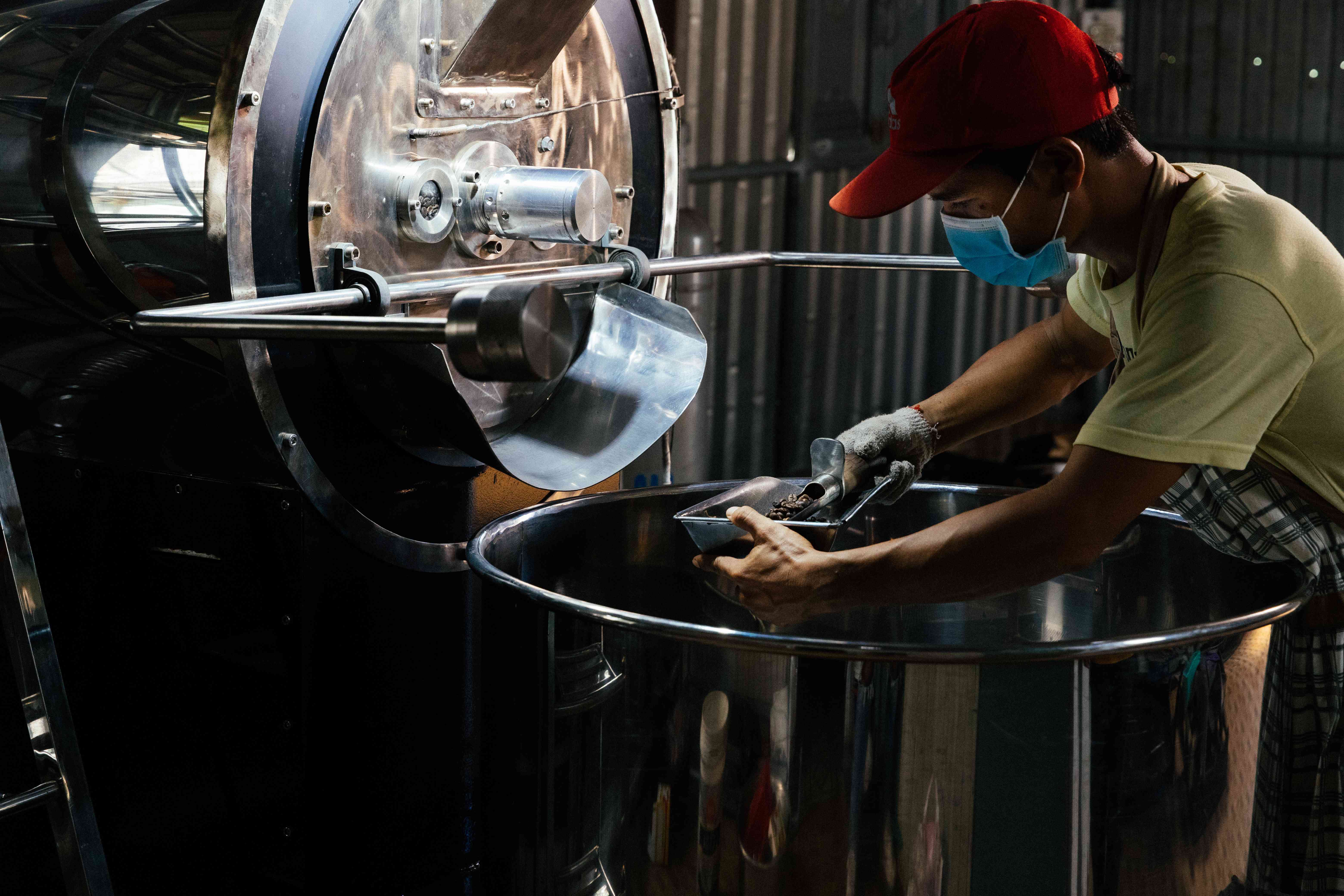
Lao động gia đình quyết định diện tích có thể quản lý
Một vườn cà phê cần lao động ở nhiều thời điểm khác nhau, từ chăm sóc, làm cỏ, bón phân đến thu hoạch và sơ chế ban đầu. Vì vậy, quy mô đất còn phụ thuộc vào số người trong hộ có thể làm việc, độ tuổi, sức lao động và thời gian họ có thể dành cho nông nghiệp.
Một hộ có diện tích lớn nhưng ít người làm nông có thể phải thuê lao động hoặc giảm mức độ chăm sóc. Ngược lại, một hộ có nhiều thành viên trong độ tuổi lao động có thể duy trì diện tích lớn hơn mà chưa cần tăng ngay chi phí tiền mặt.
Nghiên cứu trên các hộ cà phê ở Đắk Lắk cho thấy quy mô hộ và lao động gia đình có liên hệ với hiệu quả sản xuất. Một nghiên cứu khác ghi nhận lao động thuê vào mùa thu hoạch vừa tốn kém vừa khó tìm, khiến nguồn lao động của gia đình trở thành một nguồn lực đáng kể trong tổ chức sản xuất. [4][5]
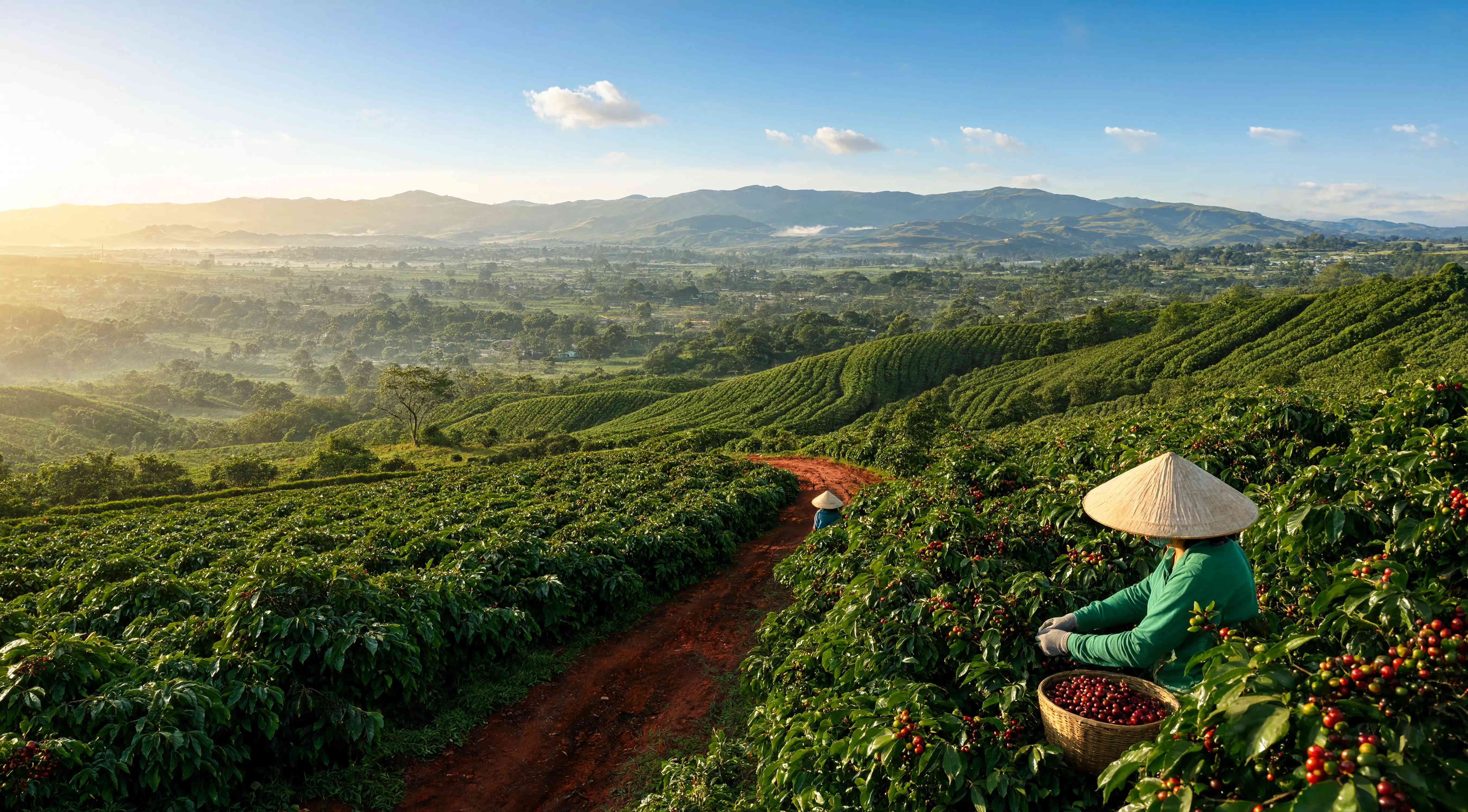
Vốn quyết định diện tích có thể duy trì
Diện tích sở hữu và diện tích có thể đầu tư hiệu quả là hai khái niệm khác nhau. Cây cà phê cần phân bón, nước, bảo vệ cây, thiết bị, công lao động và trong một số trường hợp cần đầu tư cho tái canh. Nếu vốn lưu động không đủ, mở rộng diện tích có thể làm hộ thiếu tiền cho chính phần diện tích đang cho thu hoạch.
Nghiên cứu tại Đắk Lắk cho thấy các nhóm chi phí của sản xuất cà phê bao gồm phân bón vô cơ, phân hữu cơ, phân chuồng, thuốc bảo vệ cây, nước, lao động thuê, lao động gia đình, khấu hao và các khoản khác. Nghiên cứu cũng ghi nhận khả năng tiếp cận tín dụng có quan hệ với hiệu quả kỹ thuật trong mẫu khảo sát. [5]
Hạ tầng tưới là ví dụ rõ. Nghiên cứu của Rios và Shively tại Đắk Lắk cho rằng sự kém hiệu quả của các hộ nhỏ có liên quan một phần đến quy mô đầu tư cho hạ tầng tưới, cùng với trình độ học vấn và mức độ phụ thuộc vào cà phê. [1] Điều này không có nghĩa hộ lớn luôn hiệu quả hơn, nhưng cho thấy diện tích không thể tách khỏi mức đầu tư cần thiết để vận hành diện tích đó.
Cà phê cạnh tranh với những lựa chọn sinh kế khác
Nông hộ hiếm khi xem toàn bộ đất và lao động như nguồn lực chỉ dành cho cà phê. Một phần đất có thể dành cho cây lương thực, cây ăn quả, chăn nuôi hoặc các hoạt động khác. Thành viên gia đình cũng có thể làm việc ngoài nông nghiệp.
Do đó, quyết định duy trì 2 ha cà phê thay vì 3 ha có thể là một lựa chọn sinh kế hợp lý nếu phần đất còn lại tạo ra nguồn thực phẩm, thu nhập hoặc giảm rủi ro. Nghiên cứu về quyết định sản xuất cà phê cho thấy lựa chọn của nông dân chịu ảnh hưởng của nhiều yếu tố kinh tế và xã hội, trong đó có quy mô trang trại, khả năng tiếp cận công nghệ, đất đai, tổ chức và lợi nhuận của cây trồng. [6]
FAO cũng lưu ý rằng sinh kế cà phê chịu tác động đồng thời của rủi ro khí hậu, thị trường và điều kiện tiếp cận nguồn lực. Những hệ thống có đa dạng hóa phù hợp có thể có cách ứng phó khác nhau trước cú sốc so với hộ phụ thuộc gần như hoàn toàn vào cà phê. [7]
Quy mô thực tế phải đọc cùng cơ cấu sản xuất
Không nên lấy một con số trung bình rồi gọi đó là “quy mô nông hộ cà phê điển hình”. Một con số chỉ có ý nghĩa khi biết nó được đo ở đâu, trong mẫu nào và diện tích đó được sử dụng như thế nào.
Cùng một diện tích, hai hộ có thể có năng lực sản xuất khác nhau vì số thửa khác nhau, tỷ lệ đất dành cho cà phê khác nhau, nguồn nước khác nhau và lượng lao động gia đình khác nhau. Vì vậy, khi đánh giá quy mô nông hộ, cần nhìn đồng thời vào diện tích, cơ cấu cây trồng, lao động, vốn và điều kiện sinh thái.
Quy mô của một nông hộ cà phê thực chất là kết quả của sự khớp nhau giữa đất có thể sử dụng và nguồn lực có thể huy động. Khi một trong các yếu tố này thay đổi, diện tích cà phê mà hộ có thể duy trì cũng có thể thay đổi theo.
- [1] Rios & Shively (2006), Farm Size, Irrigation Infrastructure, and the Efficiency of Coffee Production in Vietnam https://www.tandfonline.com/doi/abs/10.1080/14728028.2006.9752575
- [2] Nguyen Hung Anh & Wolfgang Bokelmann (2019), Determinants of Smallholders’ Market Preferences: The Case of Sustainable Certified Coffee Farmers in Vietnam https://www.mdpi.com/2071-1050/11/10/2897
- [3] Winter et al. (2020), Evaluating the Sustainability Performance of Typical Conventional and Certified Coffee Production Systems in Brazil and Ethiopia https://www.frontiersin.org/journals/sustainable-food-systems/articles/10.3389/fsufs.2020.00049/full
- [4] Nguyen Hung Anh et al. (2019), Toward Sustainability or Efficiency: The Case of Smallholder Coffee Farmers in Vietnam https://www.mdpi.com/2227-7099/7/3/66
- [5] FAO, Coffee: Markets and Trade https://www.fao.org/markets-and-trade/commodities-overview/beverages/coffee/en
- [6] Vellema et al. (2016), Drivers influencing farmer decisions for adopting organic or conventional coffee management practices https://www.sciencedirect.com/science/article/pii/S0306919215001359
- [7] FAO, How coffee value chains foster climate-resilient livelihoods https://www.fao.org/family-farming/detail/en/c/1708803/
There is no single standard farm size that applies to every coffee-growing region. Two households can both grow coffee while farming very different areas because land history, terrain, water, labor, investment capacity, and household livelihood strategies differ. To understand why one farm has one hectare, another three, and another more, we need to consider both the land available and the household’s ability to sustain that area under real conditions.
Land Structure Sets the First Limit
Coffee area is first constrained by how land is distributed locally. Land-use rights, inheritance and subdivision across generations, land development history, and the ability to accumulate or rent additional land all affect the area a household can farm.
Having use rights to a large tract does not mean every part of it is suitable for coffee. Land may be divided among several plots, located far apart, or reserved for other crops. Conversely, a household with little owned land may cultivate a larger coffee area by renting land or acquiring additional use rights. Farm size therefore requires a distinction between land a household controls and land actually allocated to coffee.
A 2019 study in Dak Lak found that coffee farms in its sample averaged about 1.4 hectares, ranging from 0.3 to 4 hectares. Those figures describe that particular sample and should not be treated as a national benchmark for Vietnamese coffee farms. Another Dak Lak study likewise showed that farm size, irrigation infrastructure, and production efficiency need to be considered together.
Natural Conditions Determine How Much Coffee Land Is Viable
Land is only the starting condition. Terrain, rainfall, water access, soil quality, and climate determine how much land can be maintained as a coffee farm at a reasonable level of investment.
On steep land, moving inputs and harvesting can cost more, while irrigation and mechanization become harder to organize. Where water is scarce, coffee area may be constrained by the amount of water available during periods when the trees need it. A household can own enough land yet lack the reliable water needed to expand without sacrificing productivity or quality.
Research comparing coffee production systems also shows how strongly geography and farm type shape the way a system operates. A Brazil–Ethiopia comparison did not treat the “typical farm” as one uniform model; it described land area, labor, other crops, livestock, and regional conditions before assessing system performance.
Family Labor Determines How Much Land Can Be Managed
A coffee farm needs labor at many points, from maintenance and weeding to fertilization, harvesting, and initial processing. Farm size therefore depends partly on how many household members can work, their age and capacity, and the time they can devote to agriculture.
A large farm with few agricultural workers may need hired labor or may reduce the intensity of management. A household with several working-age members may be able to maintain a larger area without immediately increasing cash labor costs.
Studies of coffee households in Dak Lak have linked household size and family labor with production efficiency. Other research notes that hired labor during harvest can be both expensive and difficult to secure, making family labor a significant production resource.
Capital Determines How Much Land Can Be Sustained
Owned area and area that can be profitably invested in are not the same thing. Coffee requires fertilizer, water, crop protection, equipment, labor, and in some cases replanting investment. If working capital is limited, expanding the farm can leave the household short of funds for the existing productive area.
Research in Dak Lak identifies inorganic fertilizer, organic inputs, manure, crop-protection products, water, hired labor, family labor, depreciation, and other items among the cost components of coffee production. It also found a relationship between access to credit and technical efficiency in the sample.
Irrigation infrastructure is a clear example. Rios and Shively argued that lower efficiency among small farms in Dak Lak was partly related to the scale of irrigation investment, alongside education and dependence on coffee. This does not mean large farms are always more efficient; it shows that farm area cannot be separated from the investment required to operate it.
Coffee Competes with Other Livelihood Choices
Households rarely treat all their land and labor as resources reserved exclusively for coffee. Some land may support food crops, fruit trees, livestock, or other activities, while family members may work outside agriculture.
Maintaining two hectares of coffee instead of three can therefore be a rational livelihood choice if the remaining land provides food, income, or risk reduction. Research on coffee-production decisions shows that farmers respond to economic and social factors including farm size, access to technology, land, organizations, and the profitability of crops.
FAO also notes that coffee livelihoods face climate, market, and resource-access risks at the same time. Diversified systems can respond differently to shocks than households that depend almost entirely on coffee.
Farm Size Must Be Read Together with the Production System
An average figure should never be presented as though it were the universal “typical coffee farm.” A number becomes meaningful only when we know where it was measured, what sample it came from, and how the land was used.
Two farms with the same area can have very different production capacity because they may have different numbers of plots, different shares of land devoted to coffee, different water supplies, and different amounts of family labor. Farm size is therefore best assessed alongside cropping structure, labor, capital, and ecological conditions.
In practical terms, the size of a coffee farm is the result of a fit between usable land and resources that a household can mobilize. When any of those factors changes, the amount of coffee land the household can sustainably maintain can change as well.
- [1] Rios & Shively (2006), Farm Size, Irrigation Infrastructure, and the Efficiency of Coffee Production in Vietnam https://www.tandfonline.com/doi/abs/10.1080/14728028.2006.9752575
- [2] Nguyen Hung Anh & Wolfgang Bokelmann (2019), Determinants of Smallholders’ Market Preferences: The Case of Sustainable Certified Coffee Farmers in Vietnam https://www.mdpi.com/2071-1050/11/10/2897
- [3] Winter et al. (2020), Evaluating the Sustainability Performance of Typical Conventional and Certified Coffee Production Systems in Brazil and Ethiopia https://www.frontiersin.org/journals/sustainable-food-systems/articles/10.3389/fsufs.2020.00049/full
- [4] Nguyen Hung Anh et al. (2019), Toward Sustainability or Efficiency: The Case of Smallholder Coffee Farmers in Vietnam https://www.mdpi.com/2227-7099/7/3/66
- [5] FAO, Coffee: Markets and Trade https://www.fao.org/markets-and-trade/commodities-overview/beverages/coffee/en
- [6] Vellema et al. (2016), Drivers influencing farmer decisions for adopting organic or conventional coffee management practices https://www.sciencedirect.com/science/article/pii/S0306919215001359
- [7] FAO, How coffee value chains foster climate-resilient livelihoods https://www.fao.org/family-farming/detail/en/c/1708803/