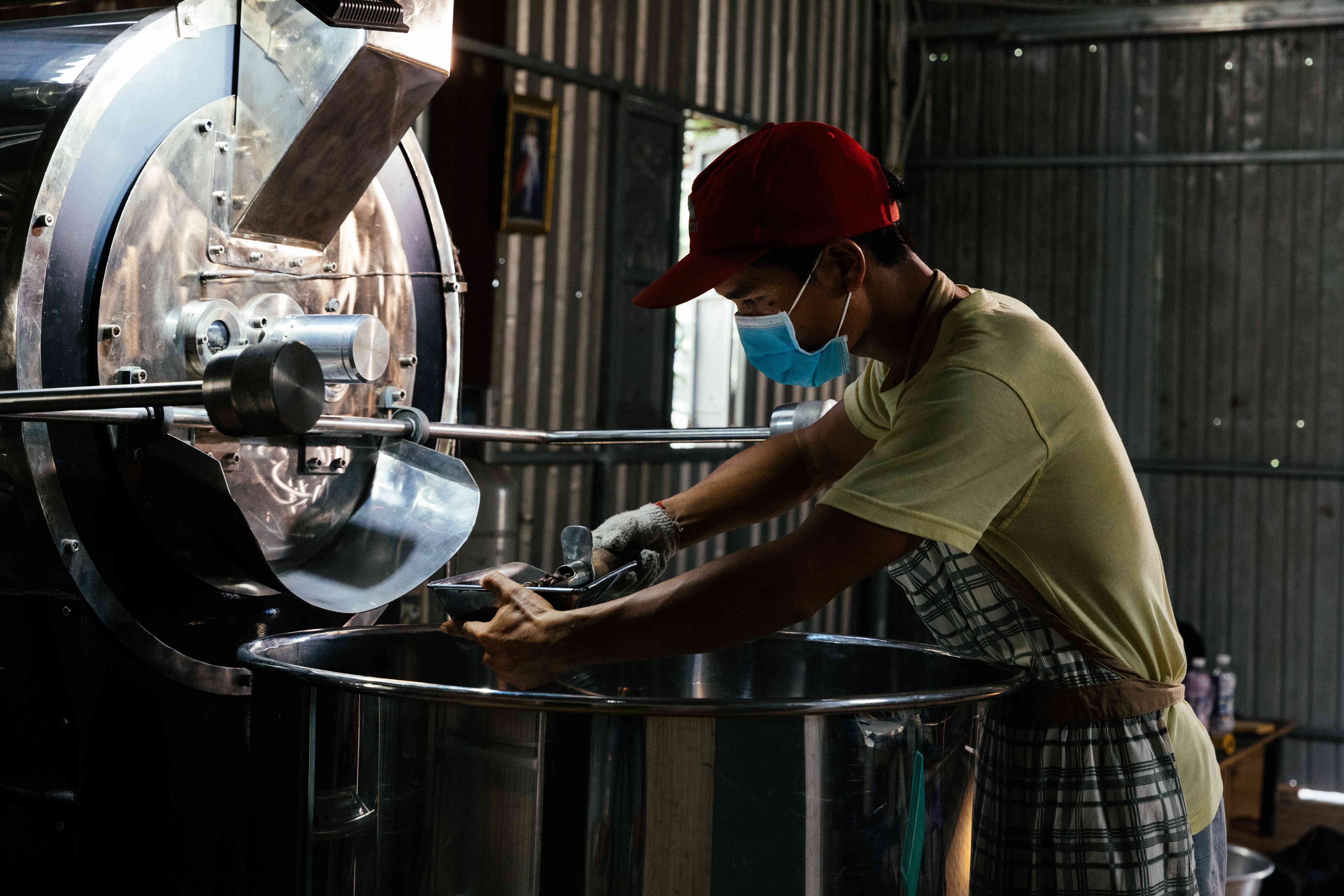
Nhà rang xay thường được nhìn qua hoạt động biến cà phê xanh thành cà phê rang, nhưng giá trị kinh tế của một nhà rang không dừng ở chiếc máy rang. Trước khi rang có quyết định mua nguyên liệu, đánh giá chất lượng và quản lý tồn kho; sau khi rang còn có kiểm soát tính nhất quán, xay, phối trộn, đóng gói, phát triển sản phẩm và cung ứng. Mỗi quyết định tạo ra giá trị nhưng cũng kéo theo chi phí và rủi ro.
Nhà rang xay đứng ở đâu trong chuỗi giá trị
Nhà rang nằm giữa nguyên liệu xanh và sản phẩm cuối cùng. Công việc không đơn thuần là gia nhiệt hạt mà là biến một nguyên liệu nông nghiệp có biến động thành sản phẩm phù hợp với mục tiêu thị trường. Điều đó đòi hỏi hiểu nguyên liệu, hiểu quá trình và hiểu cách sản phẩm được sử dụng.
Sự kết nối này giải thích vì sao cùng một loại cà phê xanh có thể được định vị và chế biến theo những cách khác nhau. Giá trị không chỉ nằm trong bản thân hạt mà còn trong quyết định biến hạt thành sản phẩm nào và duy trì sản phẩm đó ổn định ra sao.
Giá trị từ lựa chọn và đánh giá cà phê xanh
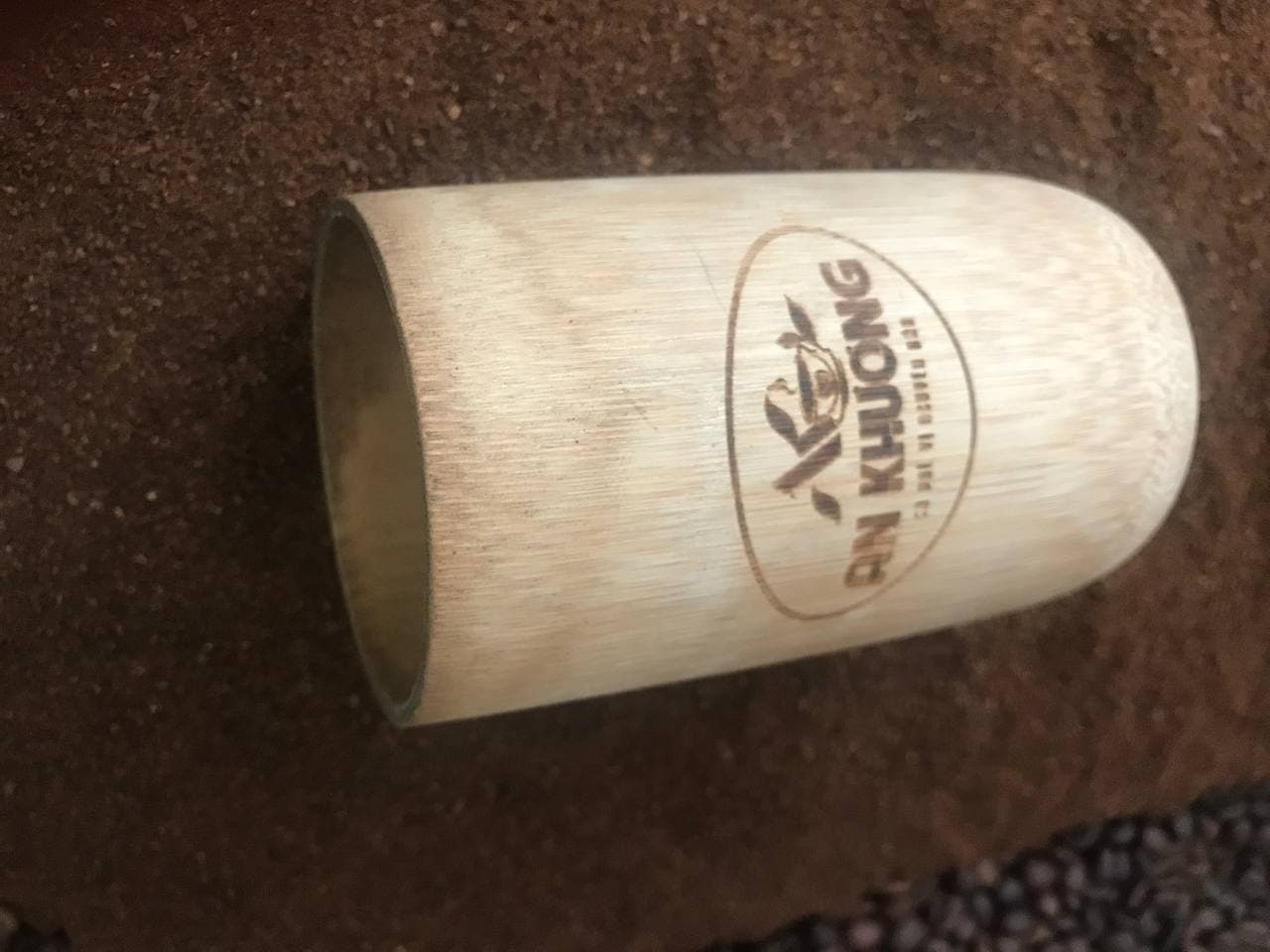
Quyết định mua nguyên liệu ảnh hưởng trực tiếp đến chất lượng và chi phí sau đó. Nhà rang cần xem thông tin nguồn gốc, quy trình sơ chế, đặc tính vật lý, cảm quan và khả năng cung ứng. SCA hiện mô tả cà phê Đánh giá giá trị cà phê theo bốn lớp: vật lý, mô tả cảm quan, cảm nhận giá trị và thông tin ngoài tách. Cách nhìn nhiều lớp giúp người mua không phụ thuộc vào một điểm số duy nhất.
Đánh giá tốt cũng giúp giảm rủi ro. Nếu nguyên liệu không đồng đều hoặc không phù hợp với mục tiêu sản phẩm, chi phí điều chỉnh ở các bước sau có thể tăng. Vì vậy, năng lực lựa chọn nguyên liệu là một phần của giá trị mà nhà rang tạo ra.
Giá trị tạo ra trong quá trình rang
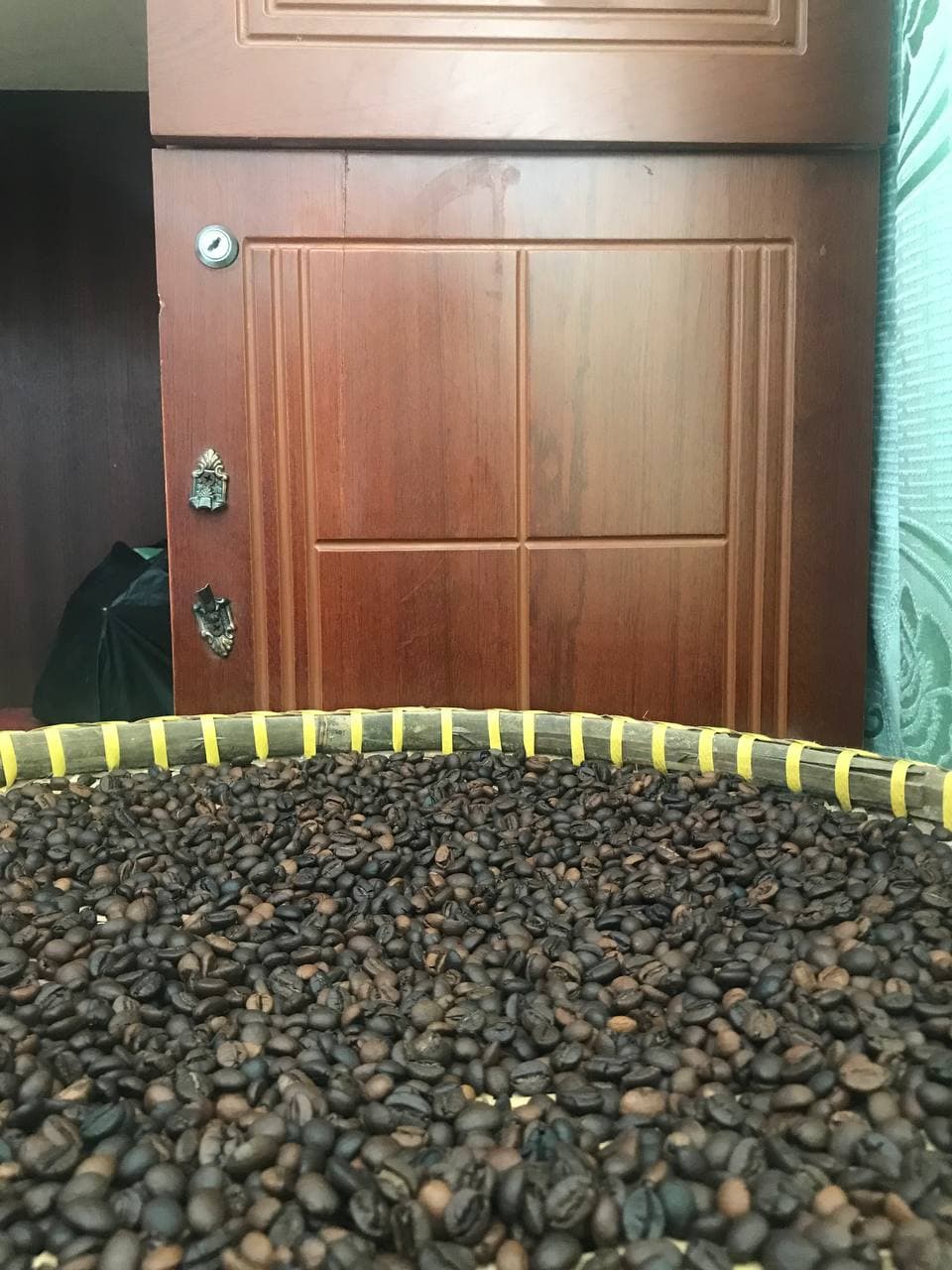
Rang biến đổi cấu trúc và thành phần của hạt, đồng thời định hình đặc tính cảm quan của sản phẩm. Nhà rang phải lựa chọn mức độ và cách điều khiển quá trình phù hợp với nguyên liệu và cách sử dụng. Giá trị ở đây nằm ở khả năng biến một nguyên liệu biến động thành sản phẩm có đặc tính có chủ đích.
Một đường cong đẹp chưa phải bằng chứng duy nhất của chất lượng. Cần xem thành phẩm có đạt mục tiêu cảm quan và có lặp lại giữa các mẻ hay không. Điều đó đưa hoạt động rang từ một thao tác kỹ thuật thành một quá trình kiểm soát chất lượng.
Giá trị từ kiểm soát chất lượng và tính nhất quán
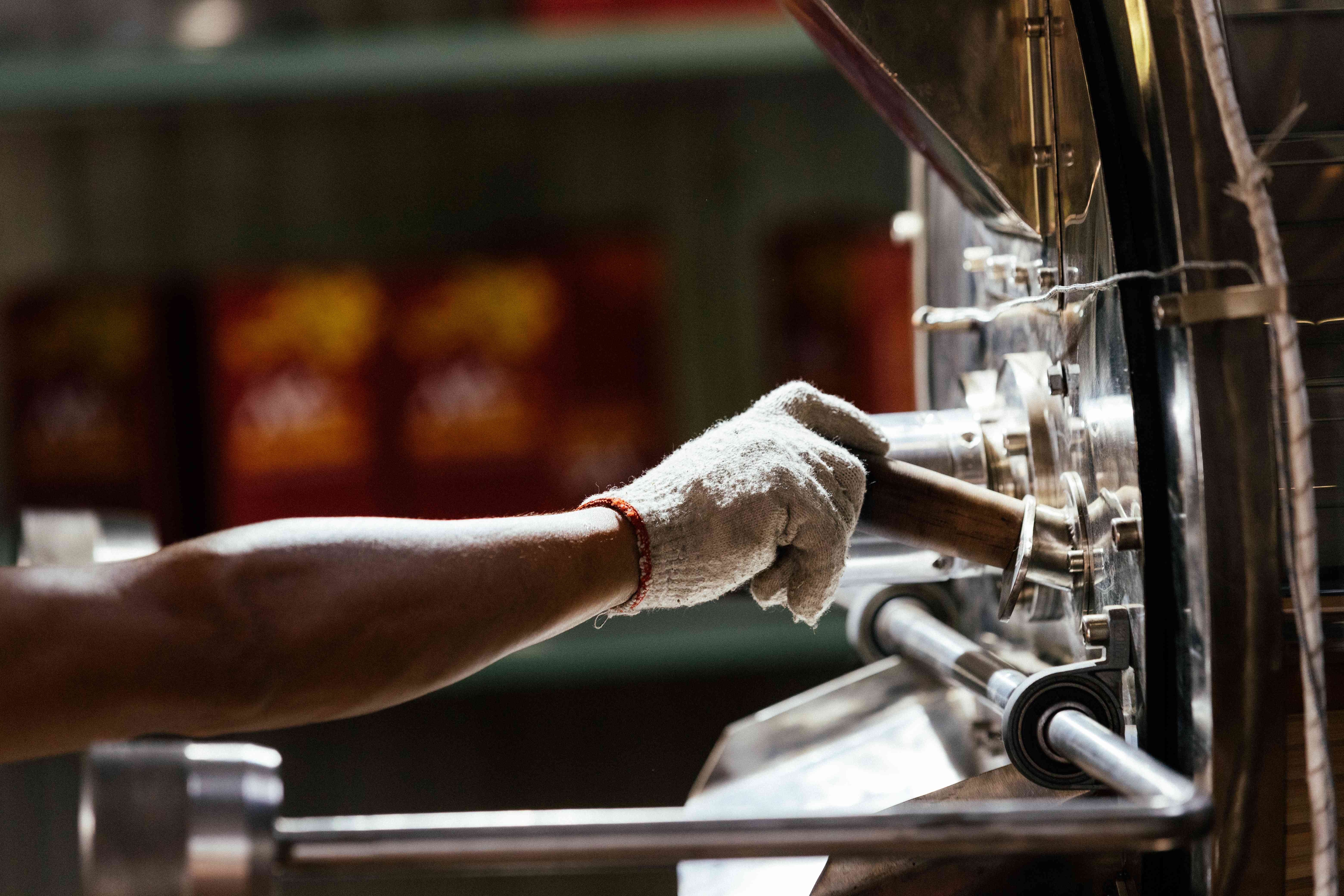
SCA nhấn mạnh vai trò của dữ liệu trong việc hiểu và kiểm soát hoạt động rang. Dữ liệu có thể gồm thông tin nguyên liệu, thời gian, nhiệt độ, đường cong, màu rang, khối lượng hao hụt và kết quả đánh giá sau rang. Khi các dữ liệu được liên kết, nhà rang có thể tìm nguyên nhân của sai lệch thay vì chỉ sửa một mẻ riêng lẻ.
Tính nhất quán có giá trị kinh tế vì khách hàng mua một sản phẩm cần nhận được trải nghiệm tương đối ổn định. Kiểm soát sai lệch cũng giúp giảm mẻ lỗi, giảm hao hụt và hỗ trợ lập kế hoạch sản xuất.
Giá trị từ xay, phối trộn, đóng gói và phát triển sản phẩm
Xay thay đổi cách sản phẩm được sử dụng và yêu cầu kiểm soát kích thước hạt. Phối trộn cho phép nhà rang xây dựng một sản phẩm có đặc tính ổn định hoặc phù hợp một mục tiêu cụ thể. Đóng gói bảo vệ sản phẩm và quyết định cách sản phẩm được lưu thông. Những bước này đều nằm sau rang nhưng có ảnh hưởng trực tiếp đến giá trị mà khách hàng nhận được.
Phát triển sản phẩm còn liên quan đến quy cách, kênh bán và nhu cầu sử dụng. Một loại cà phê tốt nhưng không phù hợp với thiết bị pha hoặc quy cách bán có thể không tạo ra giá trị tương xứng. Vì vậy, nhà rang cần nhìn sản phẩm từ đầu đến cuối thay vì chỉ tối ưu công đoạn rang.
Giá trị kinh tế phải đi cùng chi phí và rủi ro nào
Thiết bị rang, xay và đóng gói cần vốn đầu tư; nhiên liệu, điện, nhân công và bảo trì tạo chi phí vận hành. Rang còn có hao hụt khối lượng, trong khi tồn kho cà phê xanh có thể tạo chi phí vốn và rủi ro lão hóa. Nếu nhu cầu thị trường thay đổi, nhà rang có thể phải xử lý tồn kho hoặc thay đổi sản phẩm.
Do đó, giá trị tạo ra phải được nhìn cùng chi phí. Một hoạt động làm sản phẩm tốt hơn nhưng tăng chi phí quá mức chưa chắc tạo thêm giá trị kinh tế. Nhà rang hiệu quả là nơi chất lượng, khả năng lặp lại, tốc độ cung ứng và chi phí được xem xét trong cùng một quyết định.
Kết luận
Một cách nhìn có ích với chủ đề này là tránh tìm một đáp án áp dụng cho mọi cơ sở, mọi vùng trồng hoặc mọi mô hình kinh doanh. Chất lượng, môi trường và hiệu quả kinh tế đều phụ thuộc vào dữ liệu thực tế và ranh giới đánh giá. Vì vậy, quyết định tốt thường bắt đầu từ việc xác định đúng mục tiêu, thu thập đúng dữ liệu, rồi so sánh các phương án trong cùng một điều kiện. Khi làm được như vậy, một chỉ số đơn lẻ sẽ trở thành một phần của bức tranh lớn hơn thay vì bị dùng như một kết luận tuyệt đối.
- SCA – Coffee Value Assessment — https://sca.coffee/value-assessment
- ICO – How Coffee Quality is Maintained — https://www.ico.org/market-development-toolkit/page/index/8/quality/98
- SCA – Using Your Coffee Data as Business Intelligence — https://sca.coffee/sca-news/podcast/51/using-your-coffee-data-as-business-intelligence-to-deliver-quality-consistency-and-control-expo-2018-lectures-es325
Roasters are often viewed simply as businesses that turn green coffee into roasted coffee, but the economic value of a roasting operation extends far beyond the roasting machine. Before the roast, there are decisions about sourcing, quality assessment, and inventory. After the roast come consistency control, grinding, blending, packaging, product development, and supply. Each decision can create value, but each also introduces cost and risk.
Where the Roaster Sits in the Value Chain
A roaster sits between the green coffee supply and the finished product. The work is not simply about applying heat to a bean; it is about turning a variable agricultural raw material into a product that fits a defined market purpose. That requires an understanding of the raw material, the process, and the way the finished product will actually be used.
This connection explains why the same green coffee can be positioned and processed in very different ways. Value is not contained in the bean alone. It also comes from deciding what product the bean should become and from maintaining that product with enough consistency to meet its intended use.
Value Begins with Green Coffee Selection and Assessment
The sourcing decision has a direct effect on the quality and cost of everything that follows. A roaster needs to consider origin information, processing method, physical characteristics, sensory attributes, and supply availability. The Specialty Coffee Association currently describes Coffee Value Assessment through four layers: physical assessment, descriptive assessment, affective assessment, and extrinsic information. A multi-layer view helps buyers avoid reducing the value of a coffee to a single score.
Good assessment also reduces risk. If the raw material is inconsistent or poorly matched to the intended product, the cost of correcting the problem later can rise. The ability to select suitable green coffee is therefore part of the value a roaster creates, not merely an administrative purchasing task.
Value Created During Roasting
Roasting changes the structure and composition of the bean while shaping the sensory character of the finished coffee. The roaster must choose an appropriate level of development and control strategy for both the raw material and its intended use. The value lies in turning a variable input into a product with deliberate, repeatable characteristics.
A visually attractive roast curve is not, by itself, proof of quality. The finished coffee still has to meet its sensory objective and perform consistently from batch to batch. That turns roasting from a purely technical operation into a quality-control process.
Value from Quality Control and Consistency
The Specialty Coffee Association emphasizes the role of data in understanding and controlling roasting operations. Useful data can include raw-material information, time, temperature, roast curves, roast color, weight loss, and post-roast assessment. When these data are connected, a roaster can investigate the causes of variation instead of simply correcting one isolated batch.
Consistency has economic value because customers who buy a product reasonably expect a stable experience. Controlling variation can also reduce defective batches and waste while making production planning more reliable.
Value from Grinding, Blending, Packaging, and Product Development
Grinding changes how the product can be used and requires control of particle size. Blending allows a roaster to build a product with a stable profile or to meet a specific target. Packaging protects the coffee and influences how it can be stored and distributed. These steps occur after roasting, but they directly affect the value delivered to the customer.
Product development also involves format, sales channel, and intended use. A coffee may be excellent yet fail to create equivalent value if it is poorly matched to a brewing system or an unsuitable package format. A roaster therefore needs to view the product from end to end rather than optimizing the roasting stage in isolation.
Economic Value Must Be Considered Alongside Cost and Risk
Roasting, grinding, and packaging equipment require capital investment, while fuel, electricity, labor, and maintenance create operating costs. Roasting also causes weight loss, and green coffee inventory ties up capital while carrying a risk of quality deterioration. If market demand changes, the roaster may have to manage excess inventory or reformulate products.
Value therefore has to be considered together with cost. An activity that improves the product but raises costs disproportionately does not necessarily create additional economic value. An effective roaster is one that considers quality, repeatability, supply speed, and cost within the same decision framework.
A useful way to approach this subject is to avoid looking for a single answer that applies to every roasting business, growing region, or commercial model. Quality, environmental conditions, and economic performance depend on the actual data and on the boundaries of the assessment. Good decisions therefore usually begin by defining the objective, collecting the right information, and comparing alternatives under comparable conditions. A single metric then becomes one part of a larger picture rather than an absolute conclusion.
For a roaster, this wider view changes how performance should be measured. The roasting machine is important, but it is only one point in a sequence that begins with a purchasing decision and ends with a product that someone can use as intended. Choosing a green coffee that is difficult to source, difficult to roast consistently, or poorly matched to the final format can create costs that are not visible in the roast itself. Conversely, a well-organized operation can create value by making the whole sequence more predictable. Data from sourcing, roasting, quality checks, inventory, and finished-product performance can be read together to identify where variation enters the system. This also helps explain why two roasters using similar equipment may create different economic outcomes: their value-creation systems may be organized differently. The practical objective is not to maximize one stage at all costs, but to make the combined process work for the quality target, production volume, customer expectation, and available resources. In that sense, roasting skill is one component of a broader operating capability: the business must be able to turn decisions about raw material and process into a finished product that remains commercially workable. A change that improves one stage but creates instability elsewhere should therefore be judged as a whole-system change, not as an isolated improvement.
This broader perspective also clarifies why the roaster’s contribution cannot be measured only by the value added at the machine. Sourcing choices influence what the roast can achieve; process control influences whether that result can be repeated; grinding, packaging, and product design influence whether the result survives the journey to the customer. Inventory and supply decisions determine whether the product can continue to be offered without creating unnecessary exposure to cost or quality loss. These activities are connected, so a useful evaluation of a roasting business should consider the chain rather than isolate the most visible technical step.
- SCA – Coffee Value Assessment — https://sca.coffee/value-assessment
- ICO – How Coffee Quality is Maintained — https://www.ico.org/market-development-toolkit/page/index/8/quality/98
- SCA – Using Your Coffee Data as Business Intelligence — https://sca.coffee/sca-news/podcast/51/using-your-coffee-data-as-business-intelligence-to-deliver-quality-consistency-and-control-expo-2018-lectures-es325