Không có một cỡ xay duy nhất phù hợp cho mọi phin inox và phin nhôm. Khi chọn độ xay, người pha nên nhìn vào cấu trúc cụ thể của phin, sức cản của lớp bột và diễn biến dòng nước. Vật liệu kim loại là một đặc điểm dễ nhận biết, nhưng không nên coi nó là yếu tố duy nhất quyết định cách xay.
Độ xay phải được chọn cùng với thiết kế phin
Cỡ hạt ảnh hưởng đến diện tích tiếp xúc và sức cản của lớp cà phê. Nhưng nước không chỉ đi qua cà phê; nó còn đi qua bộ phận lọc của phin. Hình dạng phin, số lượng và kích thước lỗ, bộ phận chặn và cách lớp bột được giữ lại đều tham gia vào quá trình.
Vì vậy, khi đổi từ phin này sang phin khác, việc giữ nguyên mức xay trên máy không đảm bảo dòng sẽ giống nhau. Một cỡ xay phù hợp với chiếc phin có sức cản thấp có thể làm chiếc phin khác chảy chậm hơn nếu cấu trúc lọc khác.
Điểm xuất phát hợp lý là xem cỡ xay như một biến cần hiệu chỉnh theo dòng thực tế.
Phin inox và phin nhôm có thể khác ở cấu trúc, không chỉ ở vật liệu
Hai chiếc phin bằng hai kim loại khác nhau có thể có hình dạng và bộ phận lọc khác nhau. Ngay cả những chiếc cùng vật liệu cũng không nhất thiết có cùng kích thước lỗ hoặc cơ chế tạo sức cản.
Do đó, không nên viết quy tắc kiểu “phin inox luôn cần xay thô hơn phin nhôm”. Một kết luận như vậy cần dữ liệu so sánh cụ thể trên những thiết kế cụ thể. Trong thực hành, người pha nên coi vật liệu là thông tin nhận diện, còn dòng nước mới là dữ liệu để điều chỉnh.
Cách tiếp cận này cũng tránh việc biến kinh nghiệm của một chiếc phin thành tiêu chuẩn cho tất cả phin cùng loại.
Dùng dấu hiệu dòng chảy để tìm vùng xay phù hợp
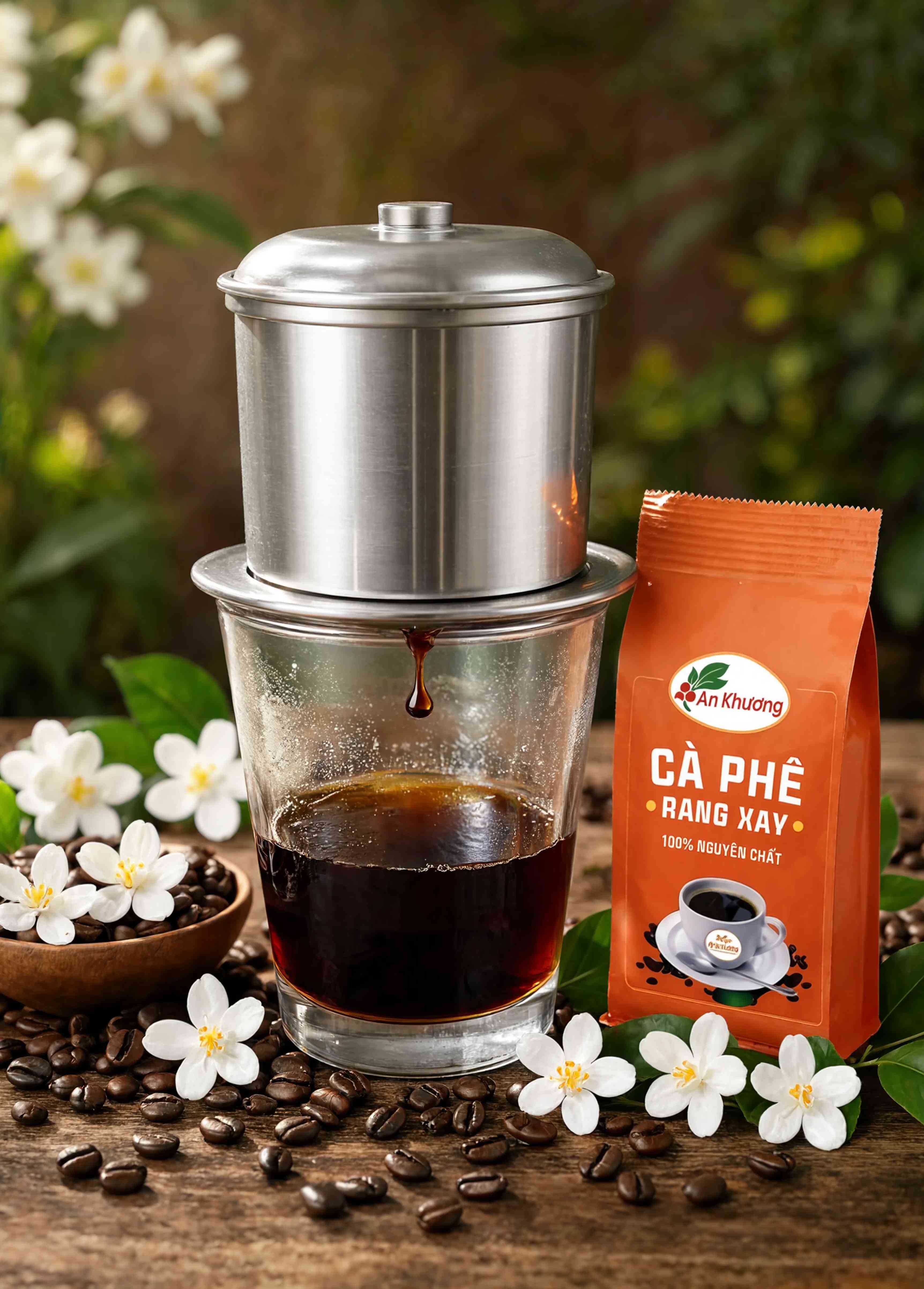
Khi thử cỡ xay, có thể quan sát thời điểm bắt đầu nhỏ giọt, mức độ liên tục của dòng và tình trạng nước trên bề mặt. Nếu nước đứng quá lâu hoặc dòng giảm mạnh, có thể cỡ xay đang tạo sức cản lớn; nếu dòng đi quá nhanh, có thể cần xem lại cỡ xay hoặc các biến khác.
Nhưng thời gian không phải bằng chứng duy nhất. Nghiên cứu về phương pháp lọc trọng lực cho thấy các phương pháp khác nhau có thể tạo ra thời gian tiếp xúc và thuộc tính cảm quan khác nhau. Vì vậy, người pha cần đánh giá cả kết quả trong cốc.
Nếu cà phê có cảm giác thiếu chiết xuất, quá đắng hoặc quá mỏng, hãy xem nó cùng diễn biến dòng. Không nên đổi cỡ xay chỉ vì muốn đạt một con số thời gian cố định.
Quá mịn và quá thô có thể biểu hiện khác nhau
Cỡ xay quá mịn thường làm tăng sức cản và có thể khiến nước đi chậm. Nếu quá thô, dòng có thể nhanh hơn. Tuy nhiên, mức độ biểu hiện còn phụ thuộc lượng bột, nước, cách nén và cấu trúc phin.
Một ly có dòng nhanh chưa chắc chỉ do xay thô. Lớp bột có thể bị phân bố khác hoặc lượng nước được đưa vào khác. Tương tự, phin chậm chưa chắc do máy xay. Bộ lọc bẩn hoặc lớp bột bị nén quá mạnh cũng có thể làm dòng giảm.
Đây là lý do nên thay một biến mỗi lần. Khi đổi cỡ xay, giữ nguyên lượng cà phê, lượng nước và thao tác chuẩn bị. Khi kết quả đã rõ, mới thử biến tiếp theo.
Tìm cỡ xay bằng những bước nhỏ

Người pha có thể bắt đầu từ mức xay hiện tại và thay từng nấc nhỏ. Mỗi lần ghi lại cỡ xay, thời gian, diễn biến dòng và cảm quan. Sau vài lần, sẽ hình thành một khoảng cỡ xay phù hợp hơn với chính chiếc phin đó.
Nếu đã thay cỡ xay nhiều lần mà dòng vẫn bất ổn, nên dừng chỉnh máy và kiểm tra thiết bị hoặc cách chuẩn bị lớp bột. Tiếp tục làm mịn hoặc thô hơn không phải lúc nào cũng giải quyết được vấn đề.
Cách chọn độ xay cho phin inox và phin nhôm vì vậy nên dựa trên thiết kế và dòng thực tế, không dựa vào nhãn vật liệu. Người pha cần tìm một vùng xay tạo ra dòng ổn định, sau đó xác nhận bằng cảm quan. Khi công thức được ghi lại và chỉ thay một biến mỗi lần, việc chuyển giữa các loại phin cũng trở nên dễ kiểm soát hơn.
Khi chuyển từ phin inox sang phin nhôm, người pha nên coi lần pha đầu tiên như một lần hiệu chỉnh thiết bị mới. Giữ loại cà phê, lượng bột và lượng nước như công thức quen thuộc, sau đó quan sát dòng. Nếu dòng quá chậm, thử một bước xay thô hơn; nếu quá nhanh, thử một bước xay mịn hơn. Sau mỗi thay đổi, ghi lại kết quả. Cách này tốt hơn việc tìm trên mạng một con số độ xay rồi áp dụng nguyên xi, bởi thông số trên máy xay, loại hạt và thiết kế phin đều có thể khác.
Nếu máy xay có nhiều nấc, người pha nên thay đổi từng nấc nhỏ và ghi lại kết quả thay vì nhảy quá xa giữa hai mức. Khoảng phù hợp thường được nhận ra qua sự kết hợp giữa dòng ổn định và cảm giác trong cốc. Nếu phải chỉnh quá nhiều mới có dòng bình thường, hãy kiểm tra lại lượng bột và cấu trúc phin. Điều đó có thể cho thấy vấn đề không nằm hoàn toàn ở độ xay.
Tài liệu tham khảo
Grind Size Must Be Chosen With the Filter Design
There is no single grind setting that works for every stainless-steel or aluminum Vietnamese filter. Particle size affects surface area and resistance, but water also has to pass through the filter assembly itself. Hole size, hole pattern, the retaining plate and the shape of the brewer all contribute to the resistance the water encounters.
For that reason, moving from one filter to another does not guarantee the same flow even when the grinder setting is unchanged. A setting that works well with a low-resistance brewer may slow dramatically in another design. Grind size is therefore better treated as a variable that is calibrated to the actual brewer and its flow.
Stainless Steel and Aluminum Can Differ in Structure, Not Just Material
Two filters made from different metals can have different dimensions and filter assemblies, while two filters made from the same metal may also behave differently. Material is easy to identify, but it is not enough to predict flow. A statement such as “stainless steel always needs a coarser grind than aluminum” is too broad unless it is supported by a comparison of specific designs.
In practice, the useful information is what the brewer actually does. The filter’s resistance, the behavior of the water and the resulting cup provide better evidence than the material label alone. This also prevents one person’s experience with one brewer from becoming a rule for every brewer of the same type.
Use Flow Signals to Find a Suitable Grind Range
When testing grind size, watch when dripping begins, whether the flow remains continuous and what happens to the water on the surface of the coffee bed. Water that sits for a long time or a flow that falls sharply may indicate excessive resistance. Very fast flow may indicate a grind issue, but it can also point to other variables.
Time is useful but not sufficient. Gravity-drip research shows that different brewing methods can produce different contact conditions and sensory outcomes. The cup still has to be evaluated. If the coffee tastes thin, underdeveloped or excessively bitter, those observations should be considered alongside the flow rather than replaced by a target time.
Very Fine and Very Coarse Grinds Can Behave Differently
A very fine grind often increases resistance and can slow the flow, while a coarser grind may allow water to pass more quickly. The visible effect, however, also depends on dose, water, preparation and the filter design. A fast brew is not automatically caused by coarse coffee, just as a slow brew is not automatically caused by the grinder.
Distribution, excessive compression, a dirty filter or a different water load can all change resistance. This is why changing one variable at a time is useful. When changing grind size, keep the coffee dose, water amount and preparation method stable so the effect of the change can be read clearly.
Find the Grind Range Through Small Changes
Start from the current setting and move only a small step at a time. Record the setting, time, flow behavior and cup result. After several trials, a practical range for that particular brewer will usually become clearer.
If several grind changes do not stabilize the flow, stop turning the grinder and inspect the equipment and coffee-bed preparation. When moving between stainless-steel and aluminum filters, treat the first brew as a calibration of a new system. Keep the familiar coffee, dose and water, then adjust one small grind step according to the observed flow.
When moving from one filter to another, it is useful to keep the coffee itself constant at first. Keep the dose and water amount from a familiar recipe, then observe the new filter before making a larger change. If the flow is clearly slower, test one small move toward a coarser grind; if it is clearly faster, test one small move toward a finer grind. The purpose is not to discover a universal setting, but to map how that particular filter responds.
Grinder markings also cannot be treated as universal units. Different grinders produce different particle distributions even when their settings appear similar. A setting number therefore has meaning only within the grinder, coffee and workflow in which it was tested. Recording the setting alongside flow and cup observations creates a practical reference that can be reused when the same setup returns.
It is also worth checking the filter before changing the grinder repeatedly. A dirty filter, an unusual retaining plate position or an inconsistent coffee bed can create resistance that looks like a grind problem. Once the basic equipment is sound, small, controlled grind changes become much easier to interpret.
One practical way to build confidence is to record the result of each setting as a range rather than as a single “correct” number. If two adjacent settings both produce stable flow and acceptable cups, that is useful information: the brewer has found a workable zone rather than a fragile point. The preferred setting can then be chosen according to convenience, coffee condition and the desired character of the drink.
When the coffee changes, the old setting should be treated as a starting reference, not a guarantee. A different roast or particle distribution can alter resistance even in the same filter. Repeating the same controlled adjustment process makes the recipe portable without pretending that one grinder number belongs to every coffee.