
Sấy đông khô không đơn giản là làm khô dịch cà phê ở nhiệt độ thấp. Đây là một quá trình tạo hình cấu trúc, trong đó nước được đóng băng rồi loại khỏi sản phẩm chủ yếu bằng thăng hoa. Những tinh thể băng hình thành trong giai đoạn đầu để lại các khoảng rỗng sau khi biến mất. Vì vậy, điều kiện đóng băng và điều kiện sấy cùng quyết định hình thái cuối cùng của hạt hoặc bánh cà phê đông khô.
Sấy sơ cấp và sấy thứ cấp quyết định cấu trúc theo những cách khác nhau
Vì cấu trúc được hình thành ngay từ lúc đóng băng, việc chỉ nhìn vào giai đoạn thăng hoa sẽ bỏ qua một phần nguyên nhân của khác biệt giữa các loại bột.
Giai đoạn đóng băng đặc biệt quan trọng vì kích thước và phân bố tinh thể băng ảnh hưởng trực tiếp đến hệ lỗ. Đóng băng theo những điều kiện khác nhau có thể tạo cấu trúc lỗ khác nhau, từ đó làm thay đổi đường đi của hơi nước trong quá trình thăng hoa và khả năng nước thấm trở lại khi pha. Các nghiên cứu về hệ cà phê đông khô cho thấy thay đổi tốc độ hoặc điều kiện đóng băng có thể làm thay đổi kích thước lỗ và tốc độ hòa tan.
Sau khi đóng băng, áp suất buồng được hạ để băng thăng hoa. Đây là giai đoạn sấy sơ cấp và thường chiếm phần lớn thời gian. Nhiệt phải được cung cấp đủ để duy trì tốc độ thăng hoa, nhưng nhiệt độ sản phẩm phải nằm trong giới hạn bảo vệ cấu trúc. Nếu sản phẩm vượt vùng nhiệt độ cho phép, vật liệu cô đặc có thể mất trạng thái rắn ổn định và xảy ra sụp cấu trúc. Khi đó, bề mặt có thể co lại, làm giảm độ xốp và ảnh hưởng đến hoàn nguyên.
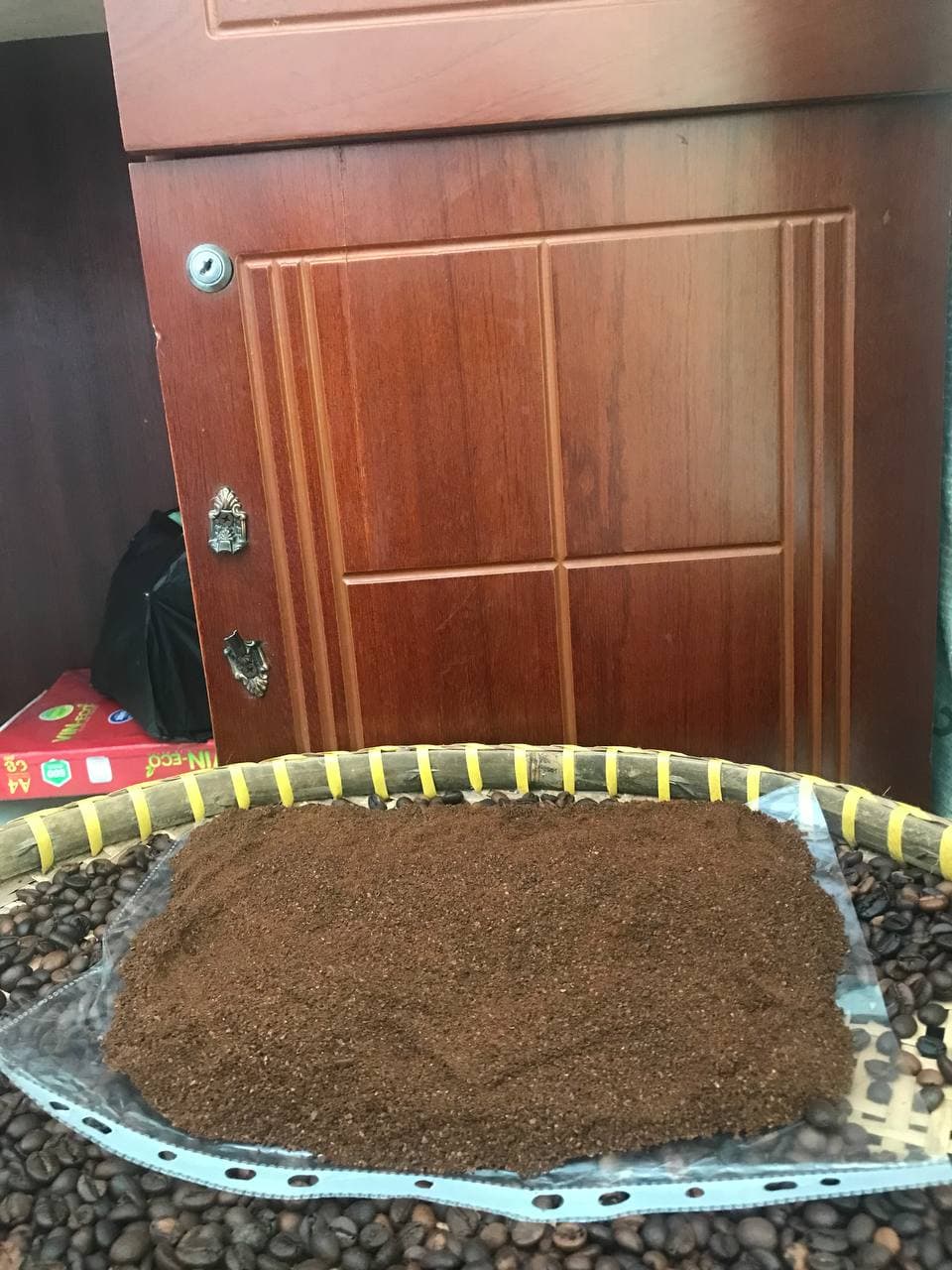
Độ xốp ảnh hưởng thế nào đến hoàn nguyên và độ bền hạt?
Sấy thứ cấp có nhiệm vụ loại phần nước liên kết còn lại thông qua giải hấp. Lượng nước cuối cùng không chỉ là một con số về độ ẩm. Nó liên quan đến trạng thái vật lý của nền vô định hình, độ ổn định và khả năng bảo quản. Nếu sấy quá ít, nước còn lại có thể làm tăng tính linh động của hệ; nếu xử lý quá mức, chi phí năng lượng tăng và không nhất thiết tạo thêm lợi ích tương ứng.
Cấu trúc xốp có vai trò trực tiếp đối với quá trình hoàn nguyên. Nước phải đi vào các khoảng rỗng, hòa tan vật liệu và thoát khí hoặc tạo dòng chất lỏng trong hạt. Một sản phẩm có mạng lỗ phù hợp có thể thấm nước nhanh hơn. Nghiên cứu về spray-sấy đông khô của cà phê cho thấy cấu trúc có độ xốp cao liên quan đến khả năng hòa tan tức thời, trong khi các phương pháp sấy khác tạo kích thước hạt và mật độ khác nhau.
Những biến số cần theo dõi khi nghiên cứu
Cấu trúc cũng phải đủ bền để chịu xử lý sau sấy. Hạt quá giòn có thể tạo nhiều bụi khi vận chuyển; hạt bị sụp hoặc quá đặc lại có thể mất lợi thế hoàn nguyên. Vì vậy, tối ưu cấu trúc không phải là tạo càng nhiều lỗ càng tốt. Mục tiêu là một cấu trúc cân bằng giữa độ xốp, độ bền cơ học, mật độ khối và khả năng tiếp xúc với nước.
Khi nghiên cứu quá trình, nên đo cả biến đầu vào và thuộc tính đầu ra. Các trường cần theo dõi gồm nhiệt độ và tốc độ đóng băng, nhiệt độ sản phẩm, áp suất buồng, nhiệt độ kệ, thời gian sấy sơ cấp và thứ cấp, độ ẩm cuối, mật độ khối, hình thái và thời gian hoàn nguyên. Cách ghi dữ liệu này giúp phân biệt một thay đổi về cấu trúc do đóng băng với thay đổi do điều kiện sấy.
Điểm đáng chú ý là sấy đông khô có thể tạo sản phẩm chất lượng cao nhưng chi phí năng lượng lớn. Nghiên cứu áp dụng quality-by-design cho cà phê đông khô cho thấy tối ưu sấy sơ cấp phải cân bằng thời gian, năng lượng và giới hạn nhiệt độ để tránh sụp cấu trúc. Vì vậy, cấu trúc bột nên được xem như kết quả của cả chuỗi điều kiện chứ không phải đặc tính cố định của riêng phương pháp đông khô.
Từ thí nghiệm phòng thí nghiệm đến quy mô sản xuất
Kích thước tinh thể băng còn tạo ra một đánh đổi về tốc độ sấy. Lỗ lớn thường tạo đường thoát hơi thuận lợi hơn, nhưng cấu trúc quá thô có thể làm thay đổi độ bền của sản phẩm. Ngược lại, lỗ nhỏ làm tăng trở lực truyền khối và có thể kéo dài sấy sơ cấp. Vì vậy, điều kiện đóng băng cần được chọn cùng mục tiêu về thời gian sấy và thuộc tính cơ học.
Nồng độ chất rắn ban đầu của dịch cũng ảnh hưởng đến cấu trúc. Khi dịch cô đặc hơn, lượng chất rắn còn lại sau khi băng thăng hoa tạo thành nền dày hơn giữa các lỗ. Điều này có thể thay đổi nhiệt độ chuyển trạng thái và giới hạn vận hành của giai đoạn sấy. Vì vậy, không nên chuyển một chu trình sấy đông khô từ dịch này sang dịch khác chỉ bằng cách giữ nguyên nhiệt độ kệ và áp suất.
Một thiết kế thí nghiệm có giá trị nên tách ba nhóm biến: điều kiện đóng băng, điều kiện sấy và thành phần dịch. Khi thay đổi nhiều yếu tố cùng lúc mà không có thiết kế thực nghiệm, rất khó biết biến nào tạo ra thay đổi về độ xốp hoặc hoàn nguyên. Đây cũng là cơ sở để xây dựng vùng vận hành an toàn thay vì chỉ tìm một công thức đơn lẻ.
Một số lưu ý khi đọc dữ liệu
Ở quy mô lớn, truyền nhiệt và truyền khối còn thay đổi theo chiều dày lớp sản phẩm. Một chu trình đạt kết quả tốt ở khay mỏng có thể không giữ nguyên khi chiều dày tăng. Vì vậy, dữ liệu scale-up cần ghi nhiệt độ sản phẩm tại các vị trí đại diện và xác định thời điểm phần cuối của mẻ hoàn tất sấy sơ cấp.
Tài liệu tham khảo
- Applying quality-by-design to develop a coffee freeze-drying process (2014), Journal of Food Engineering.
- Anantawittayanon & Kawai (2026), Predictive model for the surface collapse during single-step freeze-drying of liquid foods: A case study in instant coffee, Journal of Food Engineering, 112996. DOI: 10.1016/j.jfoodeng.2026.112996.
- Spray-Freeze-Drying approach for soluble coffee processing and its effect on quality characteristics (2015), Journal of Food Engineering, 159, 1–8. DOI: 10.1016/j.jfoodeng.2014.10.011.
Freeze-drying isn't simply drying coffee liquid at low temperature. It's a structure-forming process, in which water is frozen and then removed from the product mainly through sublimation. Ice crystals formed in the early stage leave behind void spaces once they disappear. So freezing conditions and drying conditions together determine the final morphology.
Primary and secondary drying shape structure in different ways
Because structure is formed right from the freezing stage, looking only at the sublimation phase misses part of the reason behind differences between powder batches.
The freezing stage is especially important because ice-crystal size and distribution directly affect the pore network. Freezing under different conditions can create different pore structures, which in turn change the path water vapor takes during sublimation and the ability of water to re-penetrate during reconstitution. Research on freeze-dried coffee systems shows changing freezing rate can shift these characteristics.
After freezing, chamber pressure is lowered so the ice sublimes. This is the primary-drying stage and usually takes up most of the time. Enough heat must be supplied to maintain the sublimation rate, but product temperature must stay within limits that protect the structure. If the product exceeds the allowed temperature zone, the concentrated material can lose its stable solid state and structural collapse can occur.
How does porosity affect reconstitution and particle strength?
Secondary drying has the task of removing the remaining bound water through desorption. The final water amount isn't just a moisture percentage. It relates to the physical state of the amorphous matrix, stability, and storage ability. If dried too little, remaining water can increase the system's molecular mobility; if over-processed, energy cost rises without necessarily creating a proportional quality benefit.
Porous structure plays a direct role in reconstitution. Water needs to enter the void spaces, dissolve the material, and release trapped gas or create liquid flow within the particle. A product with a suitable pore network can absorb water faster. Research on spray-freeze-dried coffee shows highly porous structures relate to instant solubility, while other structures behave differently.
Variables worth tracking during research
The structure also needs to be strong enough to withstand post-drying handling. Overly brittle particles can create a lot of dust during transport; collapsed or overly dense particles can lose their reconstitution advantage. So optimizing structure isn't about creating as much porosity as possible. The goal is a structure balanced between porosity, mechanical strength, bulk density, and water-contact ability.
When researching the process, both input variables and output attributes should be measured. Fields worth tracking include freezing temperature and rate, product temperature, chamber pressure, shelf temperature, primary and secondary drying time, final moisture, bulk density, morphology, and reconstitution time. Recording data this way helps distinguish a structural change caused by freezing from one caused by the drying stage.
Worth noting is that freeze-drying can create a high-quality product but at high energy cost. Research applying quality-by-design to freeze-dried coffee shows optimizing primary drying must balance time, energy, and temperature limits to avoid structural collapse. So powder structure should be seen as the result of the whole chain of conditions rather than an isolated characteristic of just one step.
From lab experiment to production scale
Ice-crystal size also creates a trade-off in drying speed. Larger pores usually create a more favorable vapor-escape path, but an overly coarse structure can change product strength. Conversely, smaller pores increase mass-transfer resistance and can lengthen primary drying. So freezing conditions need to be chosen alongside the goal for drying time and mechanical properties.
The initial solids concentration of the liquid also affects structure. When the liquid is more concentrated, the remaining solid matter after ice sublimation forms a thicker matrix between the pores. This can change the glass-transition temperature and the operating limits of the drying stage. So you shouldn't transfer a freeze-drying cycle from one liquid to another just by scaling the numbers.
A valuable experimental design should separate three variable groups: freezing conditions, drying conditions, and liquid composition. When changing many factors at once without an experimental design, it's very hard to know which variable created a change in porosity or reconstitution. This is also the basis for building a safe operating region instead of just searching for a single formula.
Some notes when reading the data
At large scale, heat and mass transfer also change with product-layer thickness. A cycle that performs well on a thin tray may not hold when thickness increases. So scale-up data needs to record product temperature at representative positions and determine when the last part of the batch completes primary drying.
References
- Applying quality-by-design to develop a coffee freeze-drying process (2014), Journal of Food Engineering.
- Anantawittayanon & Kawai (2026), Predictive model for the surface collapse during single-step freeze-drying of liquid foods: A case study in instant coffee, Journal of Food Engineering, 112996. DOI: 10.1016/j.jfoodeng.2026.112996.
- Spray-Freeze-Drying approach for soluble coffee processing and its effect on quality characteristics (2015), Journal of Food Engineering, 159, 1–8. DOI: 10.1016/j.jfoodeng.2014.10.011.